-
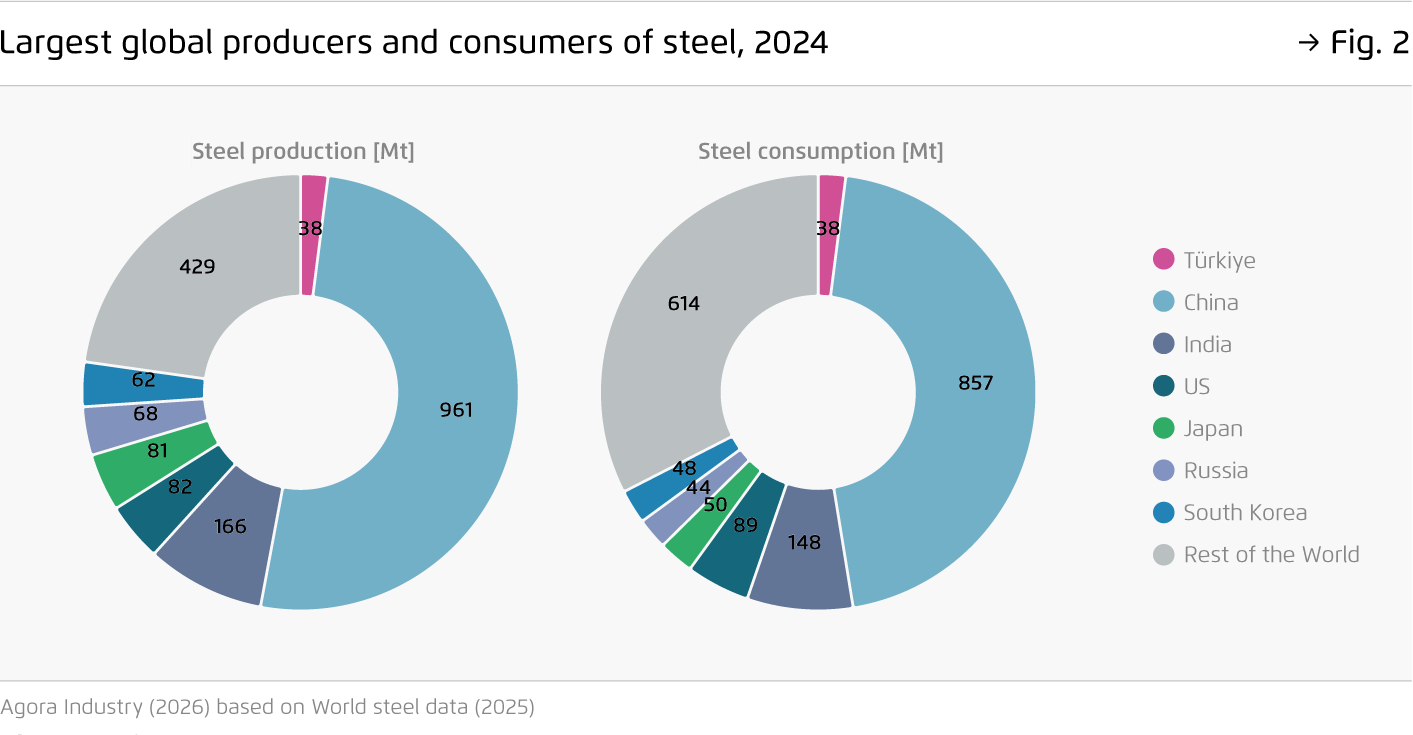
As the world’s seventh-largest steel producer, Türkiye is well-positioned to lead the shift to near-zero emission production.
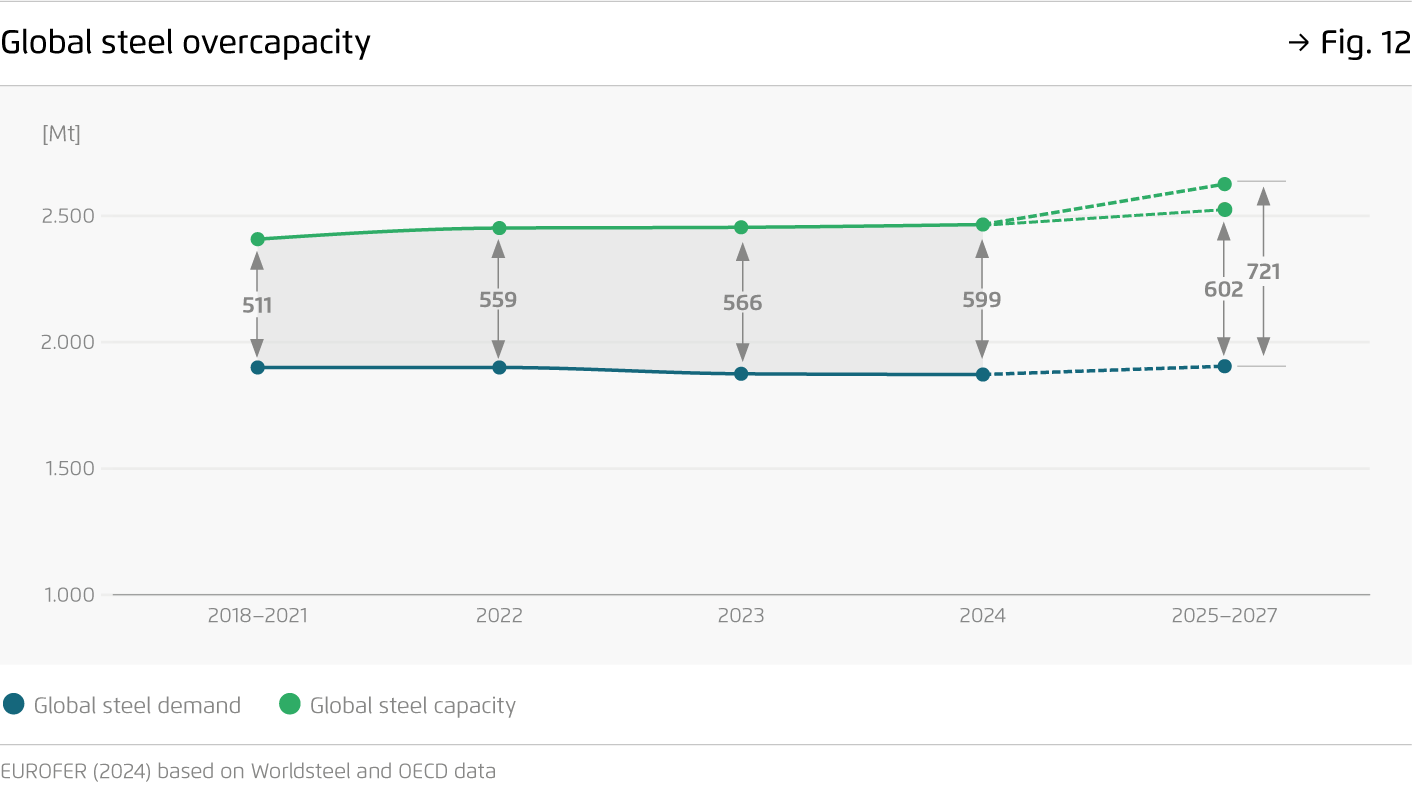
This would be a strategic response to global overcapacity, new trade dynamics and a domestic steel supply-demand mismatch. With growing global downstream demand for low-emission steel and affordable renewable energy available at home, the conditions are in place for the sector to fully seize this opportunity.
-
Early investment in near-zero-emissions technology and greater use of domestic scrap will set Türkiye's steel sector on a strong transformation path, boosting its competitiveness and resilience.
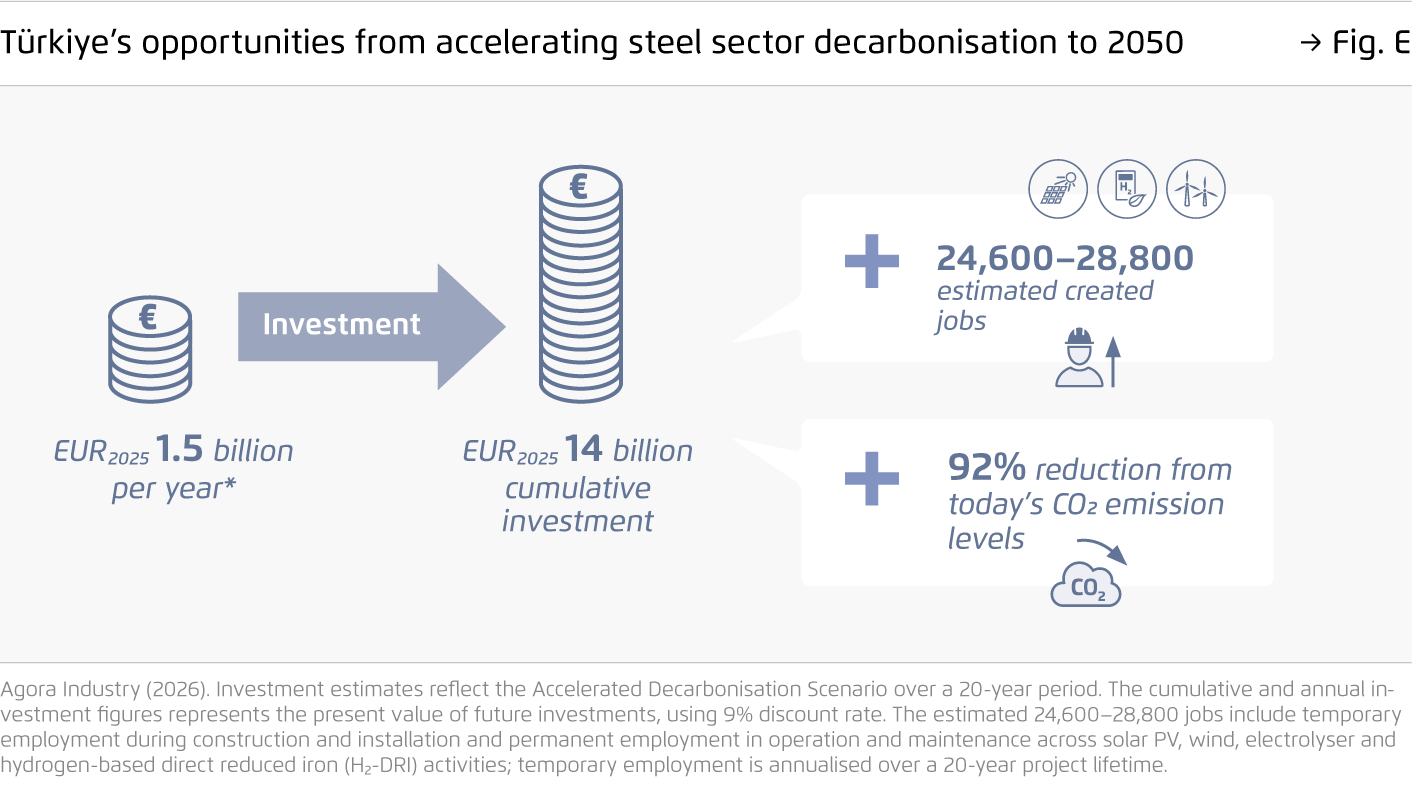
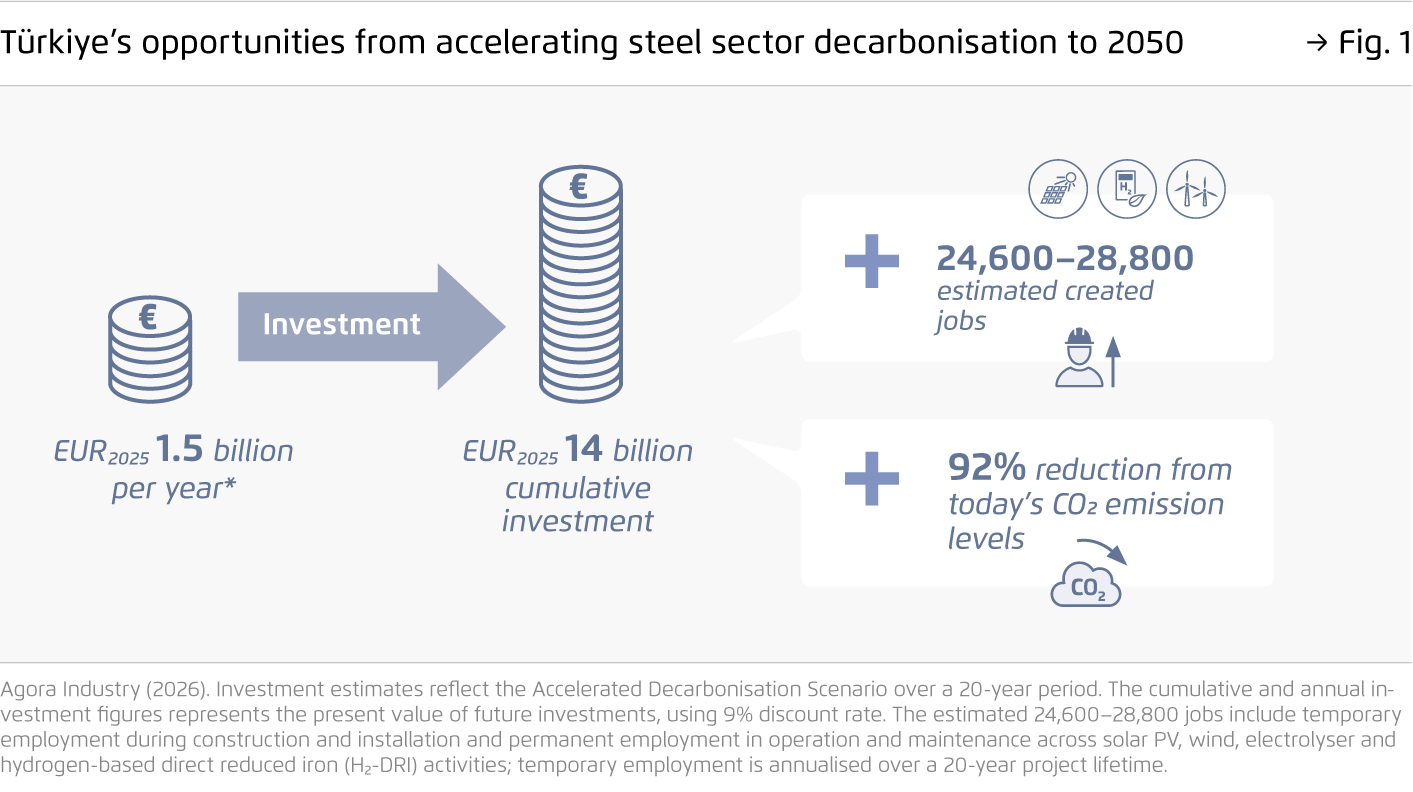
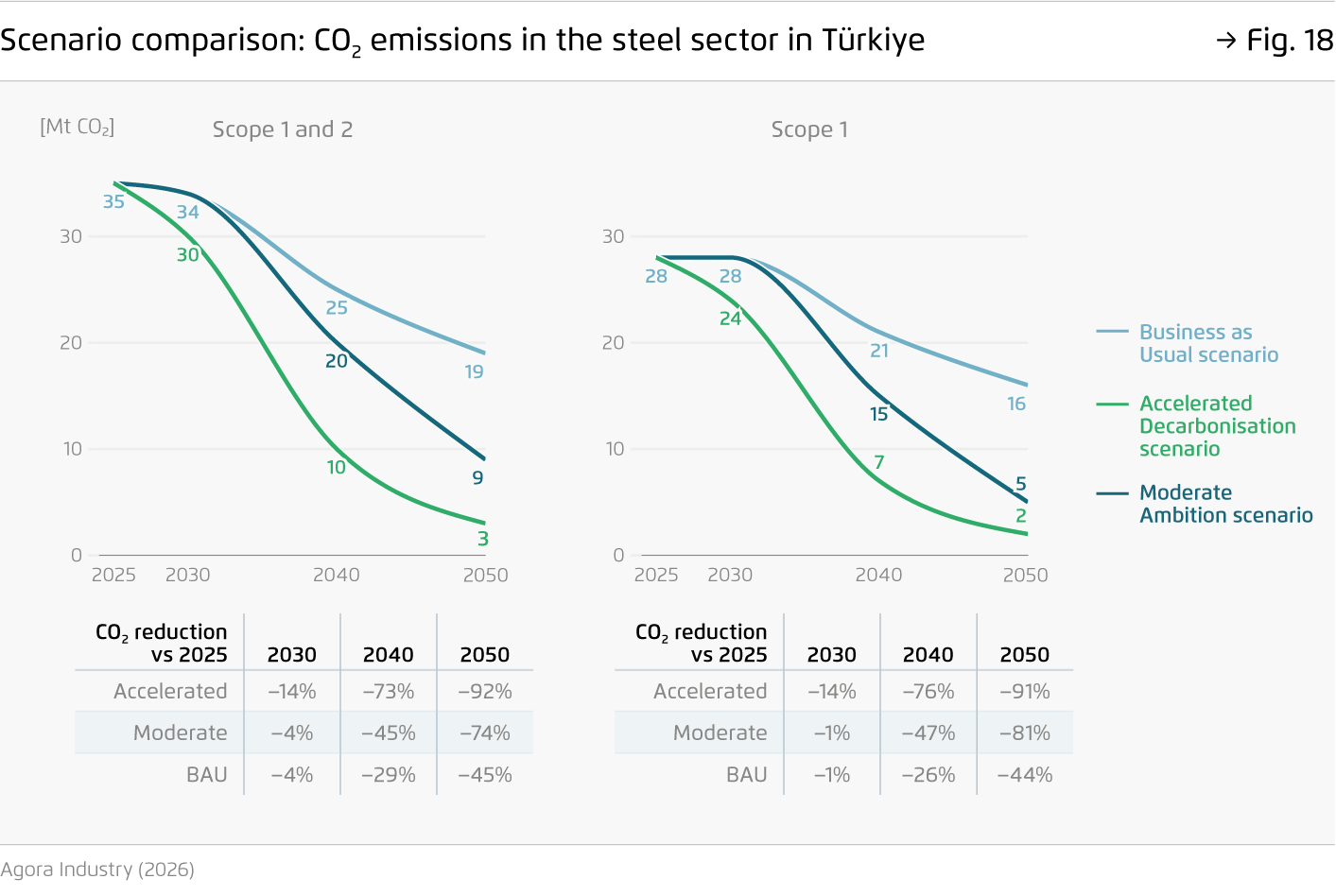
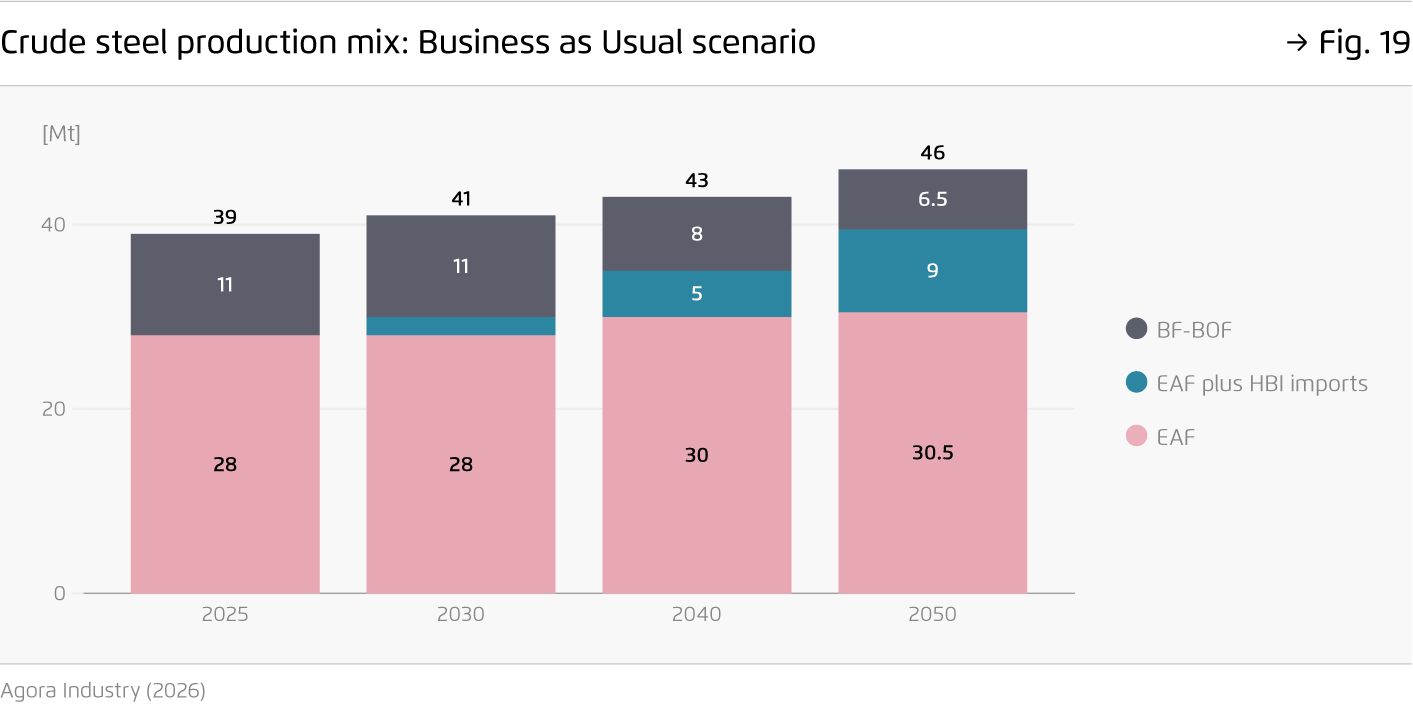
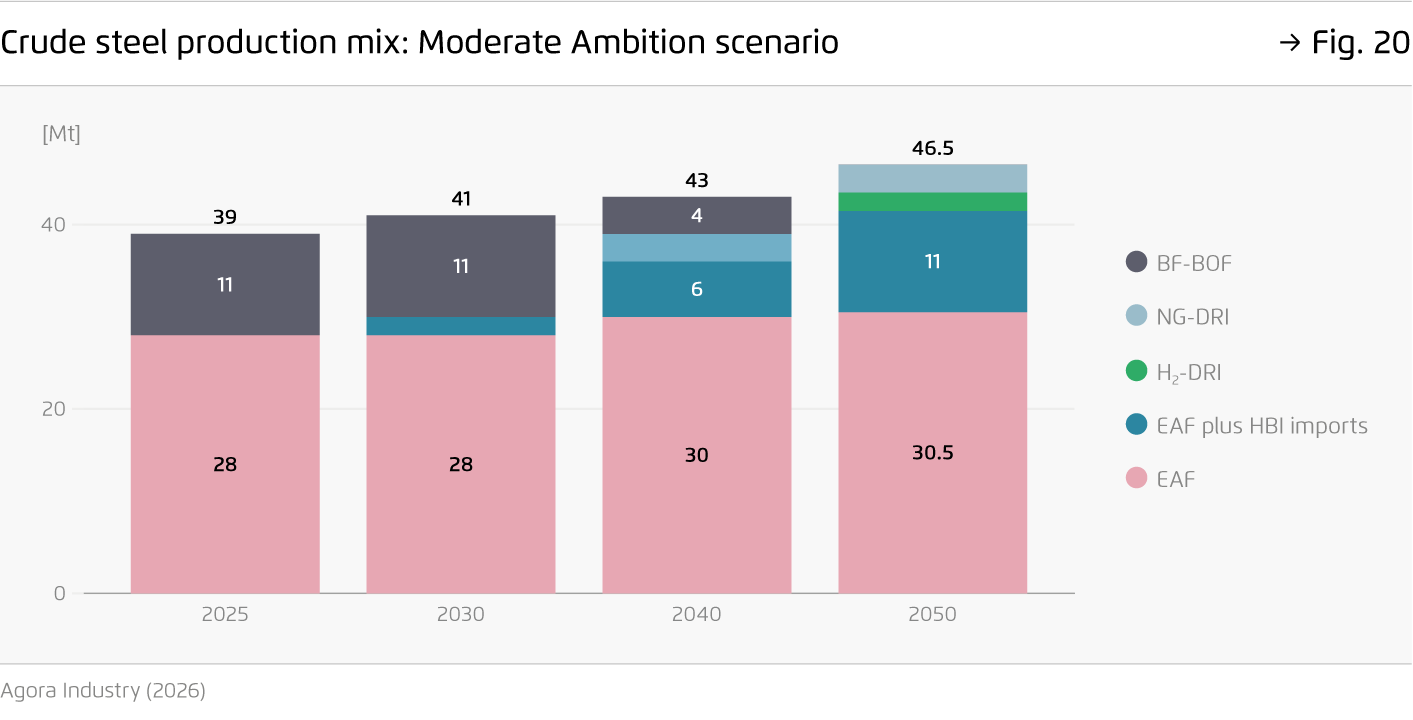
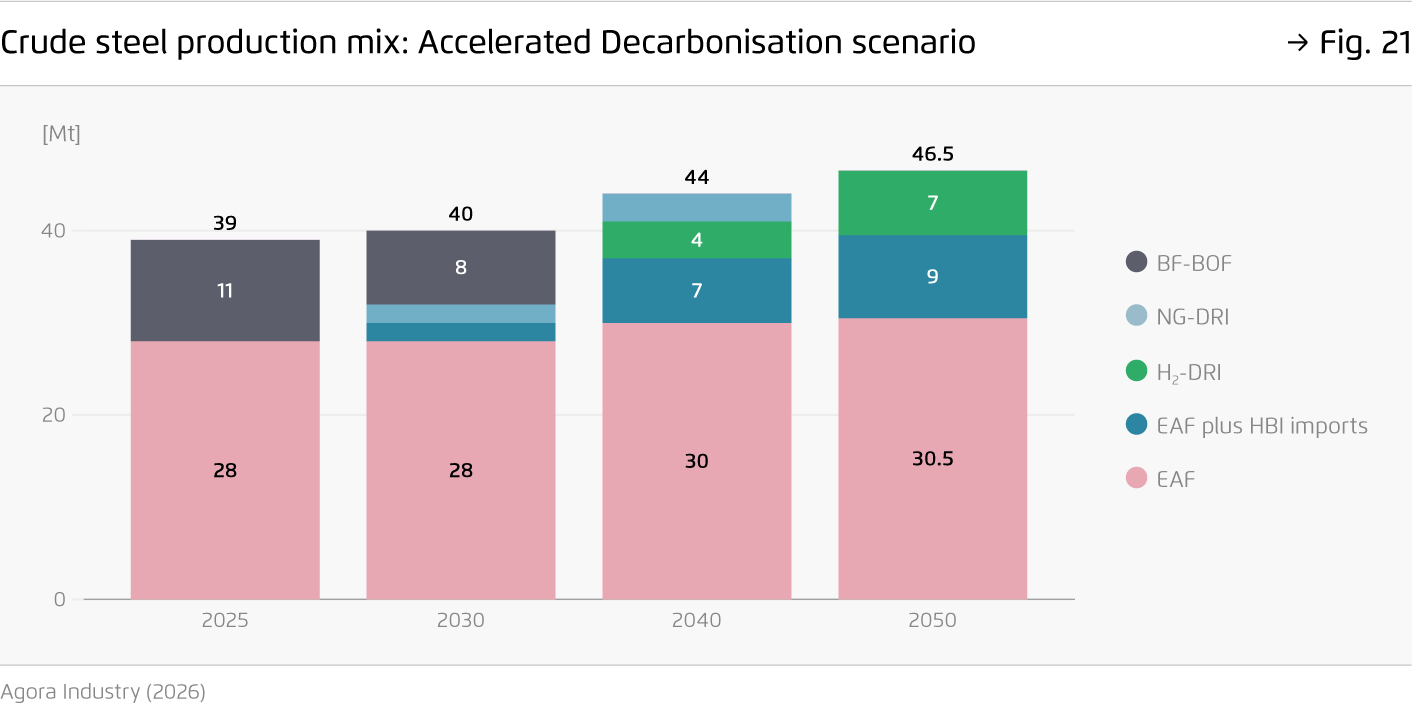
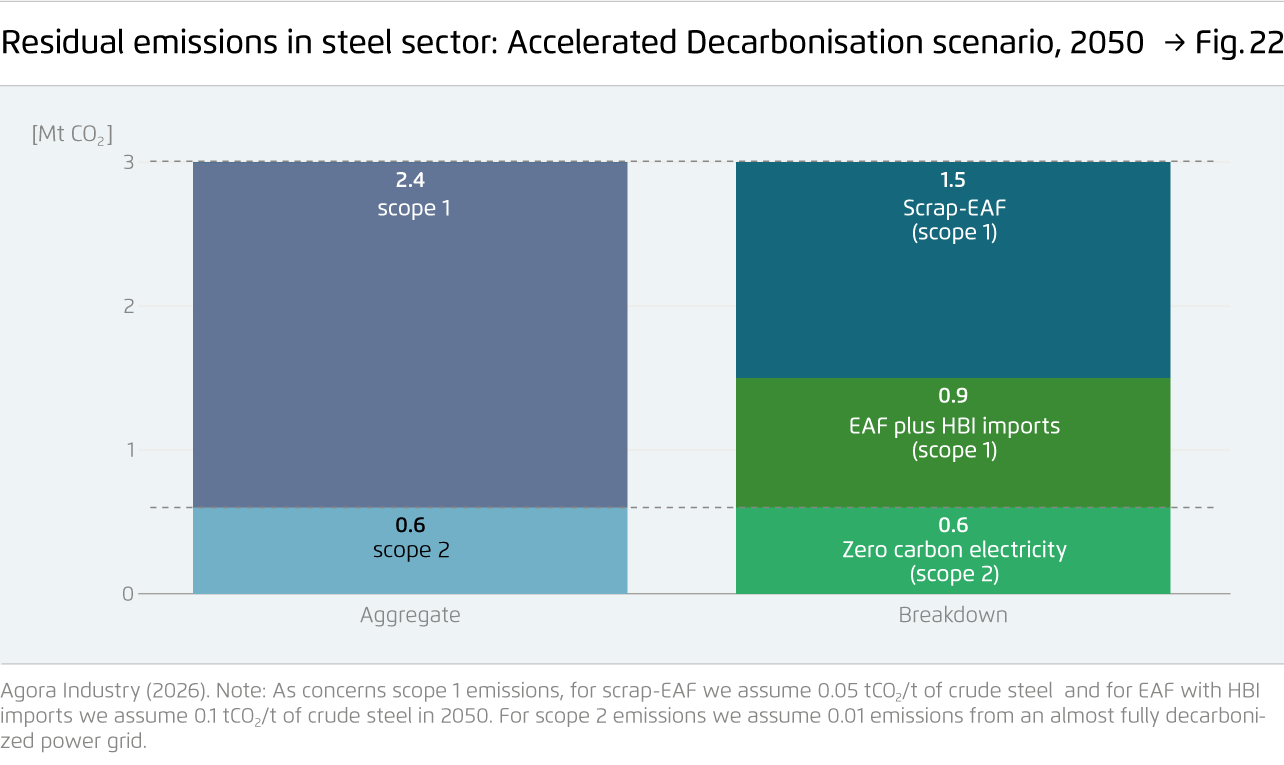
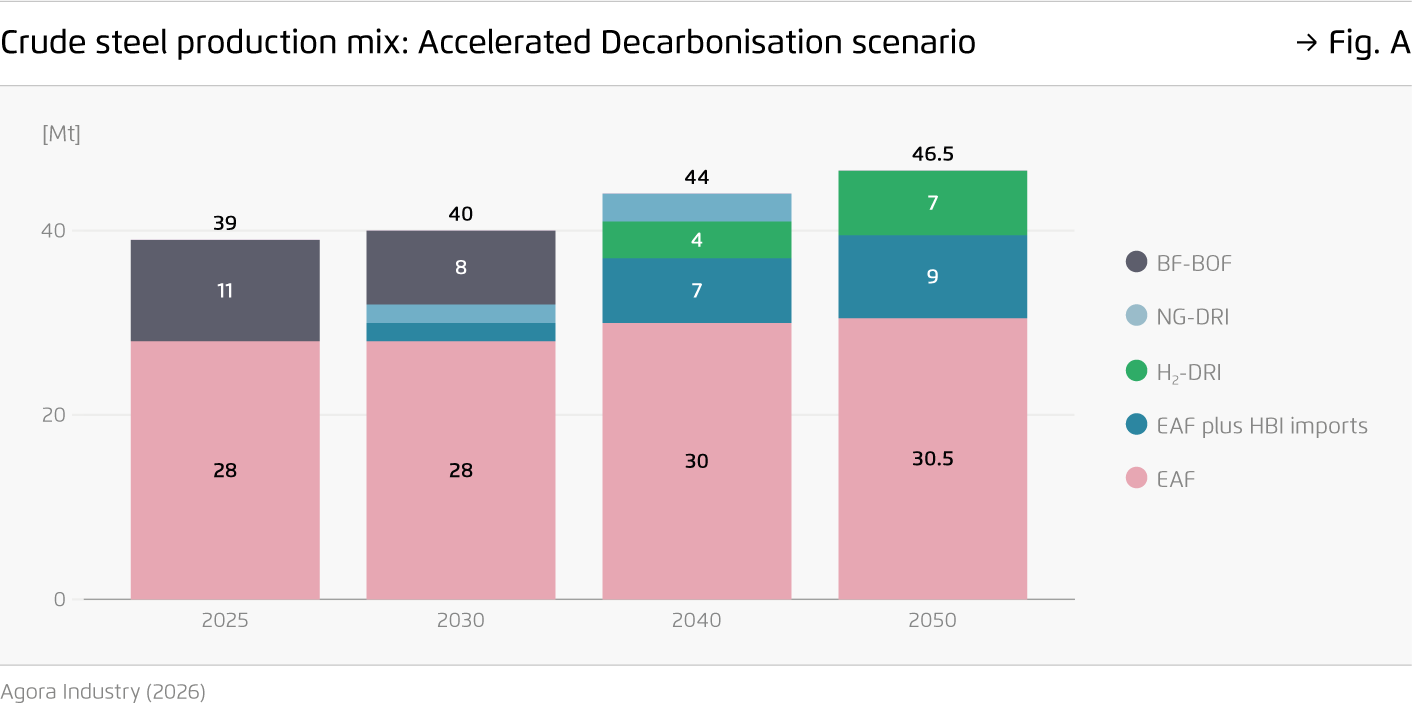
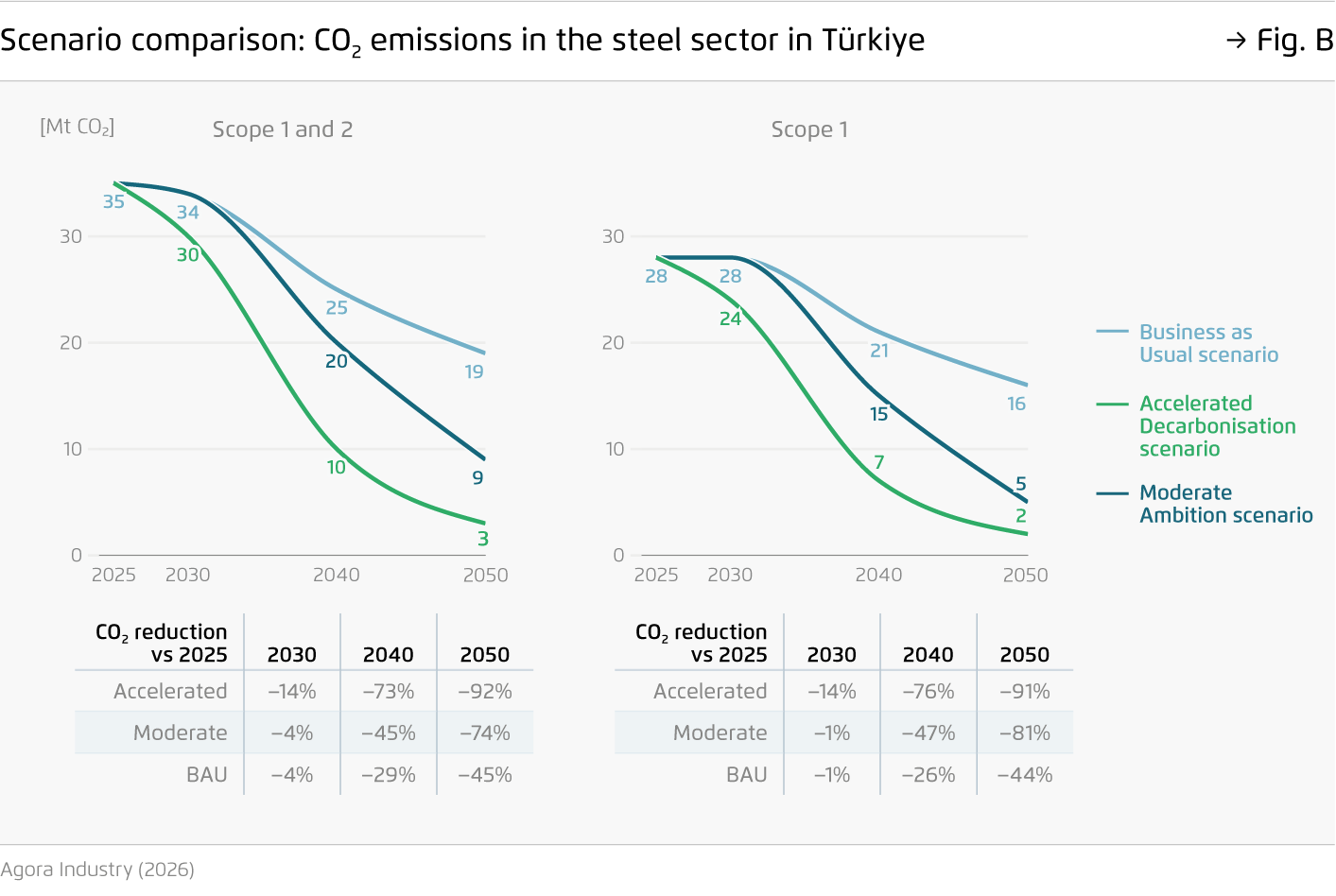
A careful balance of imported and domestically produced near-zero emissions iron would keep value creation in primary steelmaking at home, reduce supply risks and diversify the secondary steel product portfolio. This pathway would cut annual emissions by 92 percent by 2050, supporting Türkiye’s climate neutrality goal.
-
A strong carbon pricing system could give Turkish steel producers the business case for investing in domestic near-zero-emissions iron capacity.
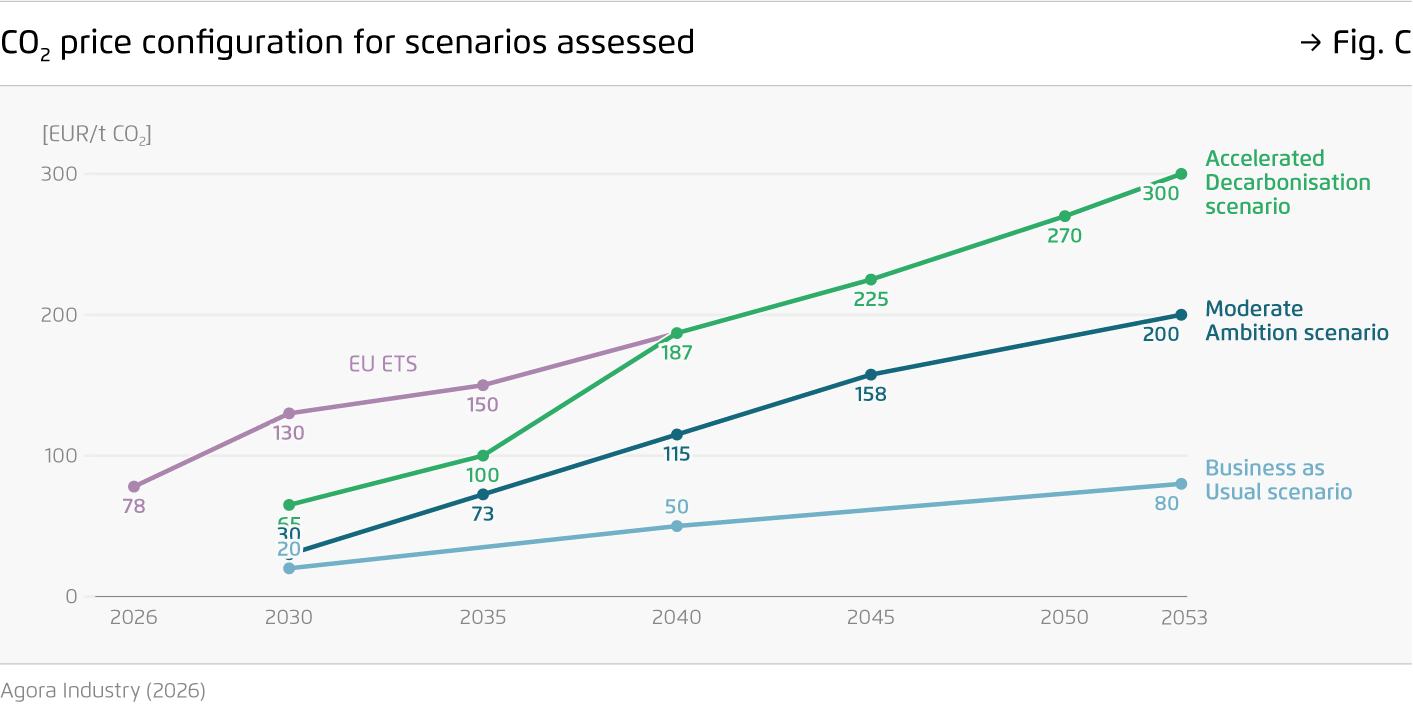
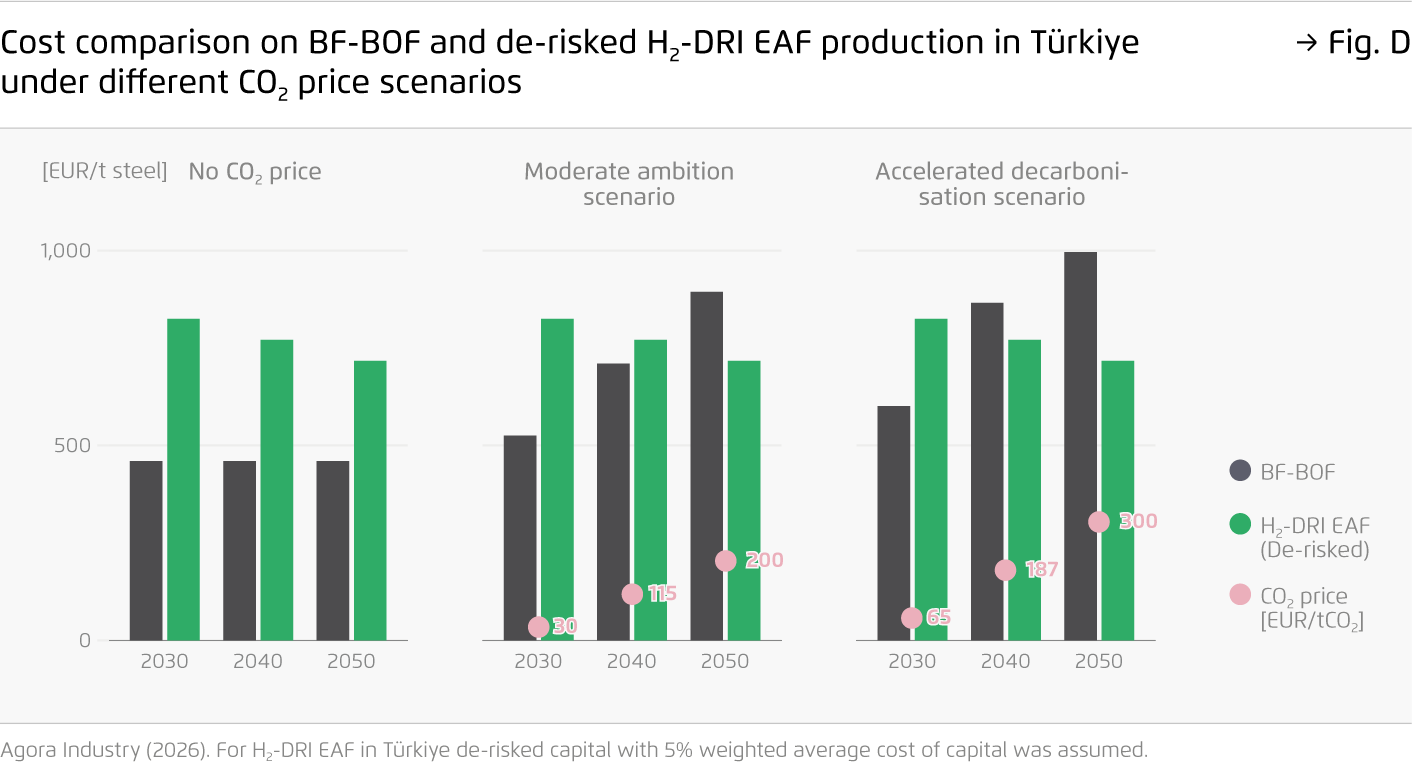
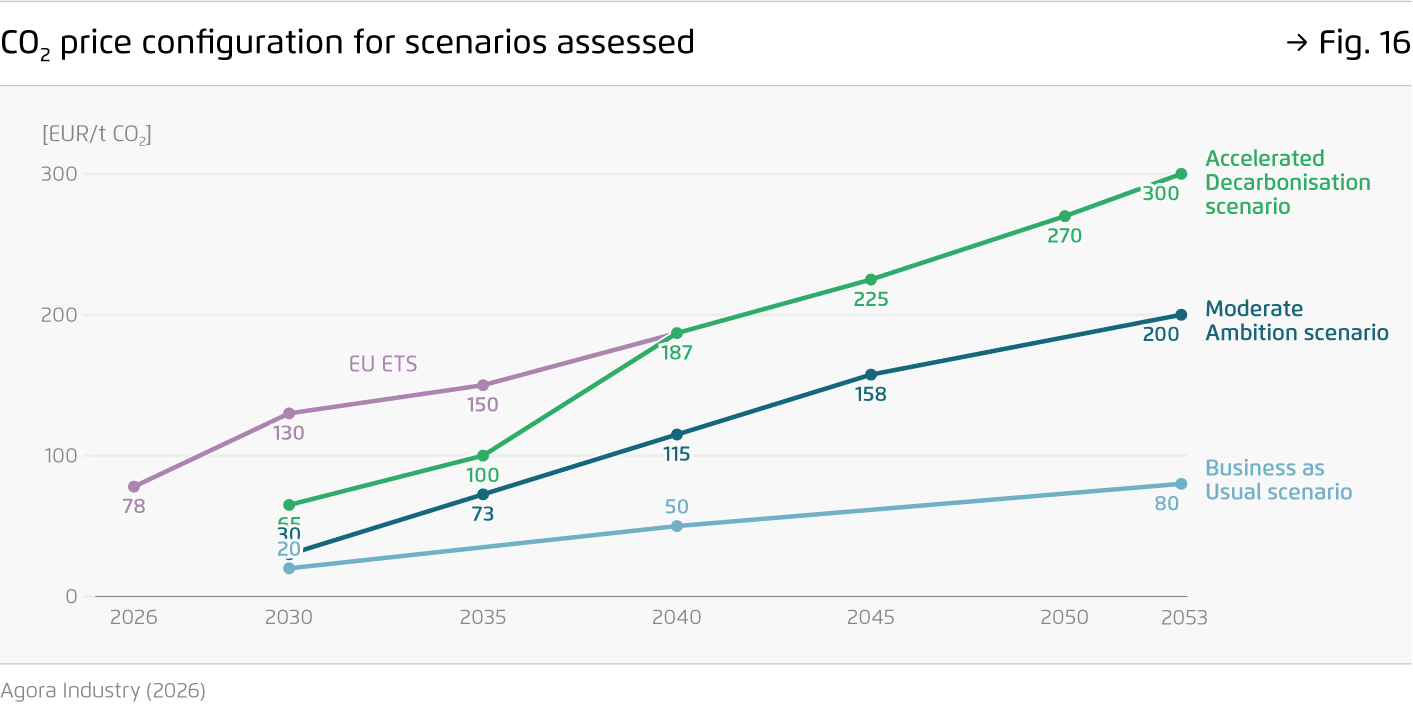
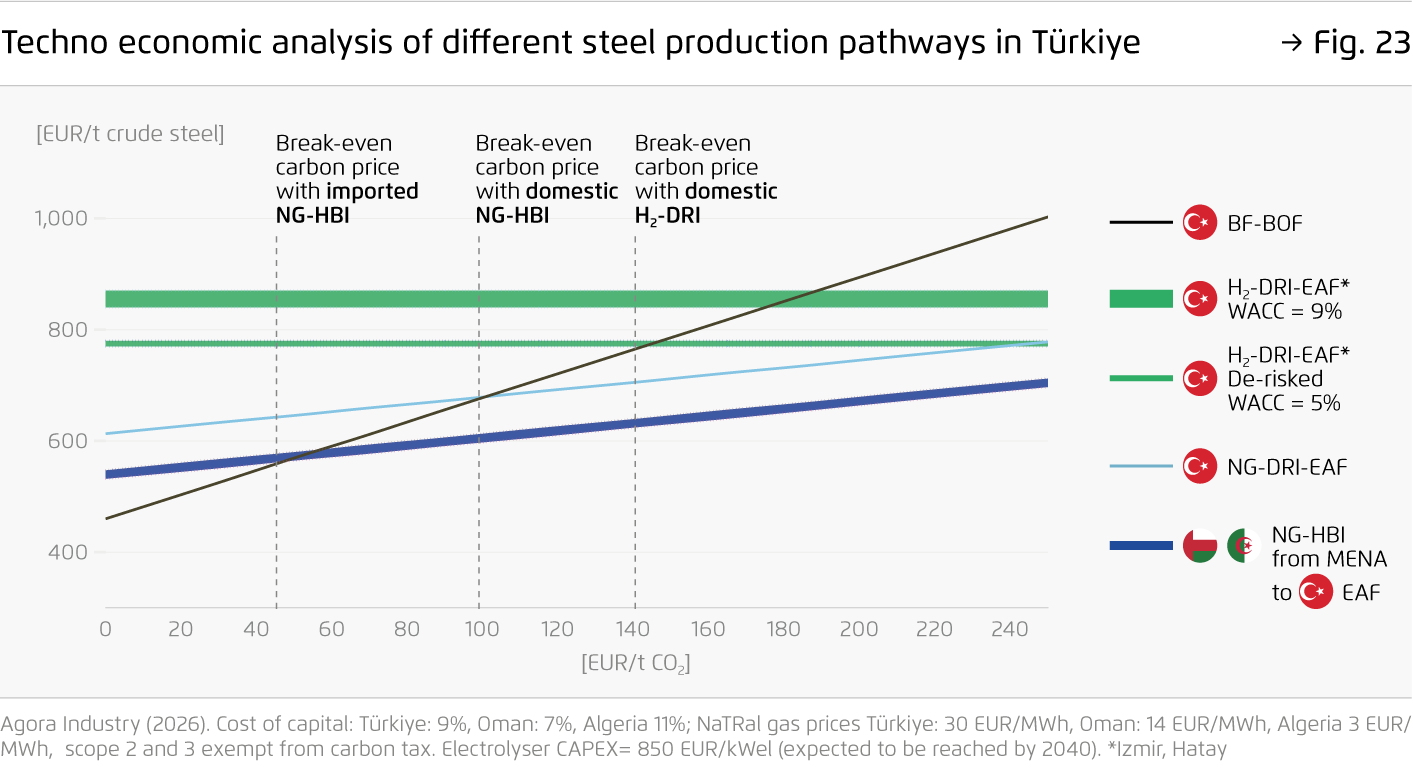
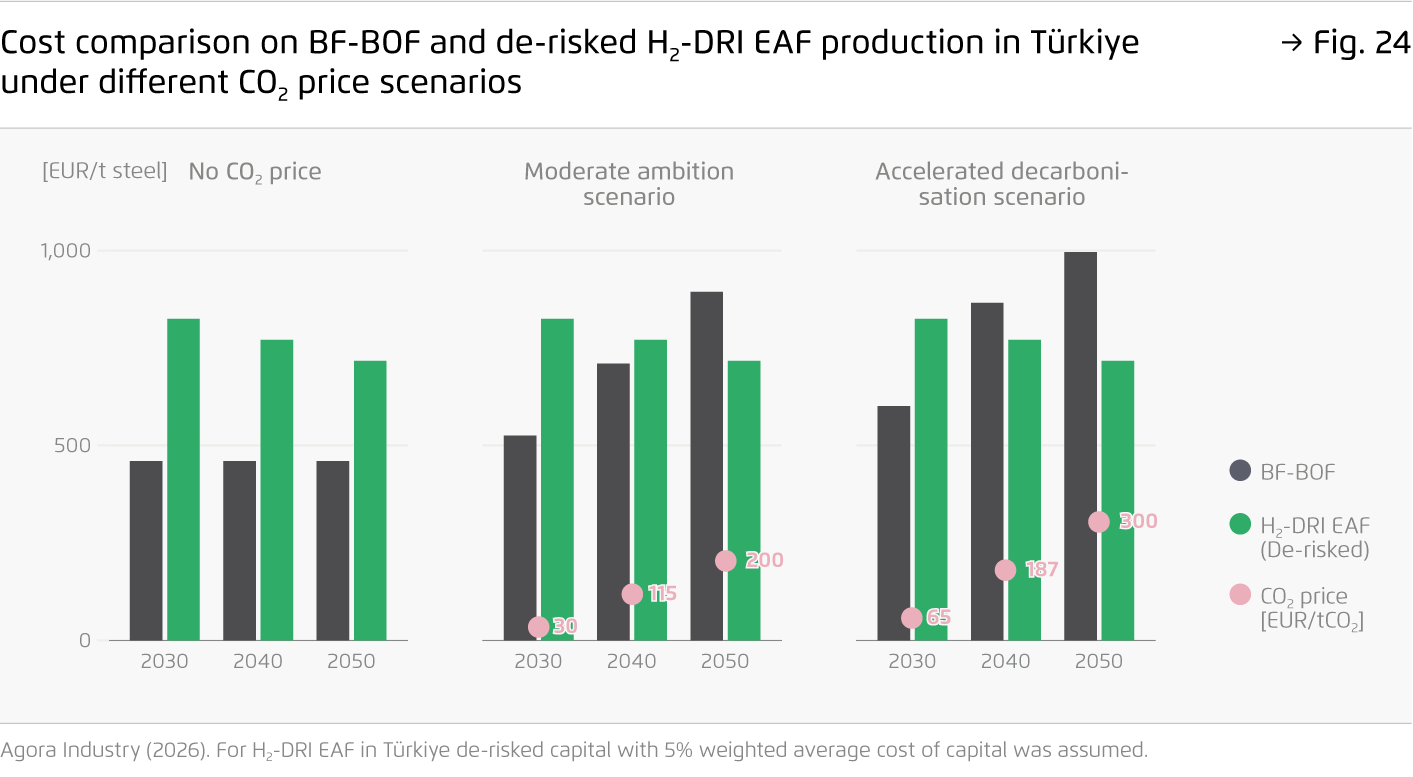
At around 100 euros per tonne of CO₂, steel made with domestic fossil gas-based iron becomes cost-competitive with coal-based production, at around 140 euros hydrogen-based steel follow. This market signal will reward early movers: those who seize it tap into growing demand for low-emission steel, lock in long-term contracts and build resilience against carbon border measures.
-
Carbon pricing revenues can help build a resilient steel sector that secures jobs, drive innovation and make Türkiye a frontrunner in global near-zero emission steel.
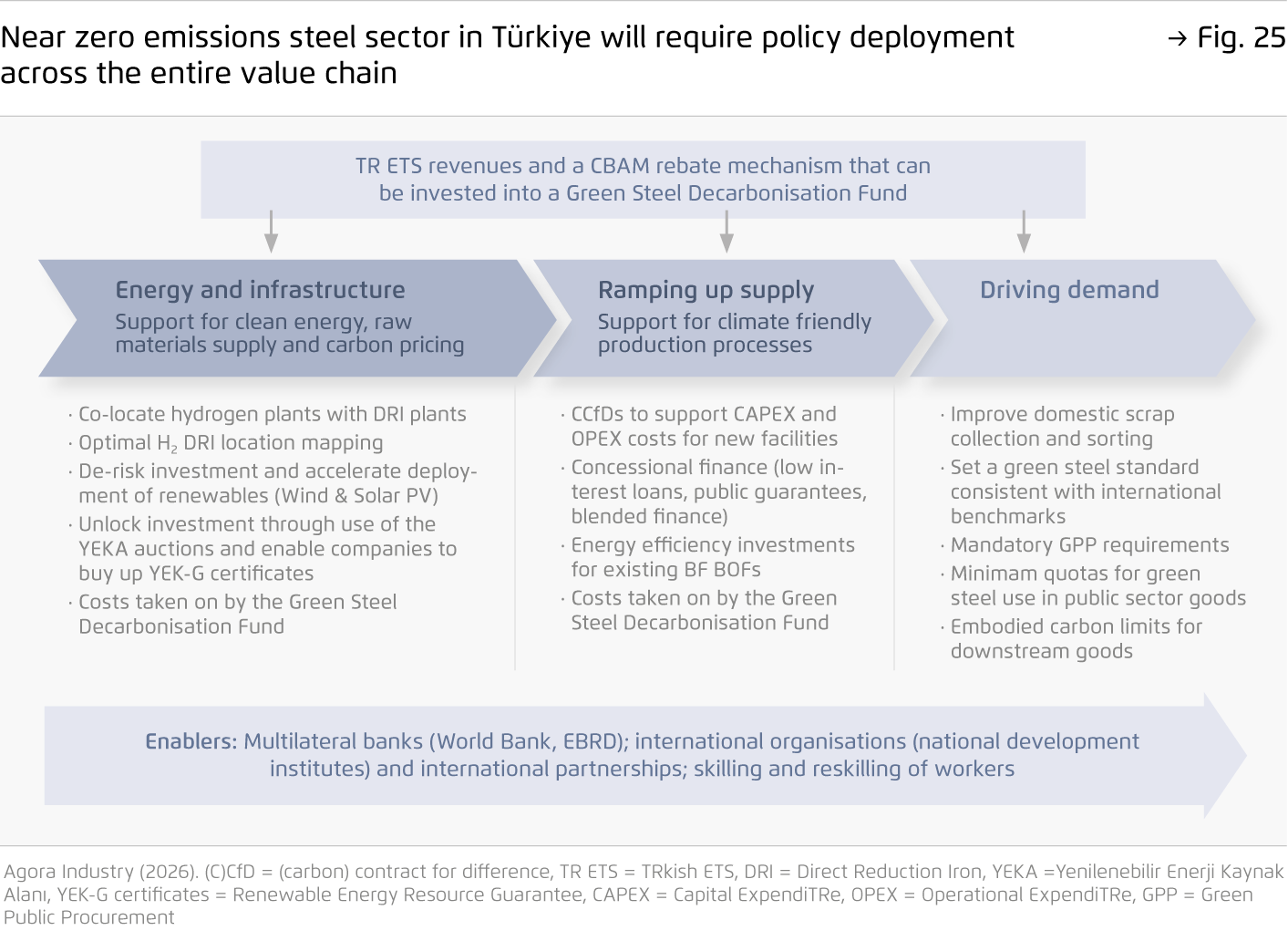
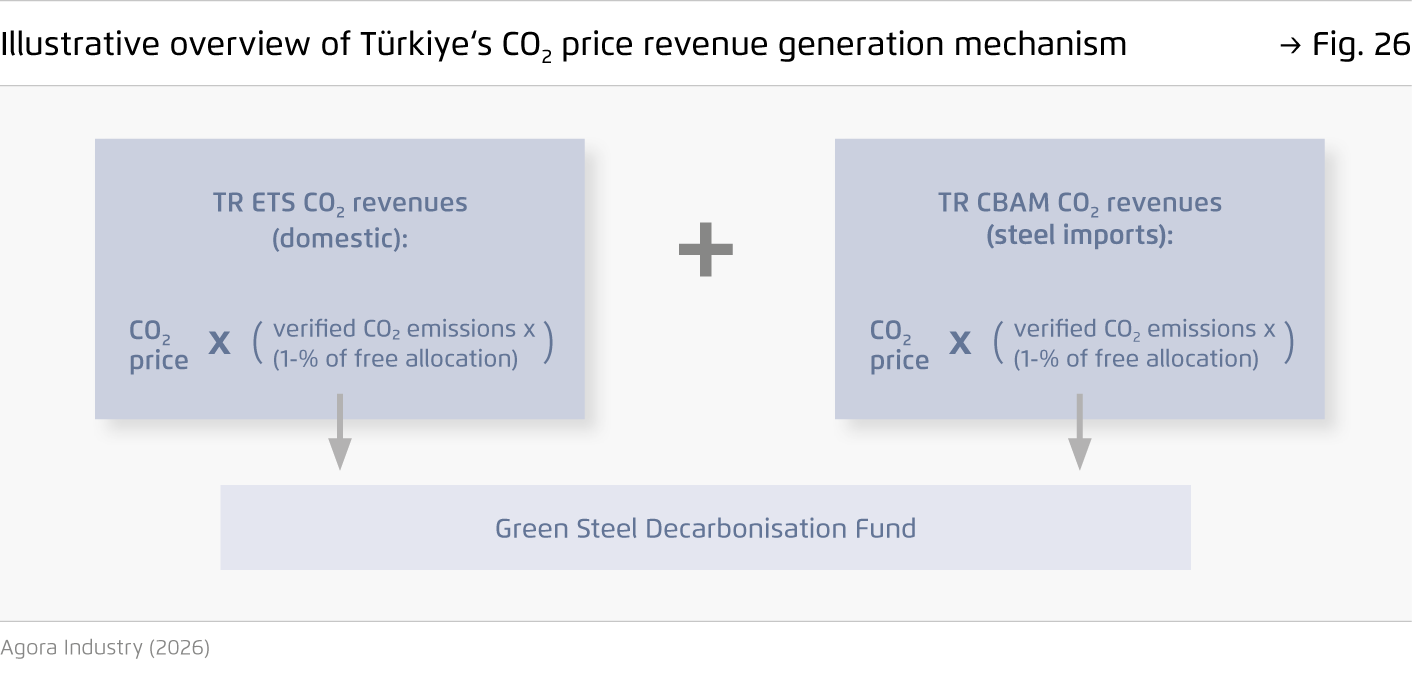
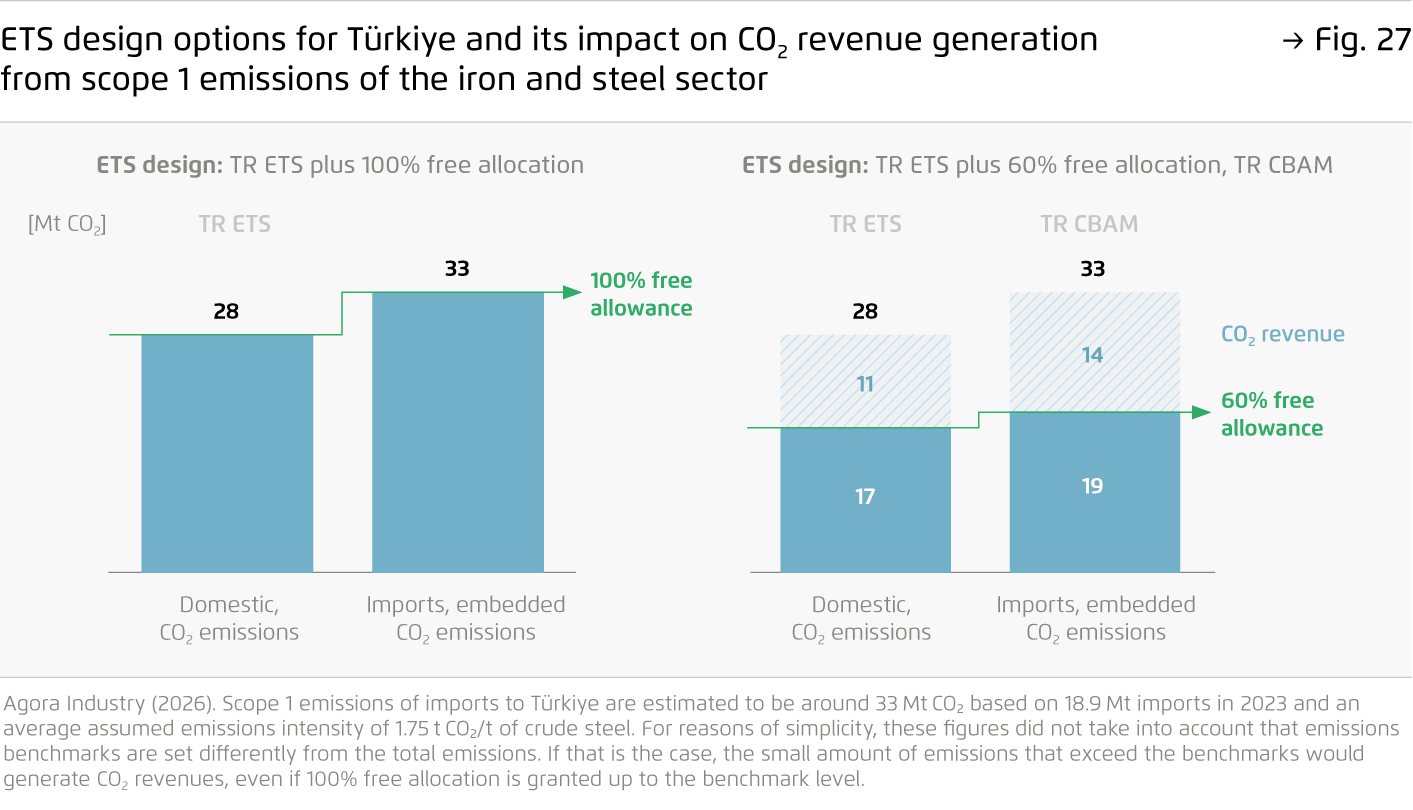
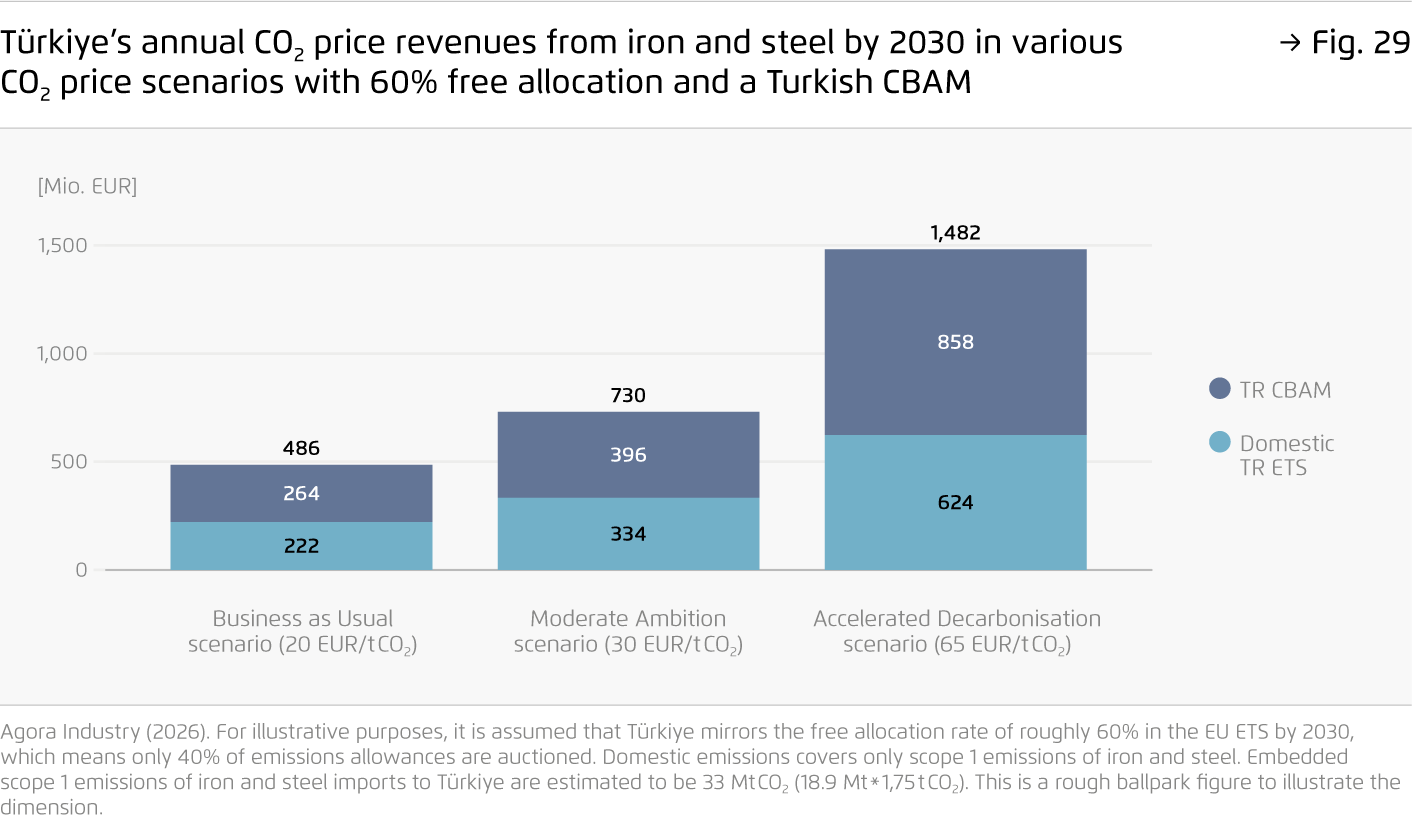
A strong regulatory framework is key, built on the recently introduced domestic Emissions Trading System and supported by a national Carbon Border Adjustment Mechanism. Together, they could generate up to 1.5 billion euros a year. Channelled into a dedicated decarbonisation fund, these revenues could help cover the sector's estimated annual investment needs for the next 20 years.
Transforming Türkiye's steel industry
Roadmap to net zero by 2053

Summary
Türkiye is in a strong position to be at the forefront of global steel transition. This report shows how this transition could strengthen Türkiye’s export competitiveness and resilience, whilst at the same time achieving the national level net zero target by 2053. The report finds that an Accelerated Decarbonisation pathway would have the greatest impact: it preserves domestic primary ironmaking, creates up to 29,000 new jobs and reduces emission by 92 percent by 2050. The key levers for this transition would be domestic deployment of hydrogen-based Direct Reduced Iron, imported low-emission Hot Briquetted Iron, increased scrap collection and recycling, and renewables build-out. Further coordinated policy measures would include the creation of a Green Steel Decarbonisation Fund, contracts for difference and green public procurement. Carbon pricing is a major lever in instigating this transformation and can also provide the financial support if the revenues for exports sent to the EU are subject to a reverse CBAM and revenues on export products to the EU are kept in Türkiye.
Key findings
Bibliographical data
Downloads
-
Study
pdf 2 MB
Transforming Türkiye's steel industry
Roadmap to net zero by 2053
-
Yayın
pdf 2 MB
Türkiye Çelik Sektörü
2053 Net Sıfır Emisyon Yol Haritası
All figures in this publication
Crude steel production mix: Accelerated Decarbonisation scenario
Figure A from Transforming Türkiye's steel industry on page 6
Share:

Scenario comparison: CO2 emissions in the steel sector in Türkiye
Figure B from Transforming Türkiye's steel industry on page 7
Share: