-
Electrification is a strategic lever to safeguard Europe against fossil fuel price volatility and geopolitical risks.
The EU spends hundreds of billions annually on fossil fuel imports, with around 90 percent of oil and gas sourced externally. As process heat accounts for over half of the EU’s industrial energy consumption, its electrification offers a major opportunity to cut emissions and strengthen economic resilience using largely mature and domestic technologies.
-
Low- and medium-temperature processes – which account for half of industrial process heat demand – offer substantial and near-term electrification potential.
About 15 percent of process heat in Europe is low temperature (< 80 degrees Celsius). These processes can already be electrified competitively compared to fossil gas-based applications under the current conditions thanks to the high efficiency of heat pumps.
-
Germany, Italy and Poland show that electrifying low- and medium-temperature industrial heat can outperform fossil and low-carbon alternatives under the right conditions.
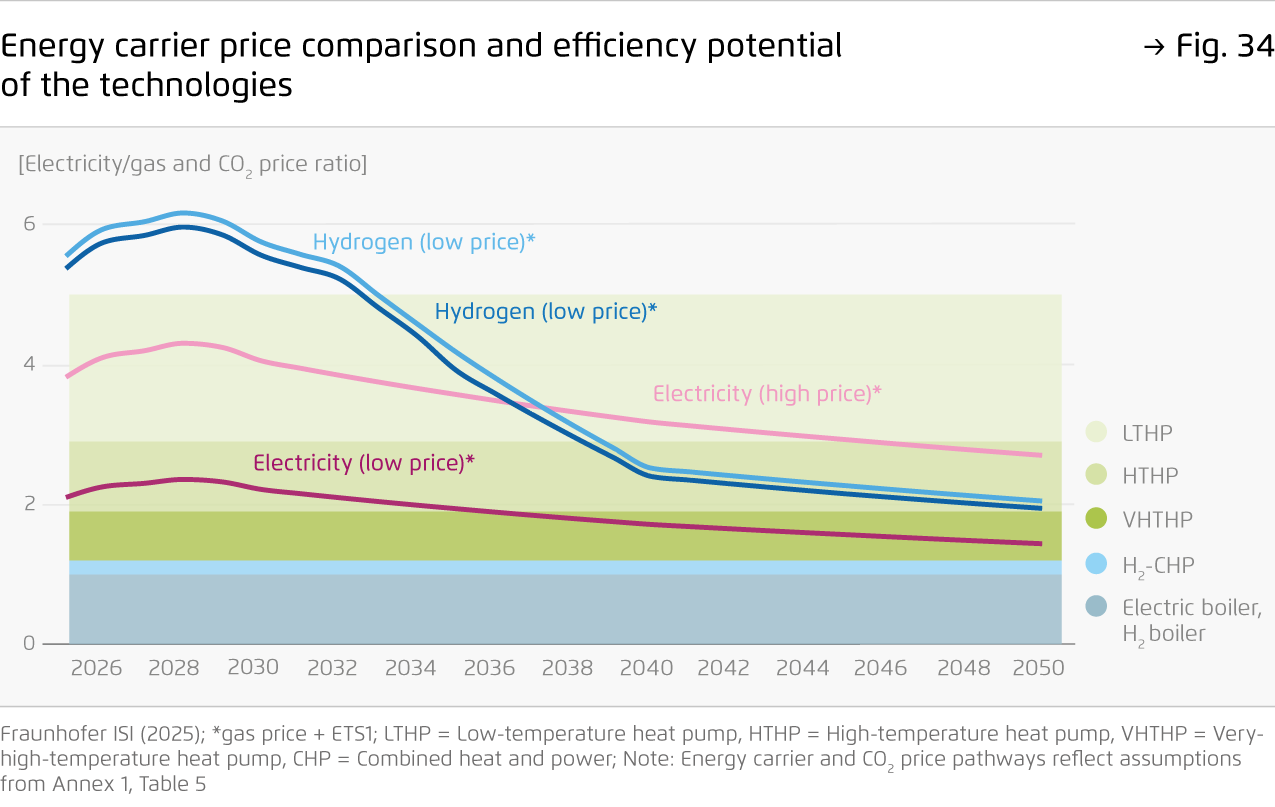
Over 2025–2050, costs could fall by about 20 percent if heat pumps are deployed where feasible and retail electricity prices stay below three times gas prices – compared with today’s 3–5 range. Accelerated renewables deployment, a meaningful carbon price and lower electricity taxation are essential to creating these conditions.
-
The forthcoming Electrification Action Plan should establish a coherent framework to scale electrification.
This should include short-term capital and operating support for heating applications above 80 degrees Celsius, grid fees that reward flexible loads to enable the use of electric boilers, and the integration of industrial demand into grid planning and adequacy assessments. National heat strategies should also provide long-term visibility, while supporting skills development and coordinated infrastructure planning.
The business case for electrifying industrial heat
Evidence from selected EU Member States

What the study is about
Reducing Europe’s reliance on imported fossil fuels while safeguarding industrial competitiveness is an urgent EU priority. Industrial process heat accounts for over half of industrial energy use, making it a critical lever for strengthening energy security and cutting emissions. This study assesses the economic, emission reductions, and energy security potential of electrifying low- and medium-temperature industrial process heat, which represents around half of total process heat demand and can already be supplied by mature technologies such as heat pumps and electric boilers. Drawing on case studies from Germany, Italy and Poland, it shows that under the right conditions – including competitive electricity prices, effective carbon pricing, and supportive industrial policy - electrification can outperform fossil-based and other low-carbon alternatives across in terms of costs, emissions, and energy savings.
Key findings
Summary on "The business case for electrifying industrial heat"
Against a backdrop of intensifying geopolitical tensions and accelerating decarbonisation imperatives, electrification has emerged as a strategic pathway to enhance Europe’s resilience and autonomy, and if pursued efficiently, its competitiveness. In 2023, the EU’s energy import dependency was more than twice China’s and more than three times higher than that of the US. This imbalance stems from the EU’s continued reliance on imported oil and gas, which exceeds 90 percent of its overall demand. Such dependence exposes Europe to volatile prices – including on electricity markets for as long as fossil fuels continue to set prices at the margin – and supply disruptions. In addition, it results in a vast transfer of wealth to external suppliers. Despite the 2022 gas crisis having eased, the EU still spent 376 billion euros on imported fossil fuels in 2024.
Electrification, particularly if supported by increased renewable and low-carbon power generation, offers a means to reverse this predicament while reducing GHG emissions at the same time. By substituting imported fossil fuels with domestically produced electricity, Europe can retain value within its economy, enhance energy security and lay the foundations for a more sustainable energy system and competitive industrial fabric. Recent EU initiatives reflect this strategic reorientation. The RePowerEU plan sought to end dependence on Russian fossil fuels, while the Clean Industrial Deal framed electrification as central to Europe’s competitiveness, setting an indicative target for Europe to use electricity to cover 32 percent of final energy consumption by 2030. Building on these, an Electrification Action Plan is expected in 2026.
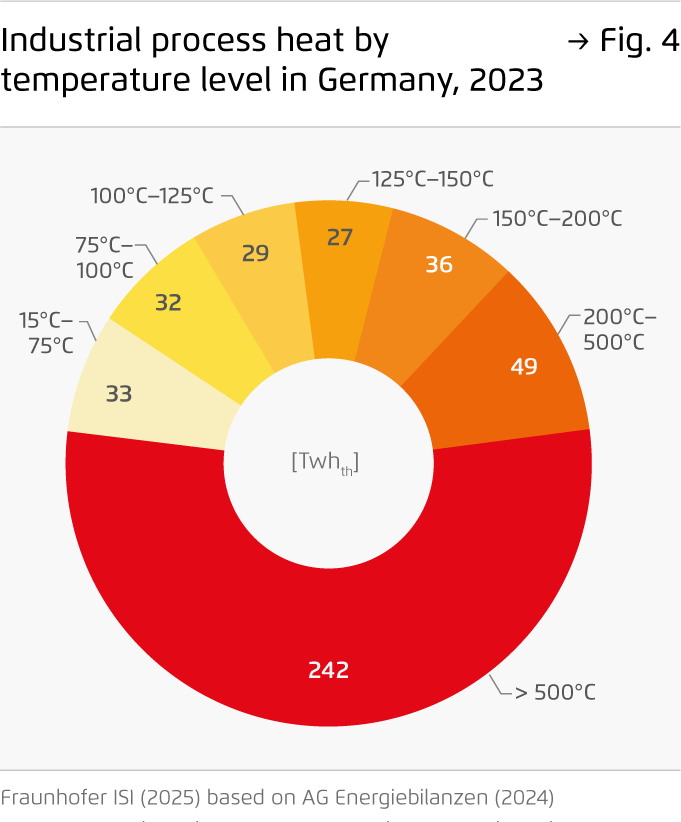
Within this broader shift, industrial electrification stands out as both a challenge and an opportunity. Industry has been traditionally viewed as “hard to abate”, yet this perception is changing. Process heat in particular – accounting for about half of European industry’s final energy consumption and three quarters of its emissions – could be electrified for around 60 percent of its current fuel use using mature electrification technologies, rising to 90 percent with technologies expected by 2035.
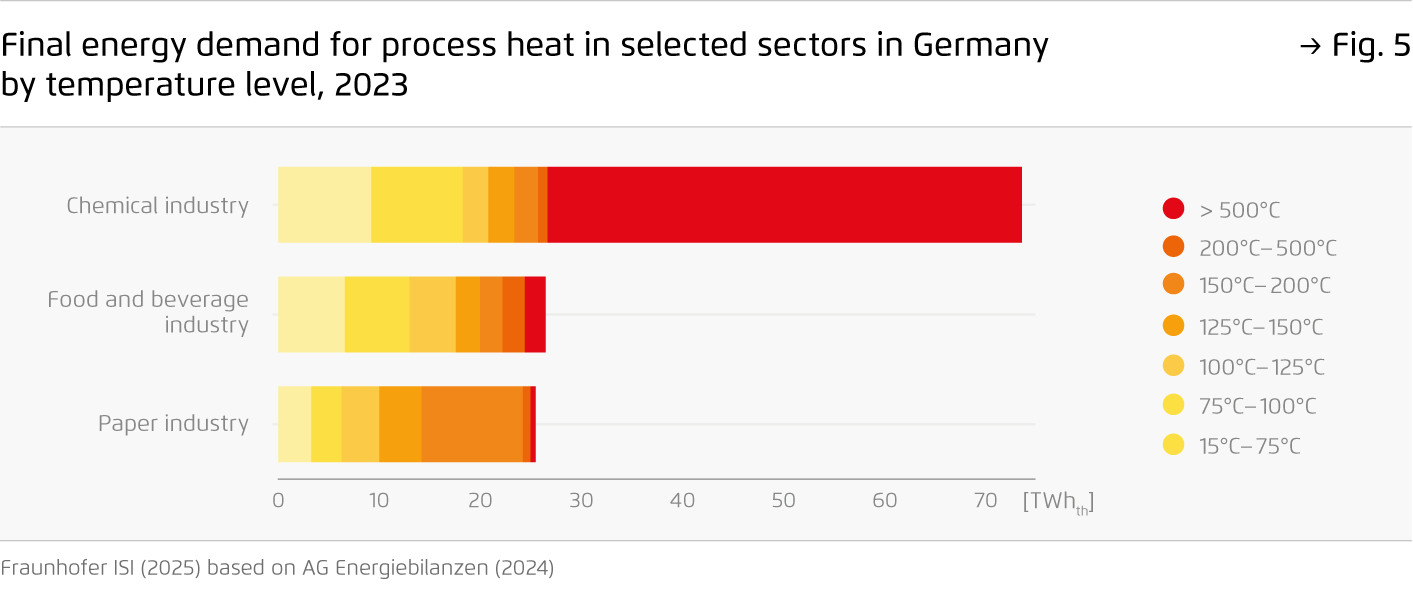
In 2019, fossil fuels combustion supplied about three-quarters of industrial process heat in Europe, while electricity accounting for only 4 percent, largely concentrated in electric arc furnaces used for secondary steelmaking. However, low- and medium-temperature processes – which cover almost the entire heat range in the food and beverage, pulp and paper and textile industries, as well as a significant portion of process heat demand in the chemical industry – entail the greatest electrification potential since their respective heat demand aligns well with the operating range of mature electric heat appliances. Heat pumps, capable of delivering temperatures of up to 165 degrees Celsius today and potentially of up to 300 degrees Celsius by 2035, achieve high efficiencies by transforming rather than generating heat – making them suitable for e.g. drying, sterilising and pasteurising processes. Electric boilers complement them for higher-temperature or steam applications and can be easily integrated into existing systems.
Against this backdrop, this study investigates the economic, environmental and energy security case for directly electrifying industrial process heat by comparison with fossil and low-carbon alternatives under varying national and sectoral conditions. It focuses on three EU Member States characterised by a strong industrial base and a significant reliance on fossil gas – Germany, Italy and Poland – to ascertain the impact of different power mixes and industrial specialisations. It uses scenario analyses to evaluate which conditions are required for electrification to strengthen Europe’s industrial competitiveness while further reducing emissions and reliance on imported fuels.
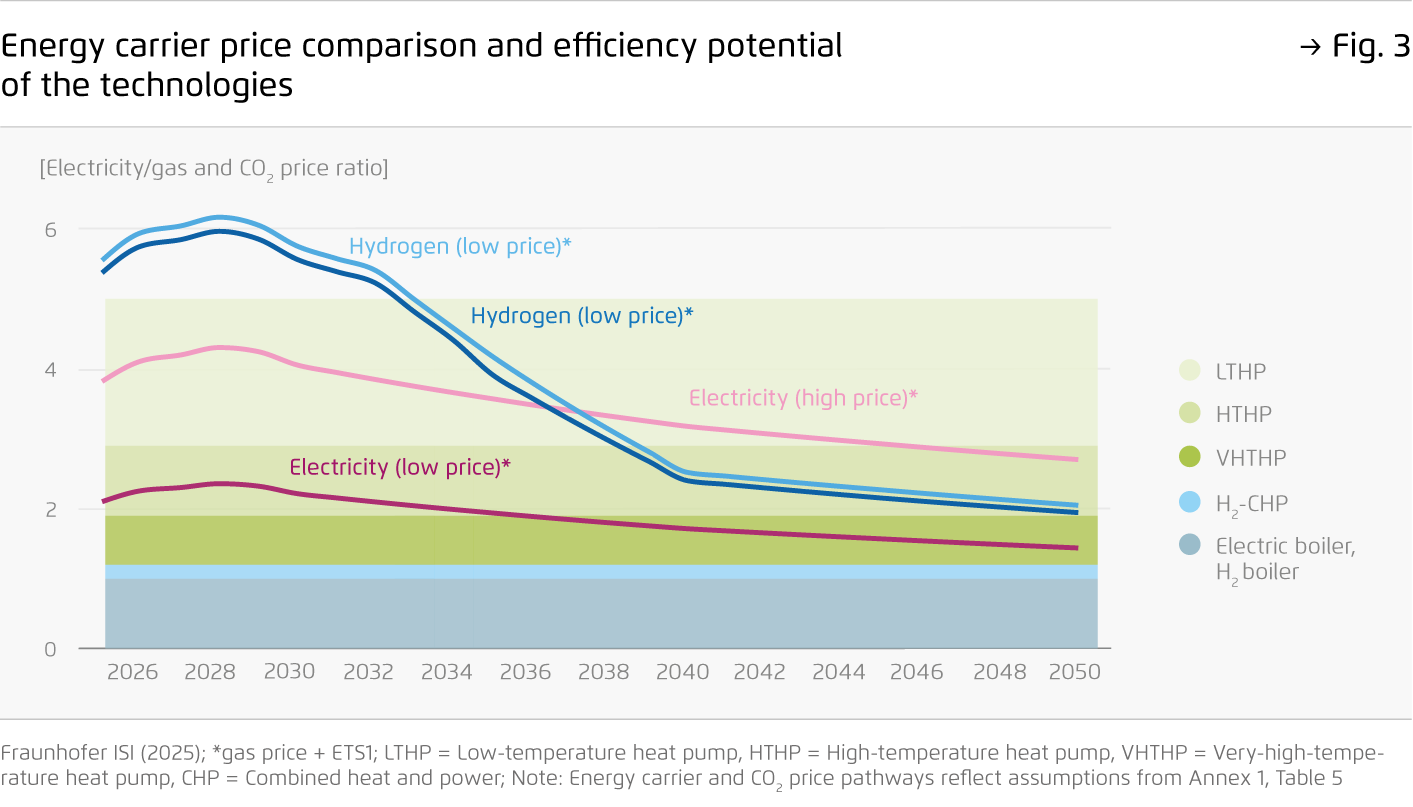
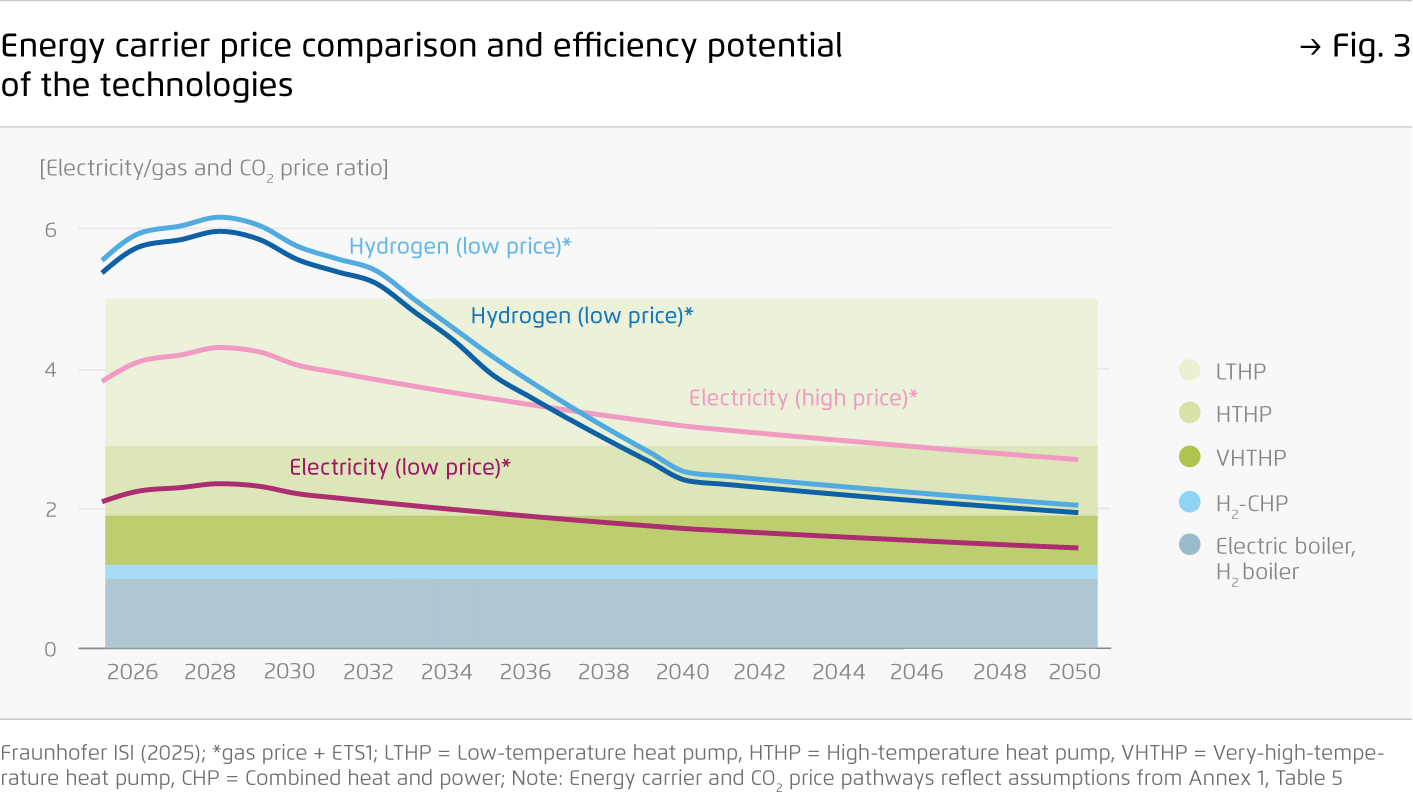
The results of the case studies are broadly consistent across Germany, Italy and Poland: over the considered timeframe (2025–2050), direct electrification is the most effective and scalable way to cut emissions and reduce energy use for low- and medium-temperature process heat. Electrification is generally already cost competitive today for low-temperature heat (<80 degrees Celsius) due to the high efficiency of low-temperature heat pumps. Their high coefficient of performance allows them to remain economical even when electricity is four to five times more expensive than gas. However, to unlock the wider benefits of electrifying medium temperature heat and to ensure industry can decarbonise competitively, the electricity-to-gas price ratio needs to fall substantially – ideally to the 1.5–2.8 range. This can be achieved by lowering taxes and levies on electricity (e.g., by shifting the tax burden from electricity towards gas) in conjunction with effective and predictable carbon pricing.
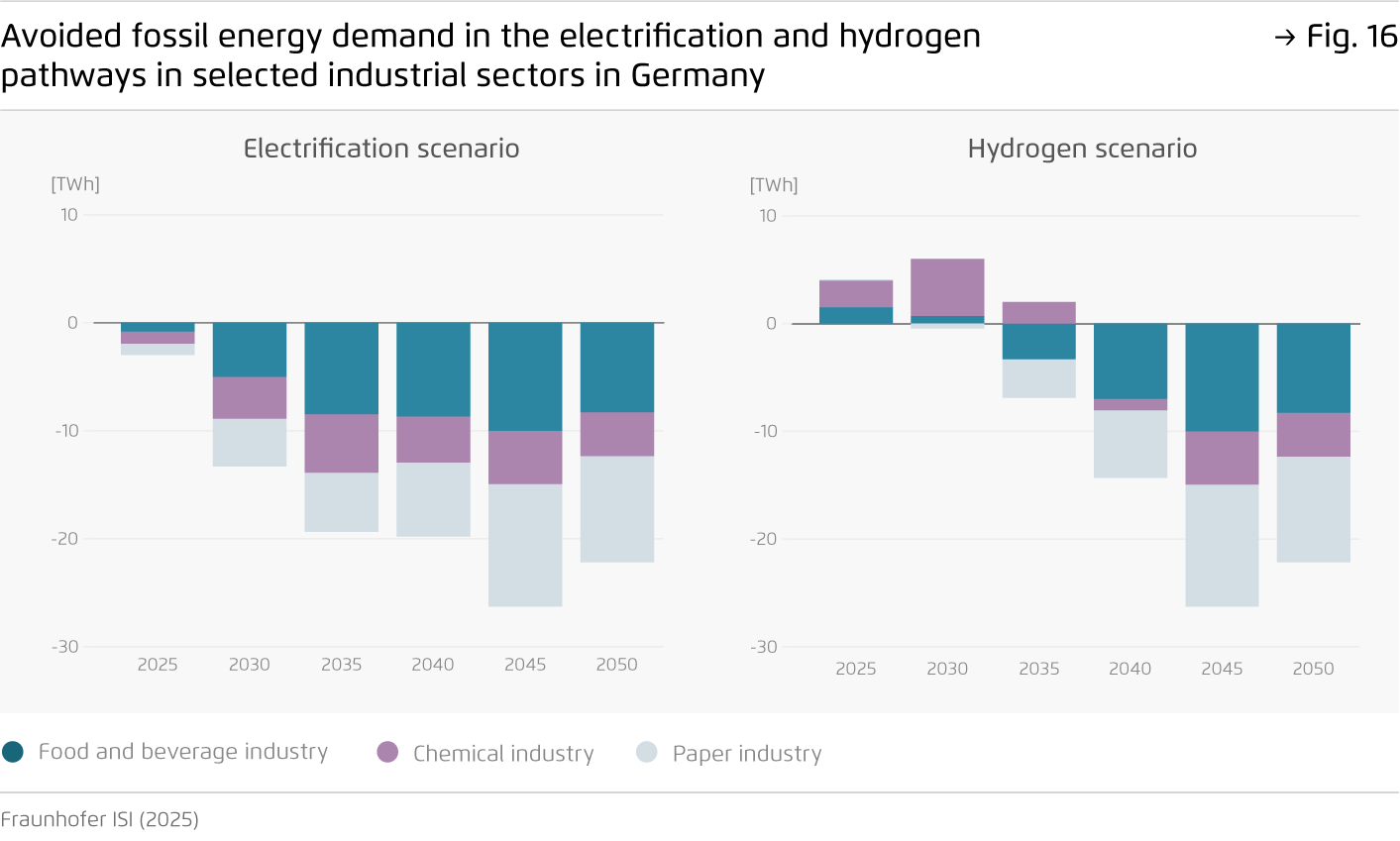
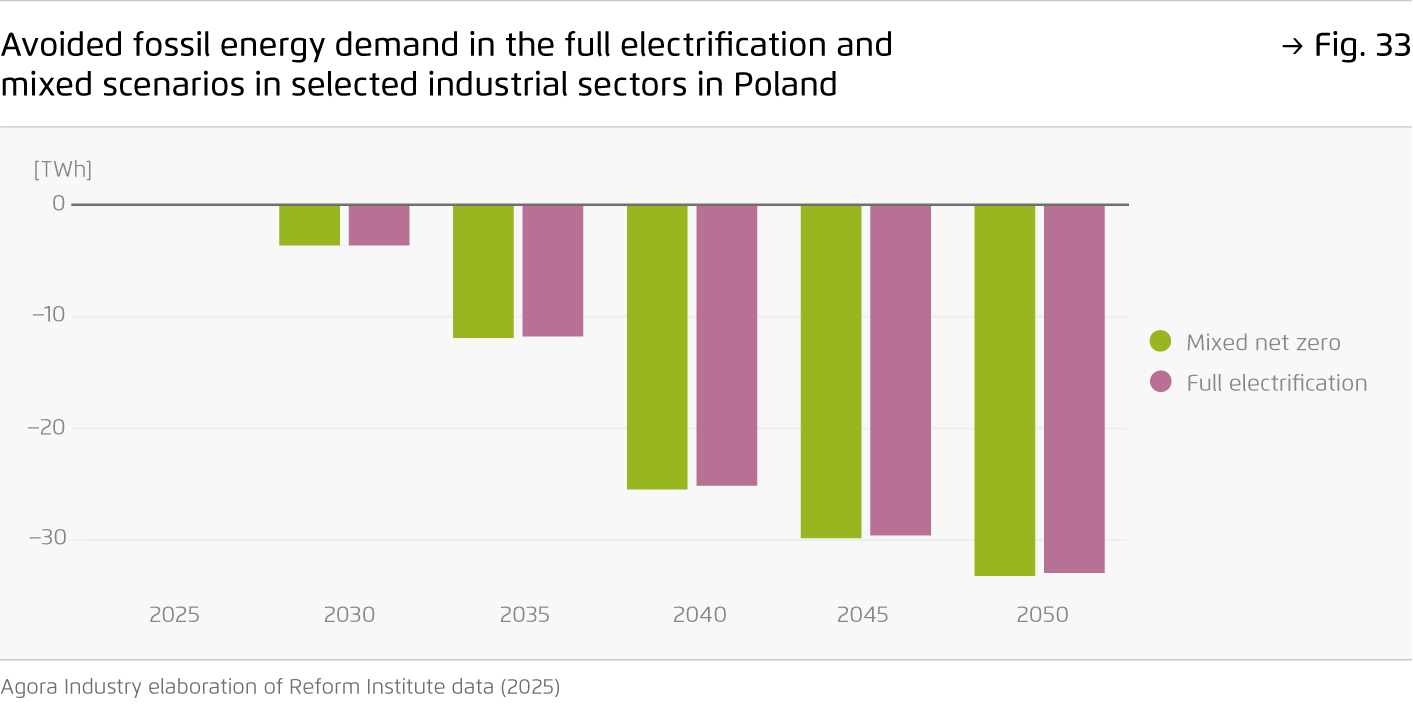
In all countries, electrification-focused pathways deliver higher primary energy savings than the alternative pathways, delivering relevant energy security benefits. Hydrogen would only contribute to reducing emissions at a later date, thus resulting in higher cumulative emissions and entailing substantially higher costs than electrification pathways. The use of biomethane remains contingent on substantial subsidies that could well increase the overall costs of the transition compared to direct electrification. Though sustainable solid biomass appears to deliver cost gains, its use remains constrained by the uncertainty of its availability – an issue that also applies to the other low-carbon alternatives to direct electrification. In addition, given the limited availability of sustainable biomass, using it in sectors that are easy to electrify would be to the detriment of more valuable material uses - an externality that is not currently priced (Agora Energiewende et al., forthcoming).
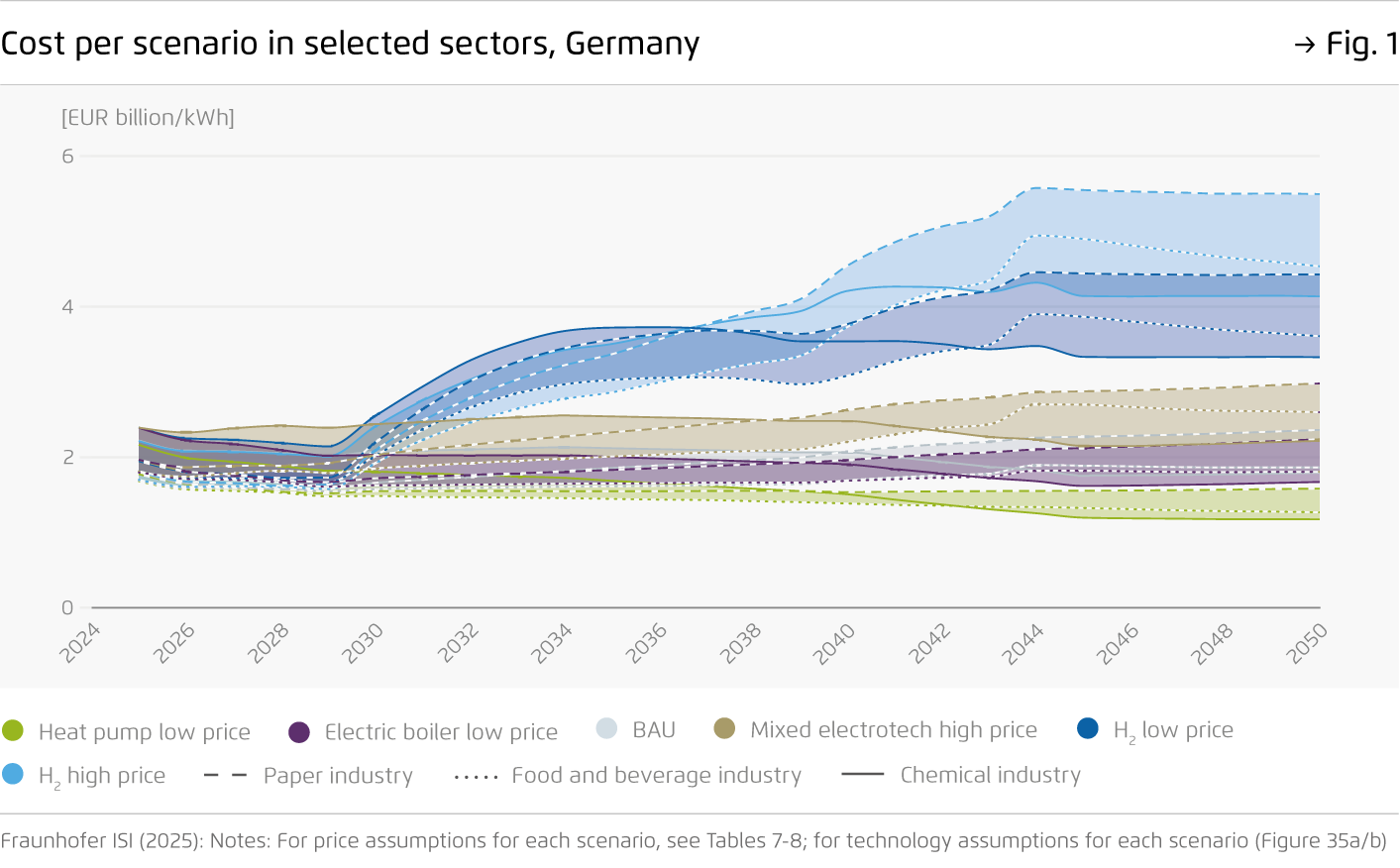
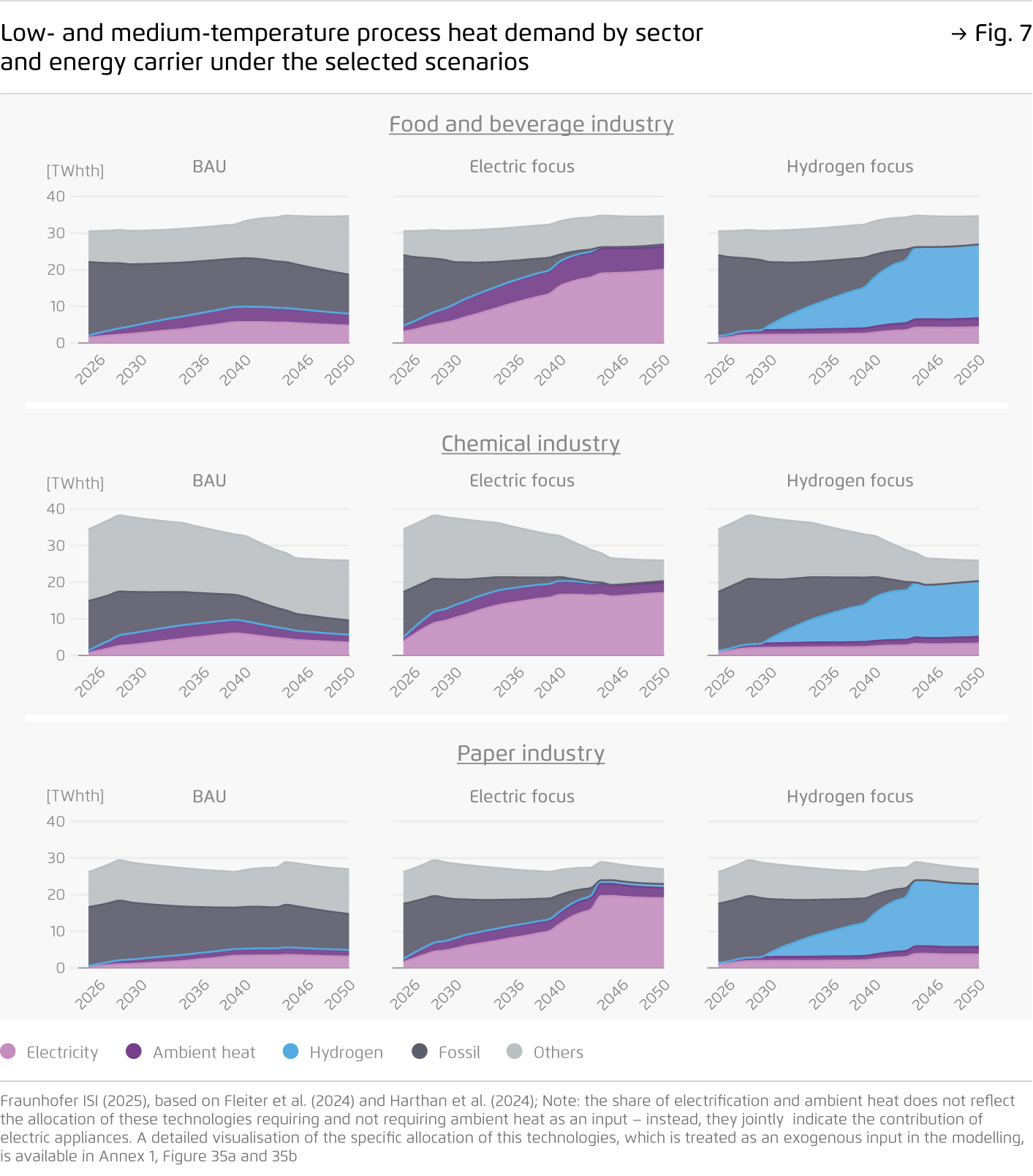
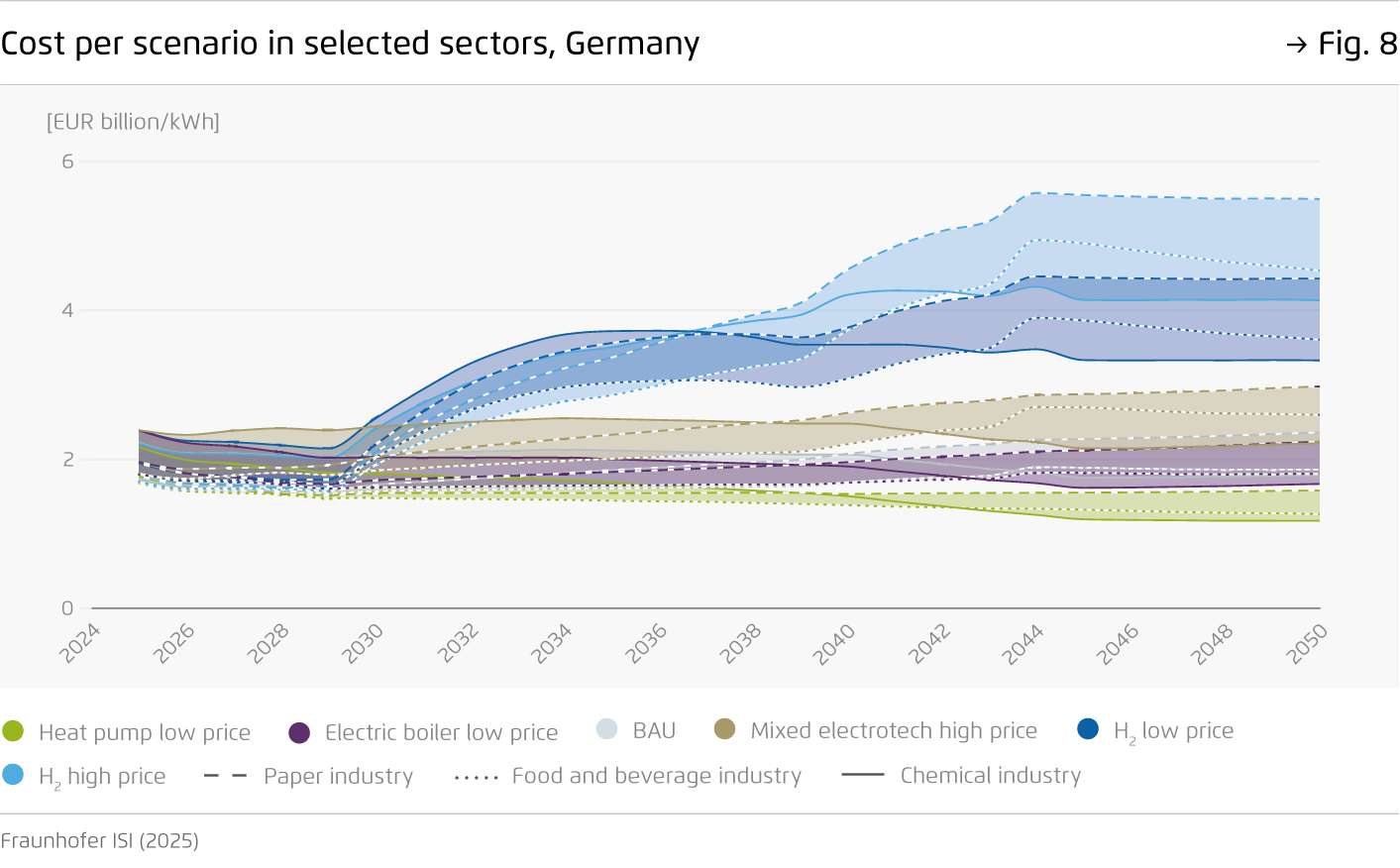
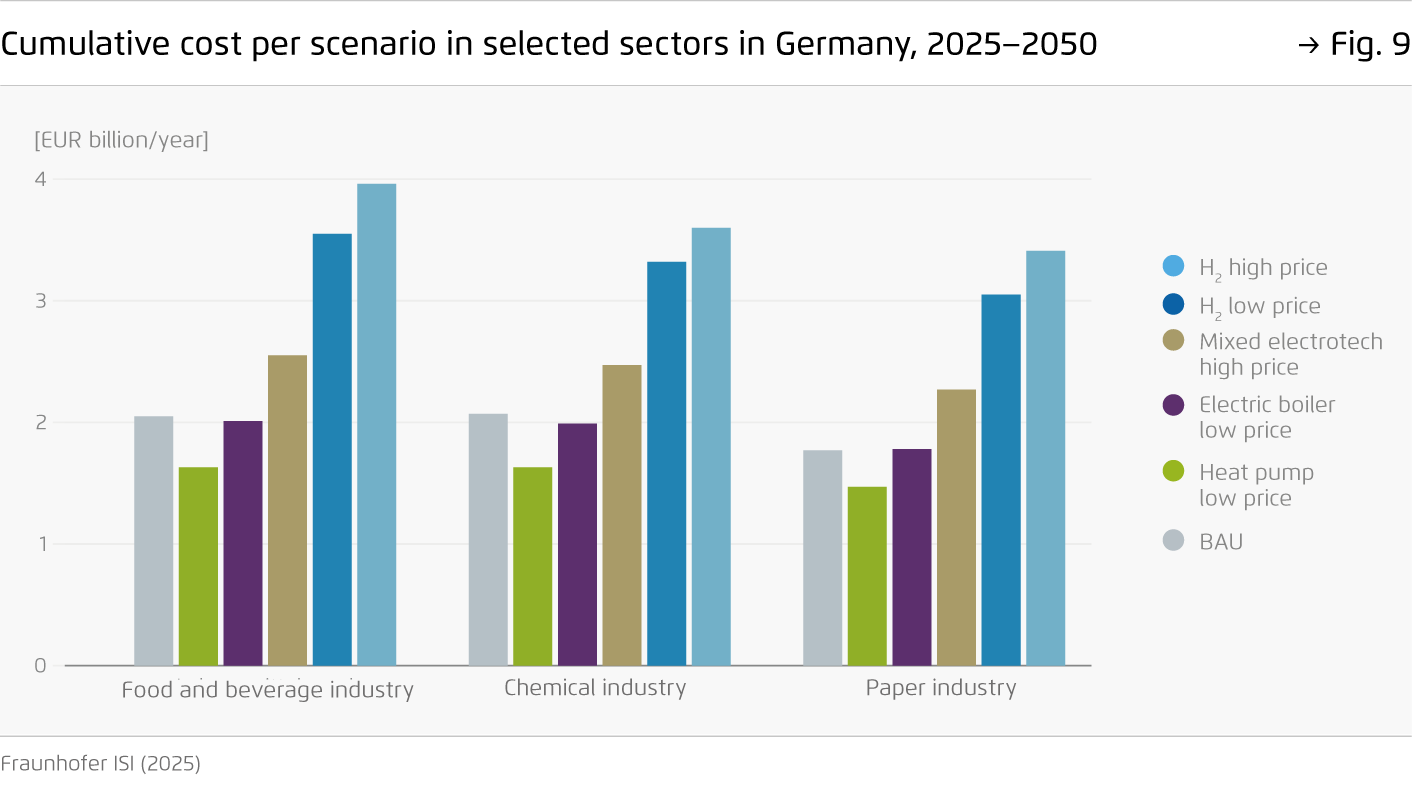
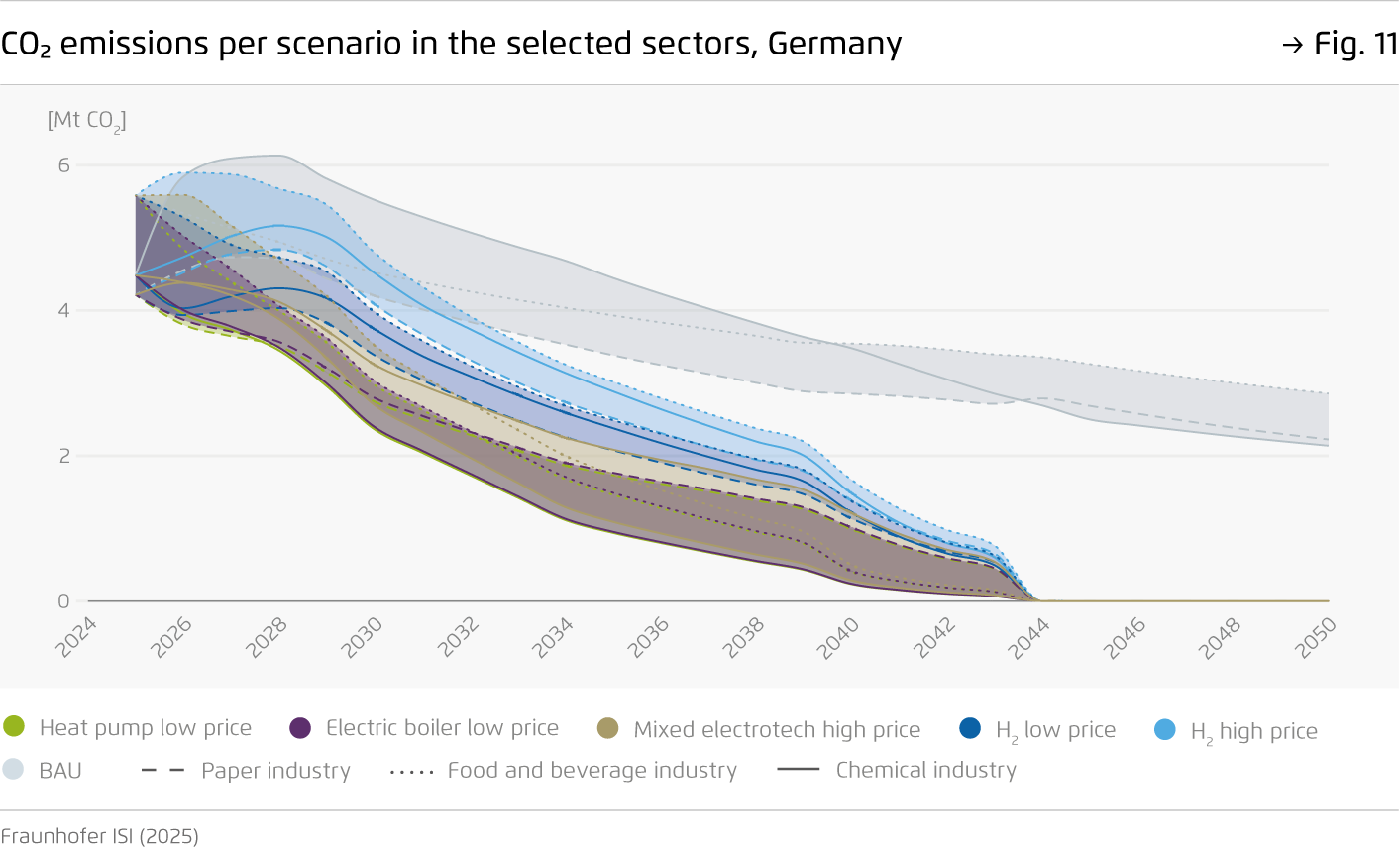
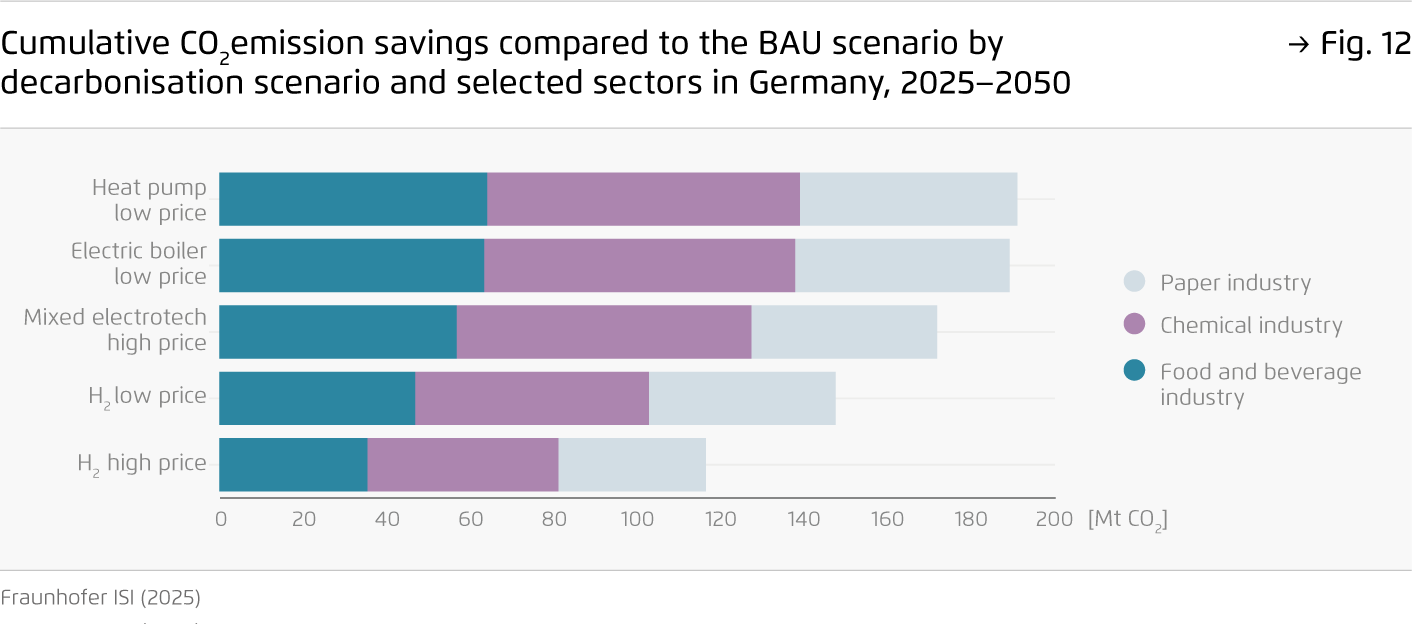
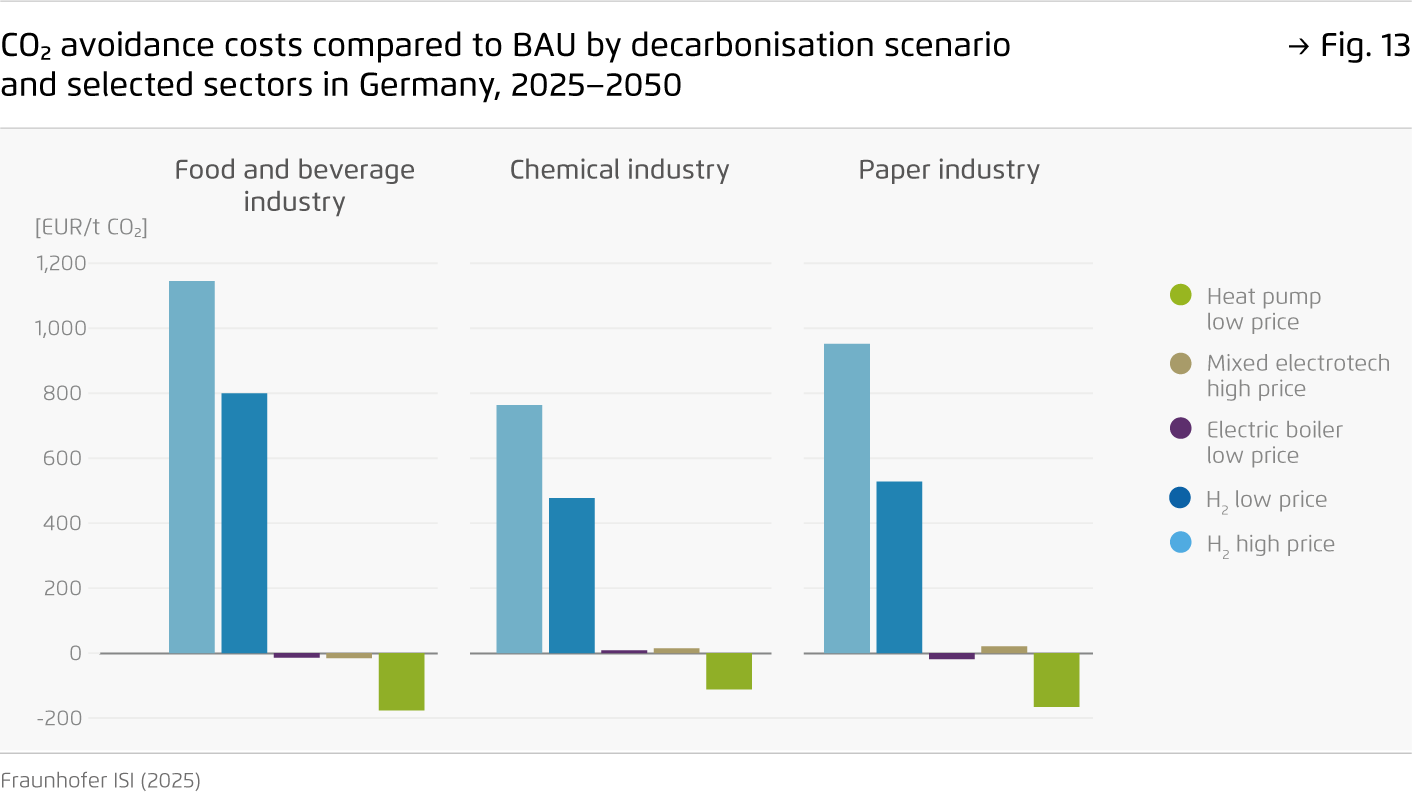
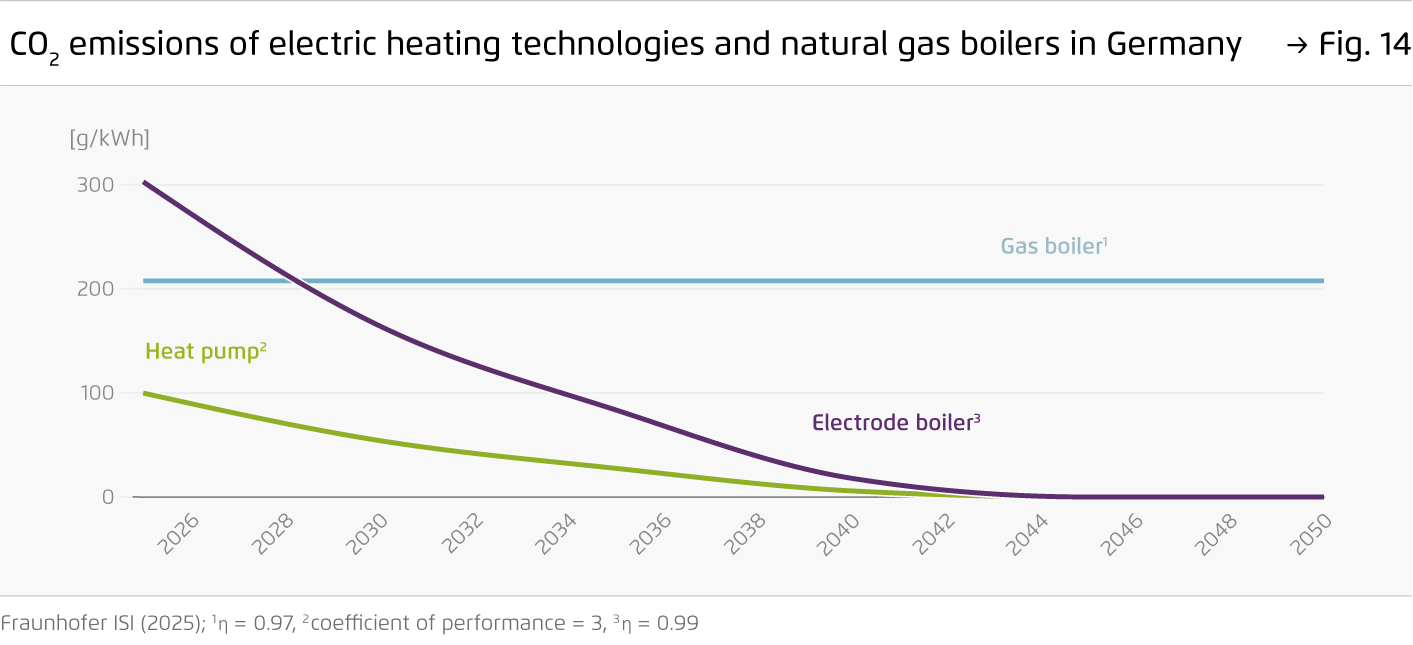
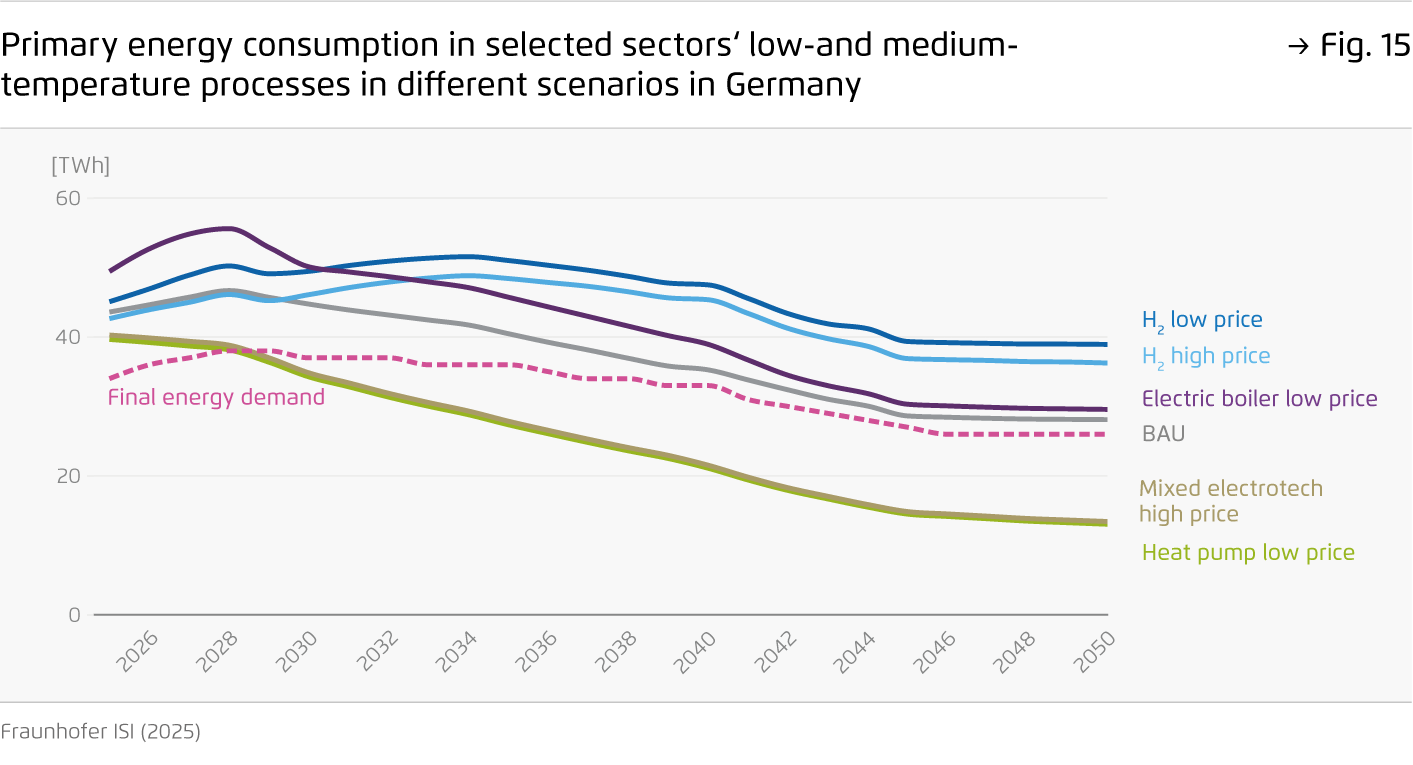
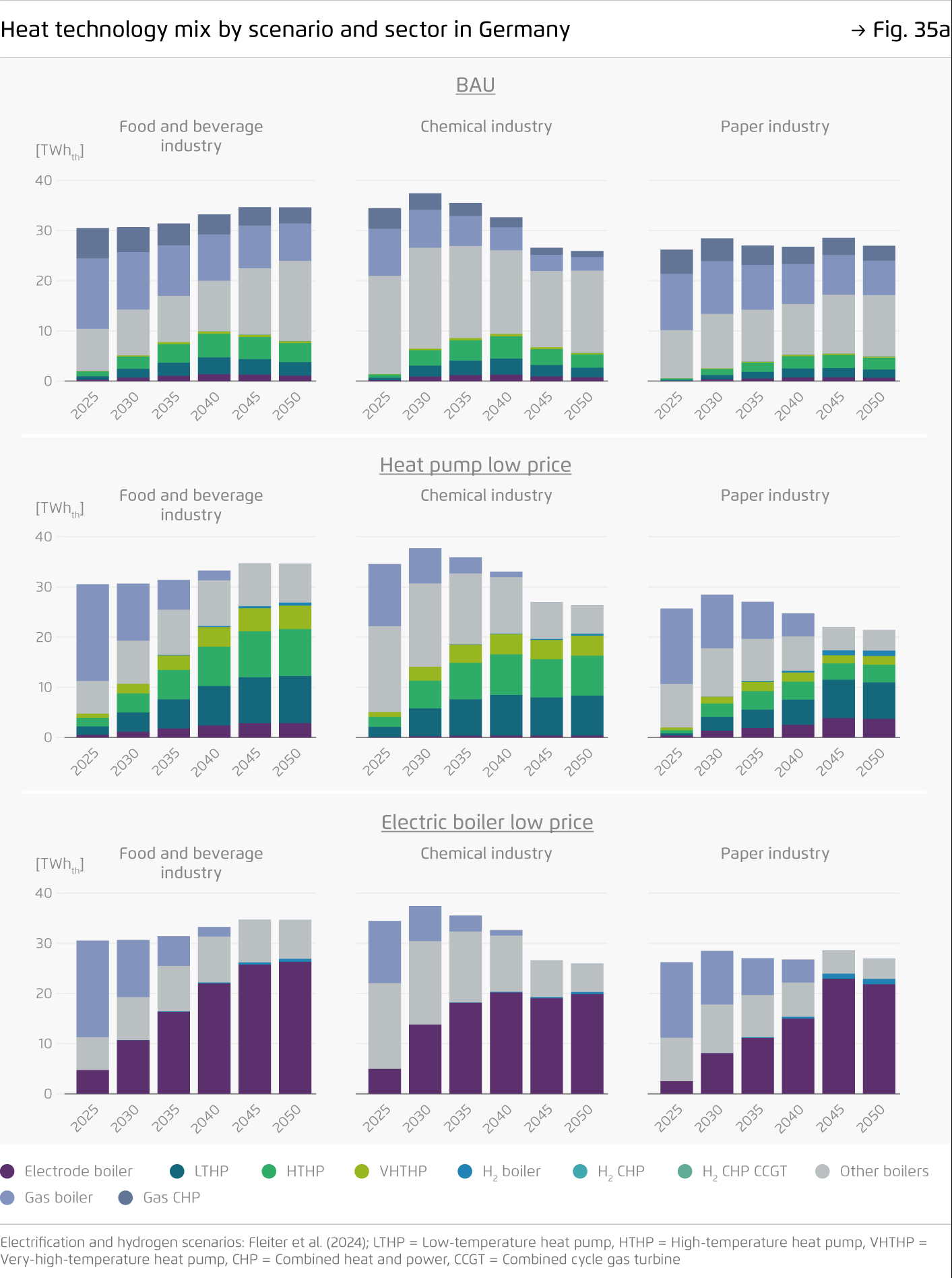
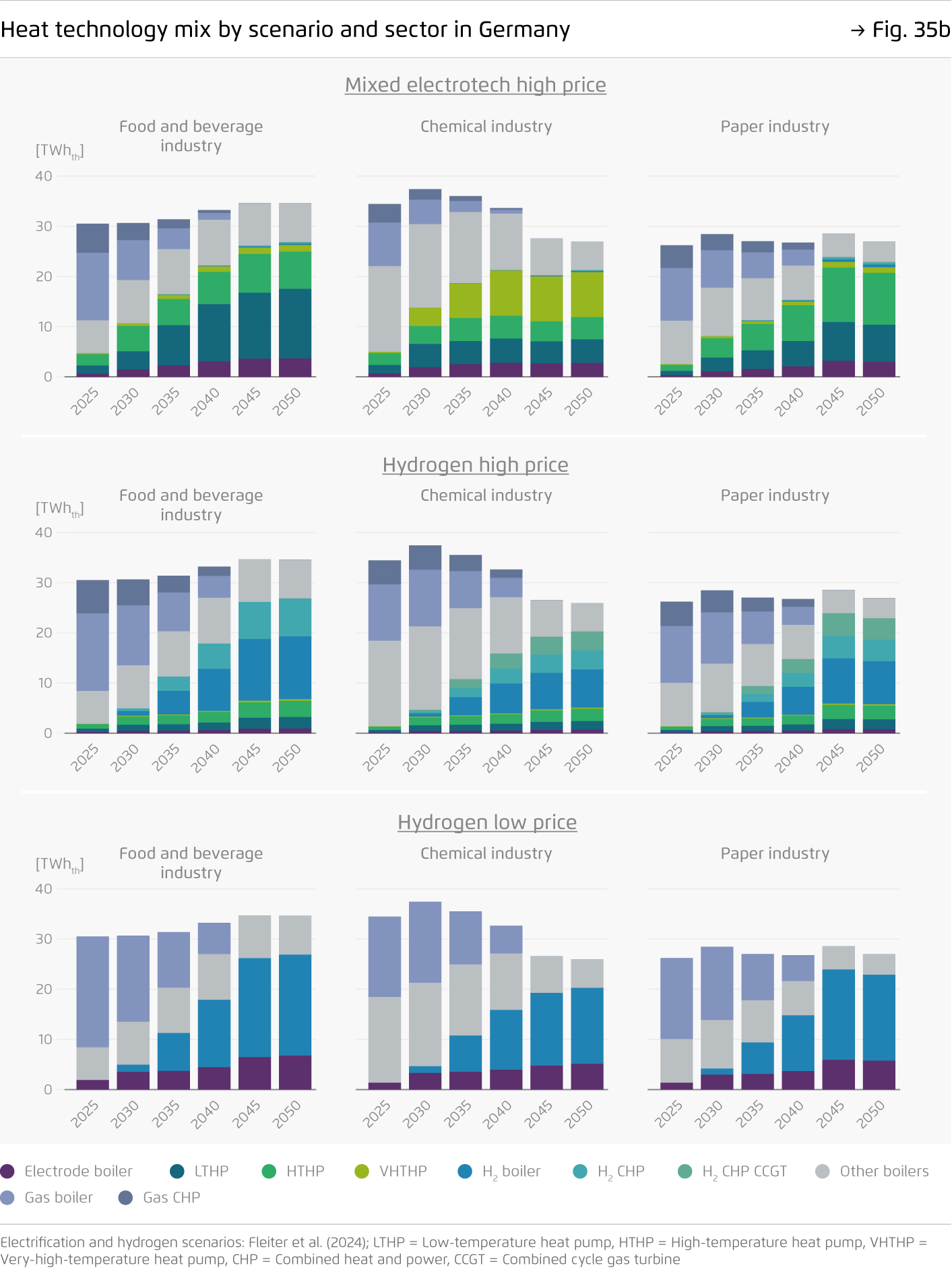
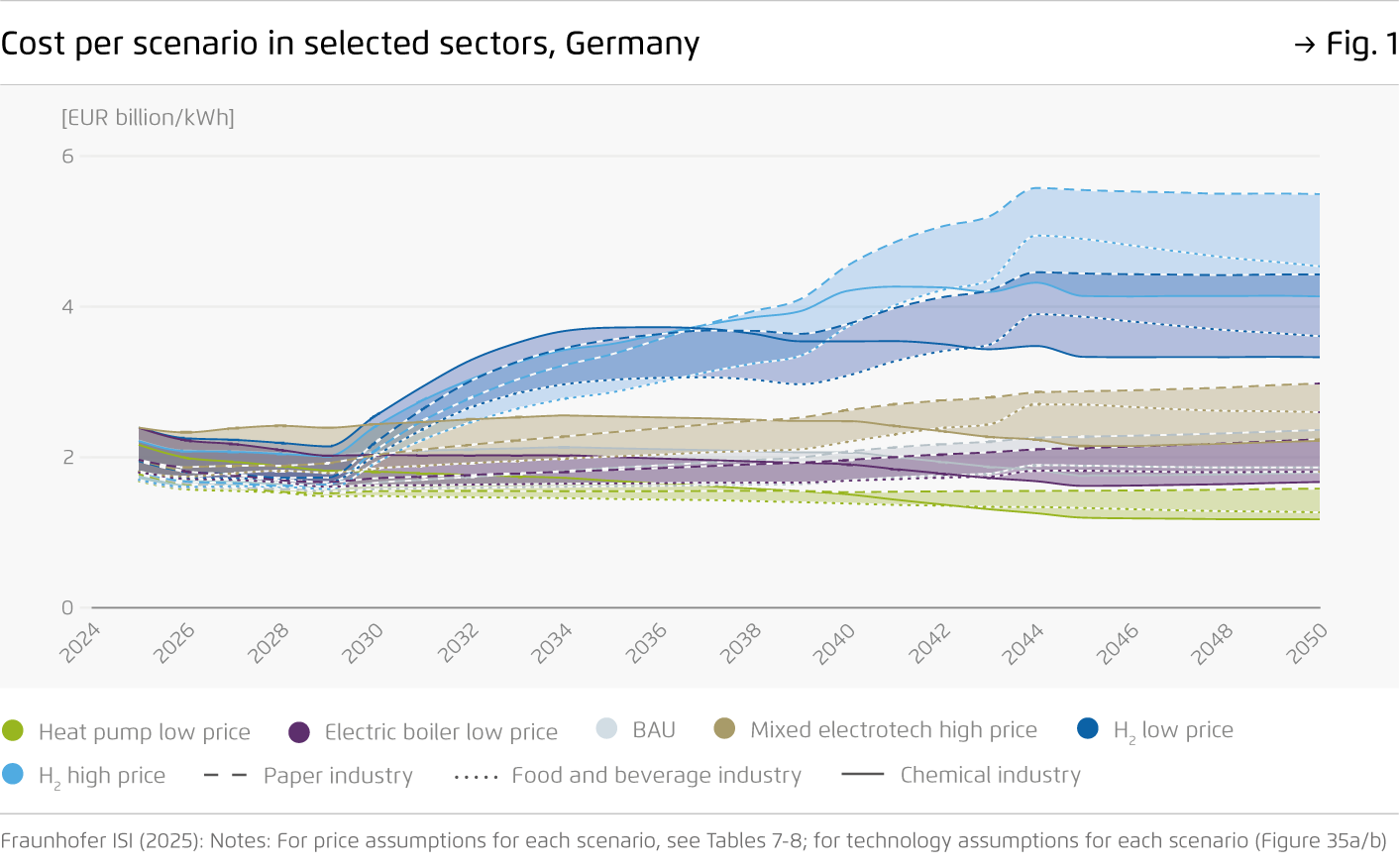
The Germany case study shows that electrification can achieve sectoral carbon neutrality cost effectively by 2045, especially if heat pumps are deployed whenever permitted by the temperature range of the respective processes (Figure 1). Electrification becomes cost competitive when the electricity-to-gas price ratio, including carbon costs, decreases from the current 3–5 range for the sectors in question to the 1.5–2.8 range. Based on conservative assumptions about the wholesale electricity price, this could be achieved by reducing fees and levies on electricity – a process that is already underway – and by ambitious carbon pricing reaching 130 euros per tonne of carbon dioxide in 2030, and 180 euros per tonne of carbon dioxide in 2040. Hydrogen pathways remain significantly more expensive. Moreover, direct electrification reduces emissions earlier and to a greater extent and promises higher efficiency gains and fossil fuel savings than hydrogen-focused pathways.
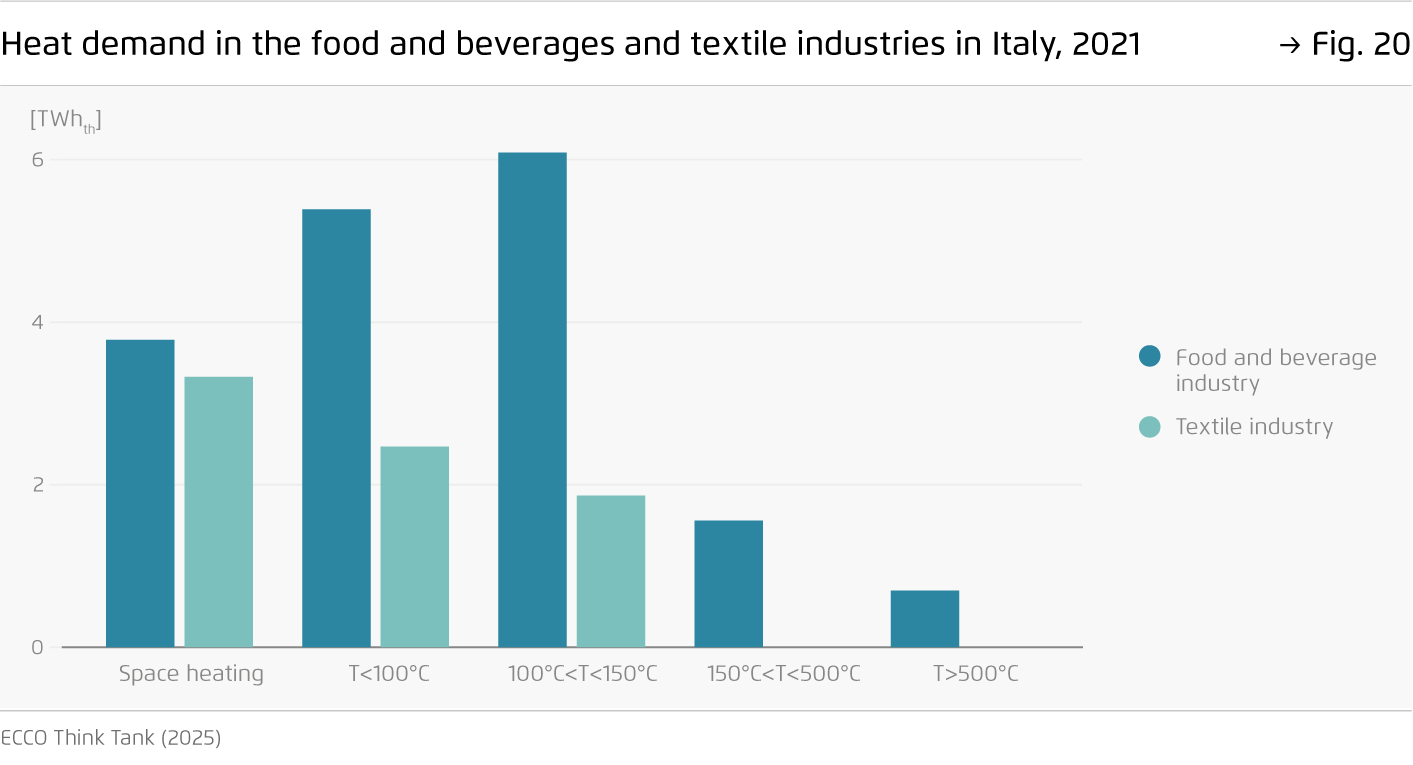
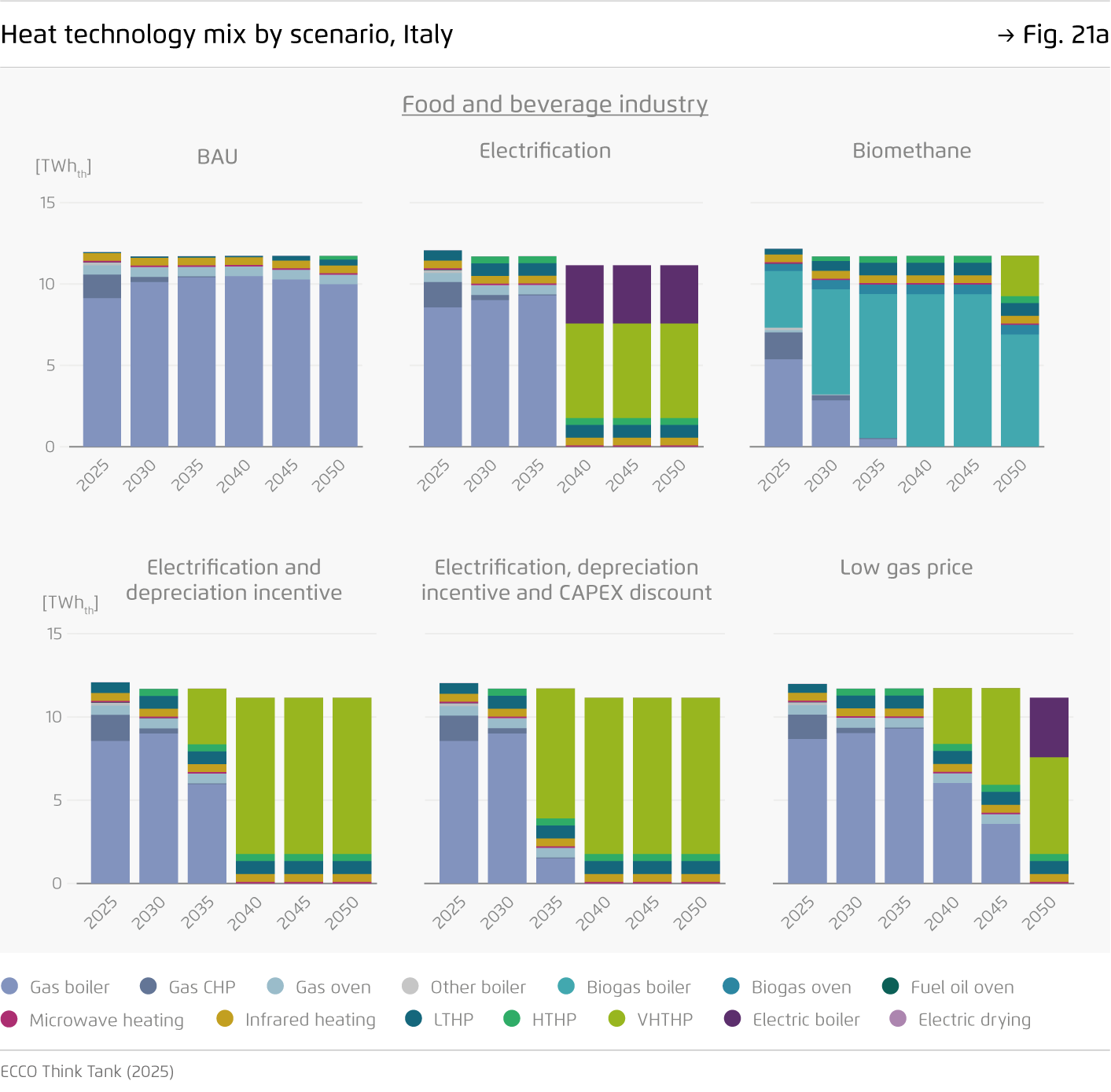
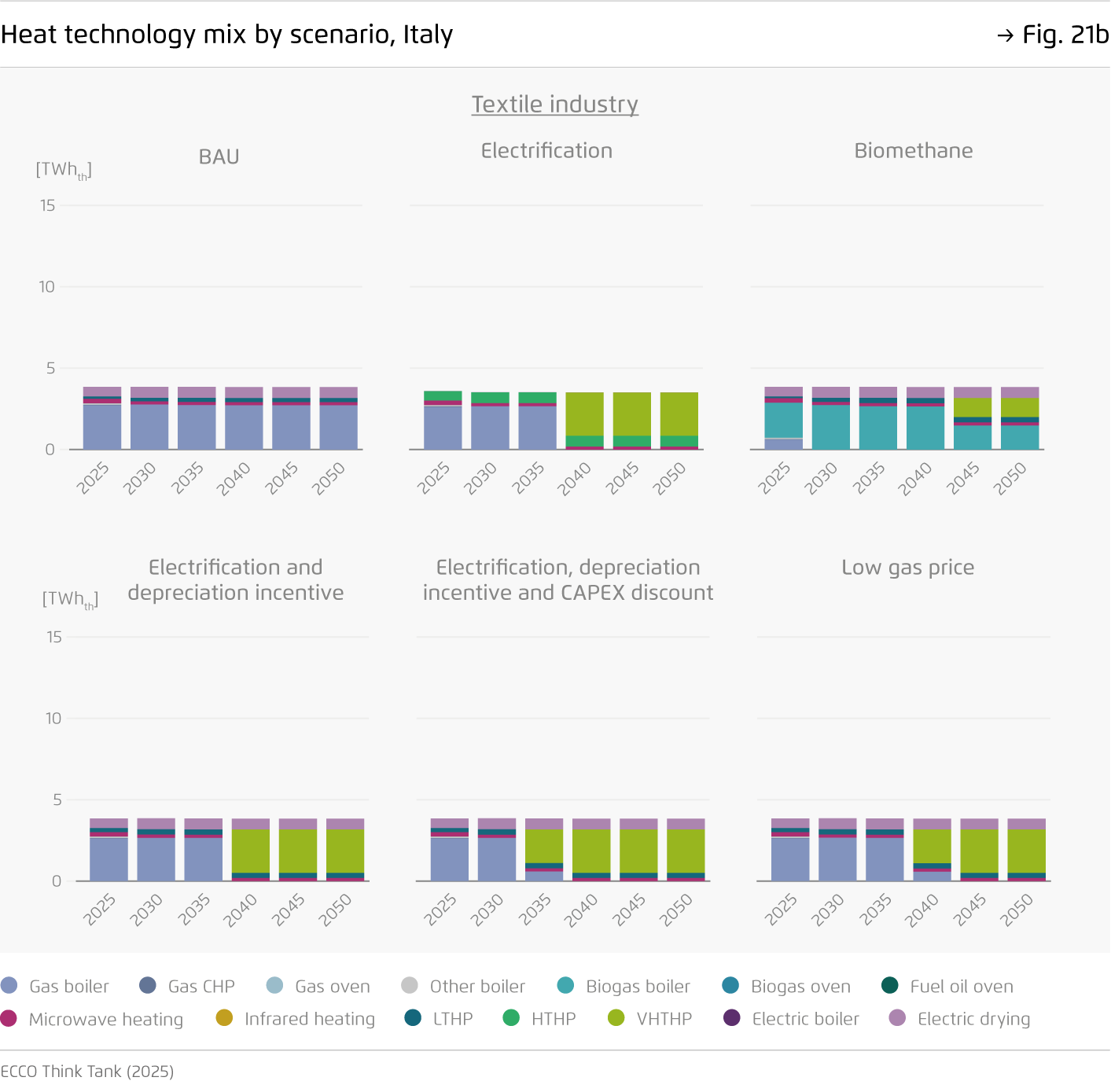
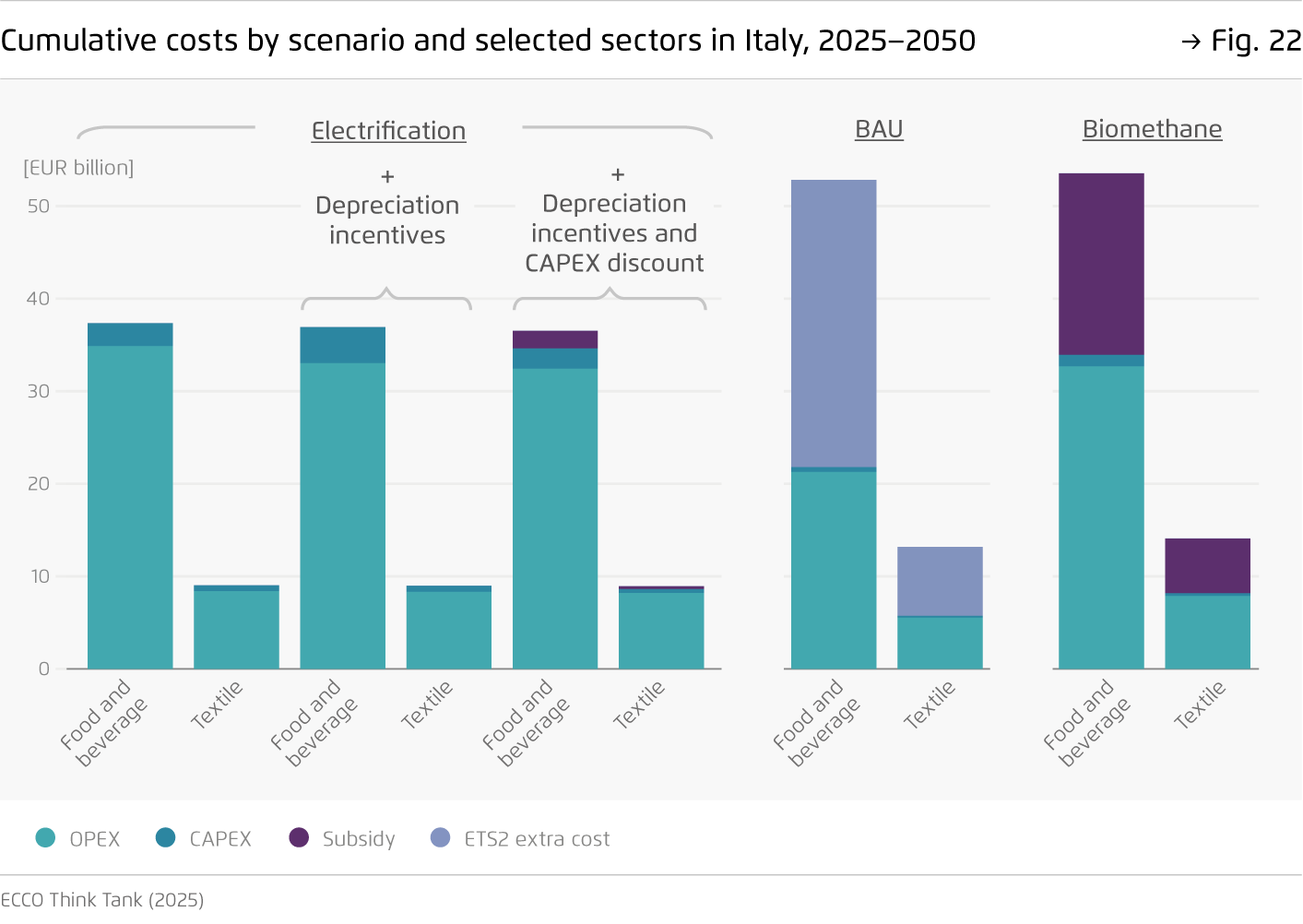
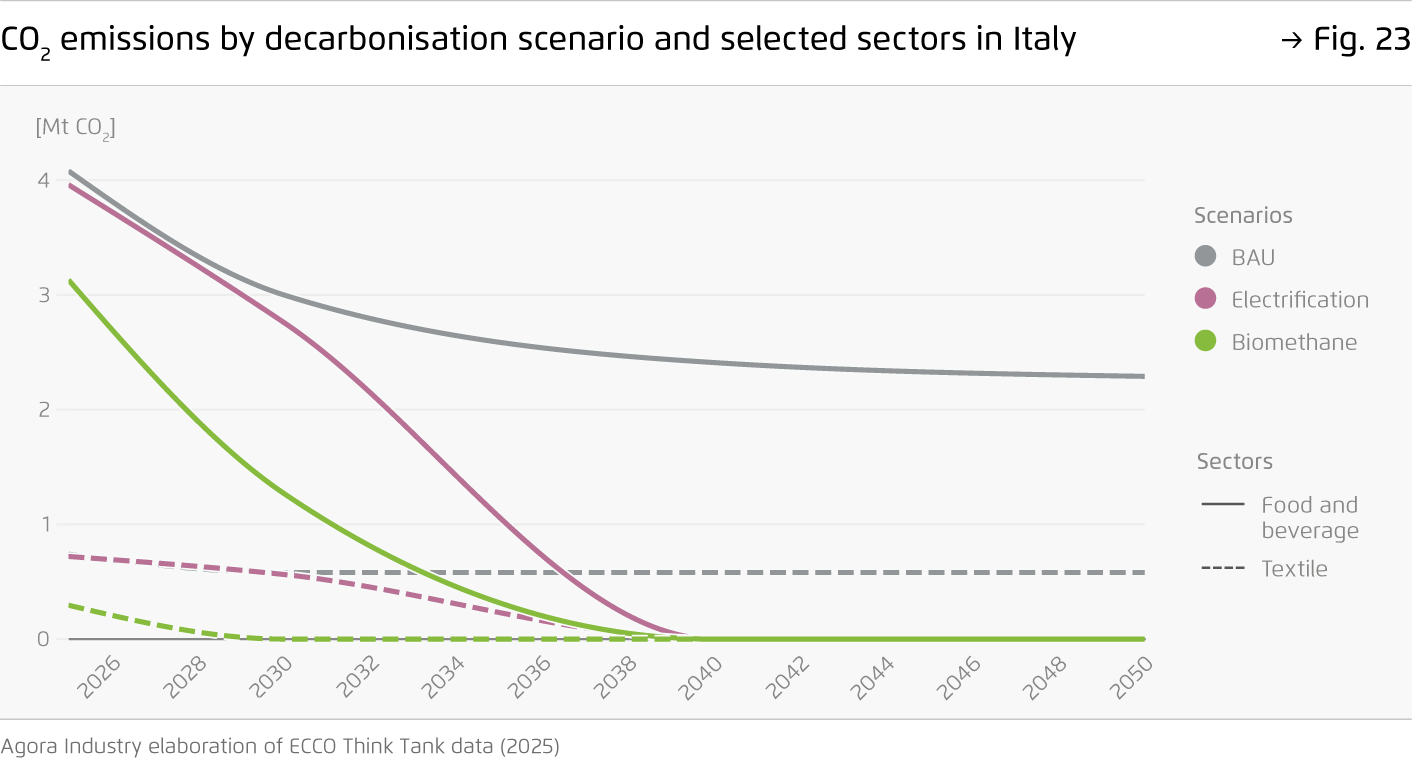
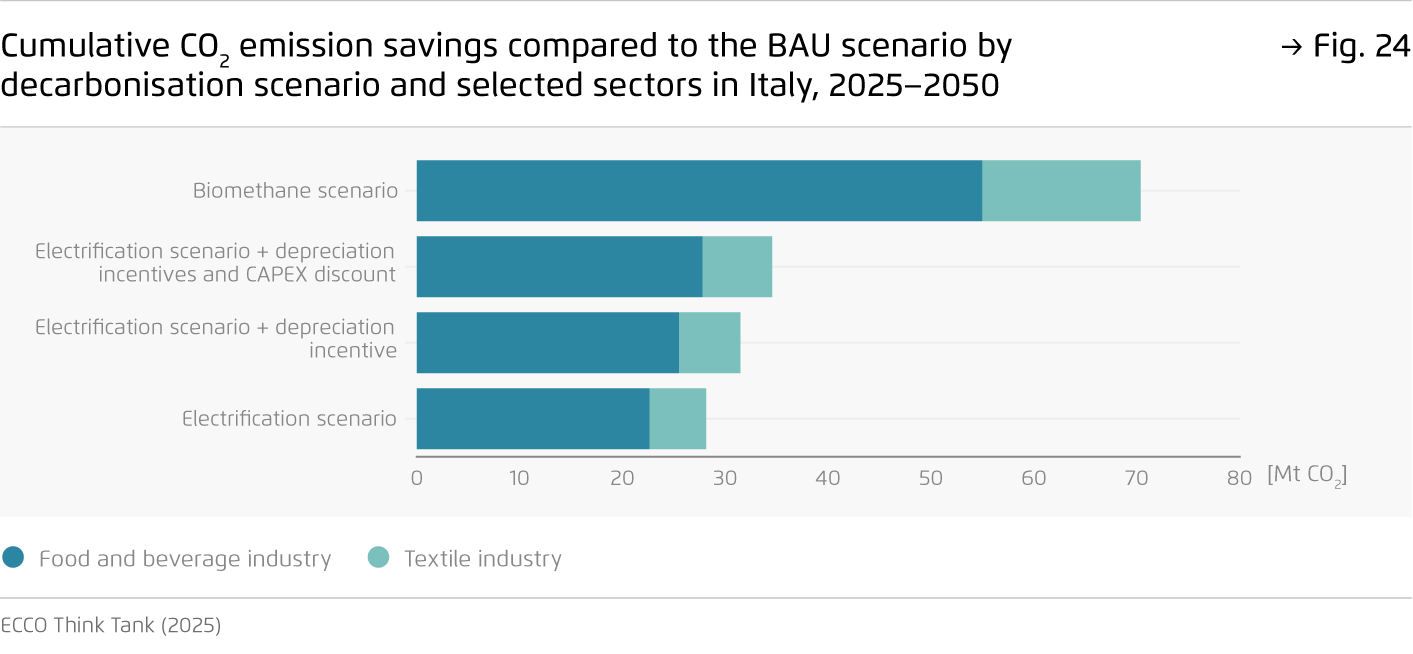
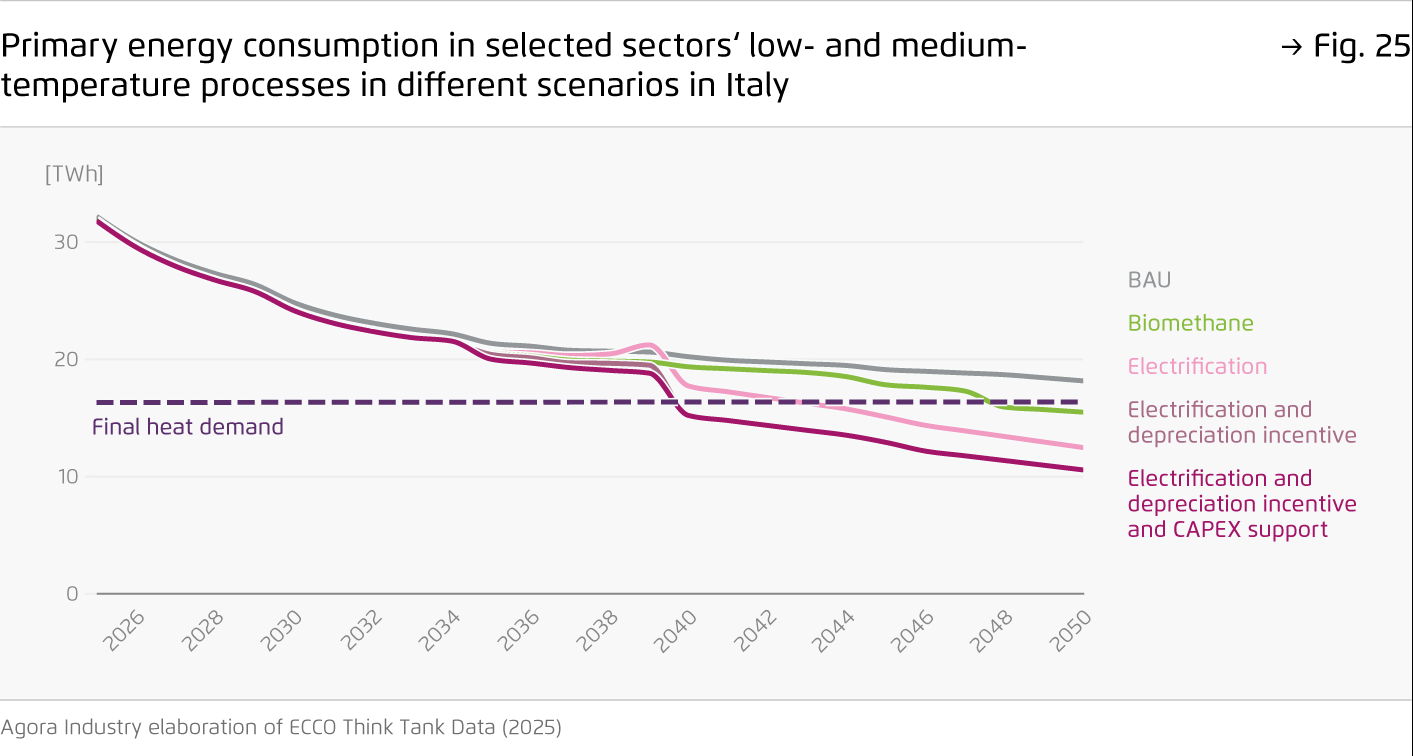
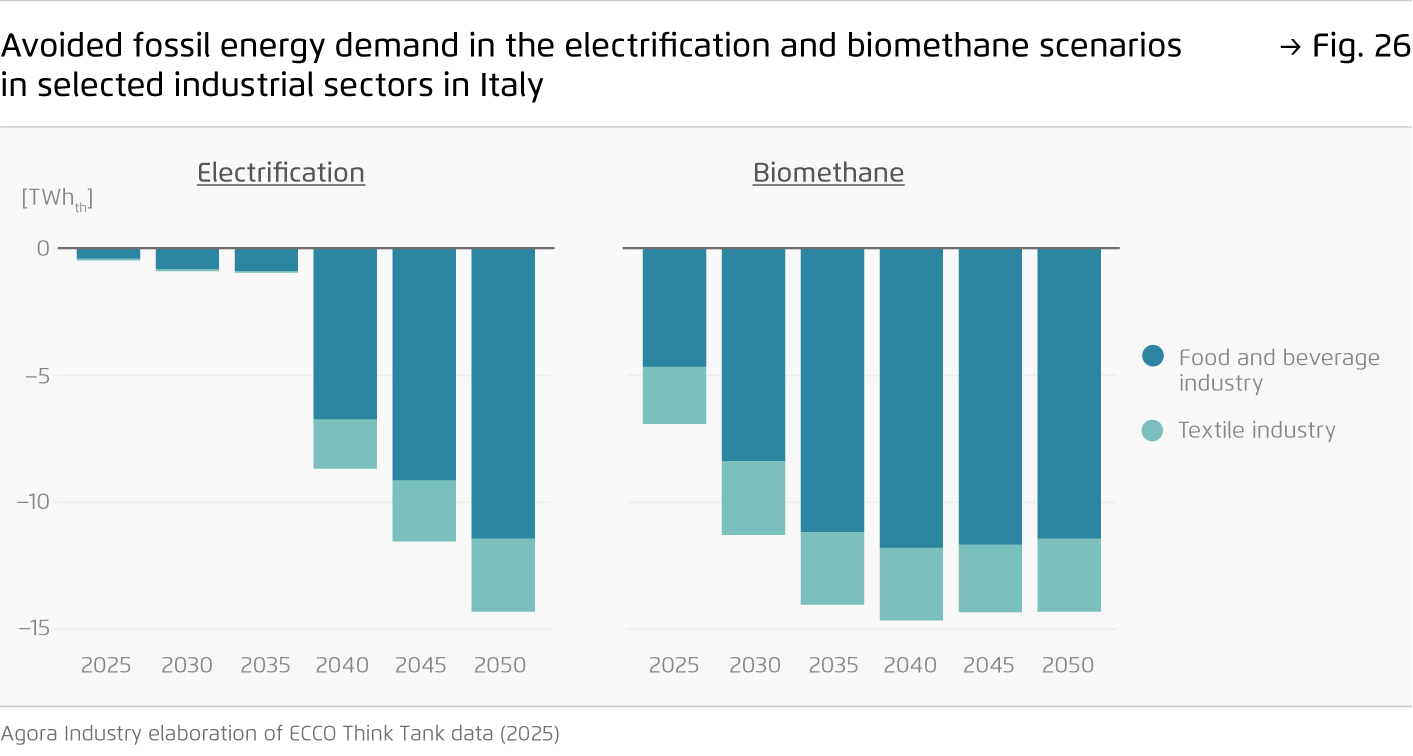
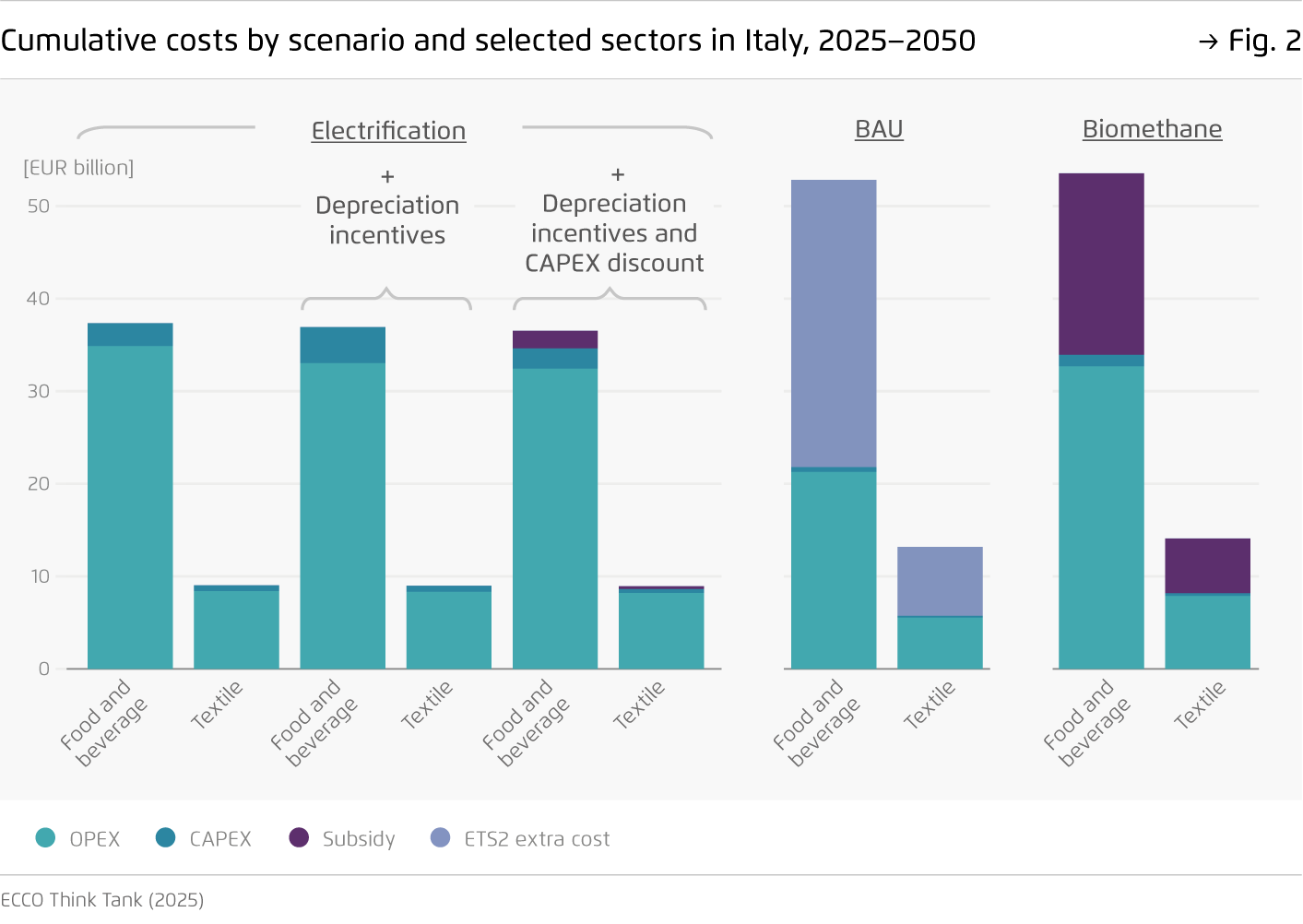
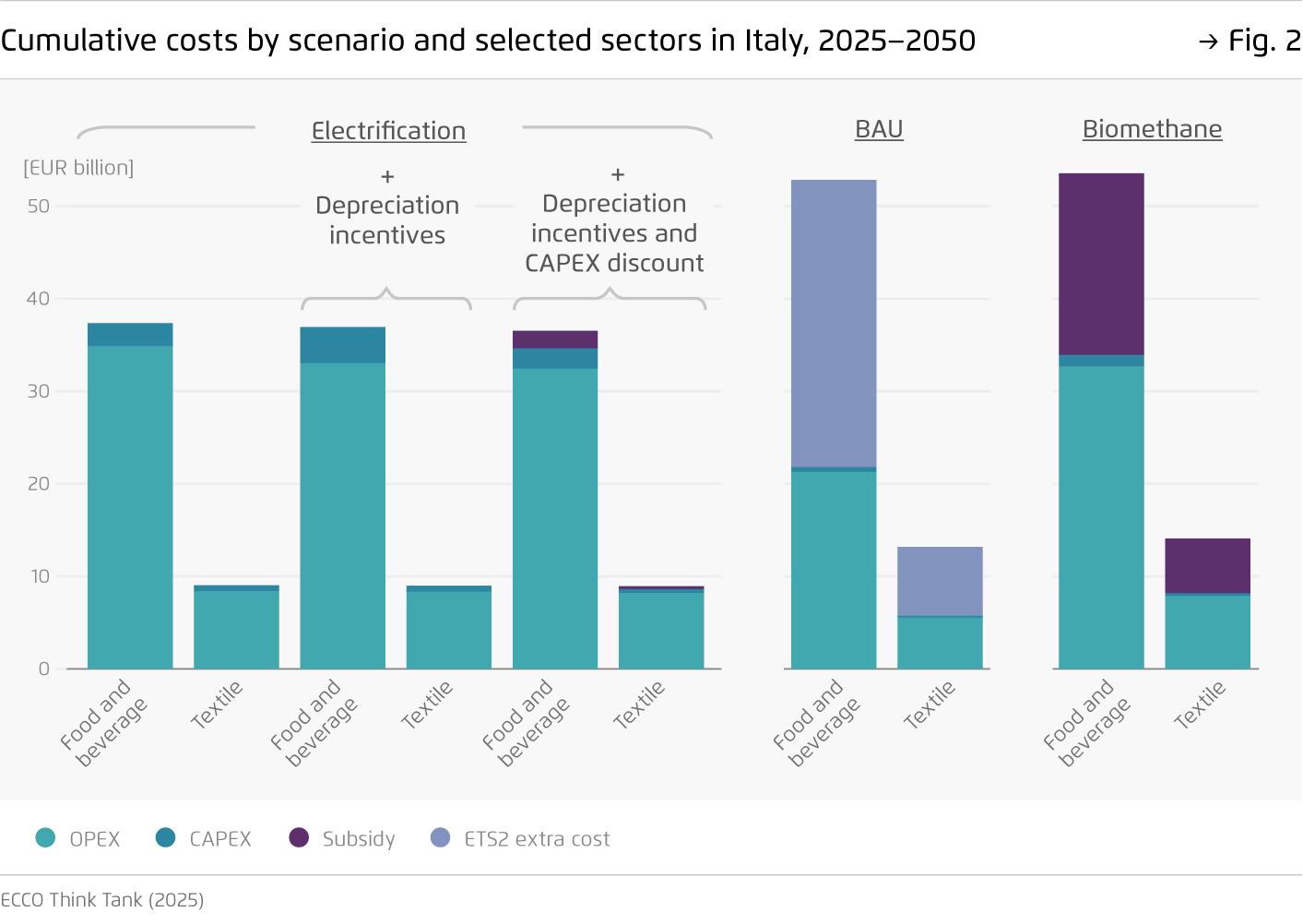
Italy’s analysis – performed for the food and beverage sector and textile industry – indicates that electrifying processes below 80 degrees Celsius, though already the lowest-cost option, represents only a limited proportion of industrial heat demand. Broader electrification becomes cost effective in the sectors in question between 2035 and 2040 as electricity prices decline compared to gas thanks to additional renewable and storage capacity, rising carbon costs under the ETS2 and decreasing technology costs. However, just a little policy support could make electrification cost competitive sooner. Policies ensuring faster asset depreciation and CAPEX support could bring the competitive deployment of electrification technologies forward to the mid-2030s, thereby achieving up to 85 percent electrification while saving 2.3 billion euros in cumulative costs over the period under consideration (Figure 2). Biomethane is uncompetitive without significant subsidisation and constrained by its limited availability. The case study warns of potential lock-in risks if industries continue investing in gas-based heat appliances because operating costs would soar by over 50 percent compared to electrification pathways if the electricity-gas cost gap were to decrease and carbon prices were to rise.
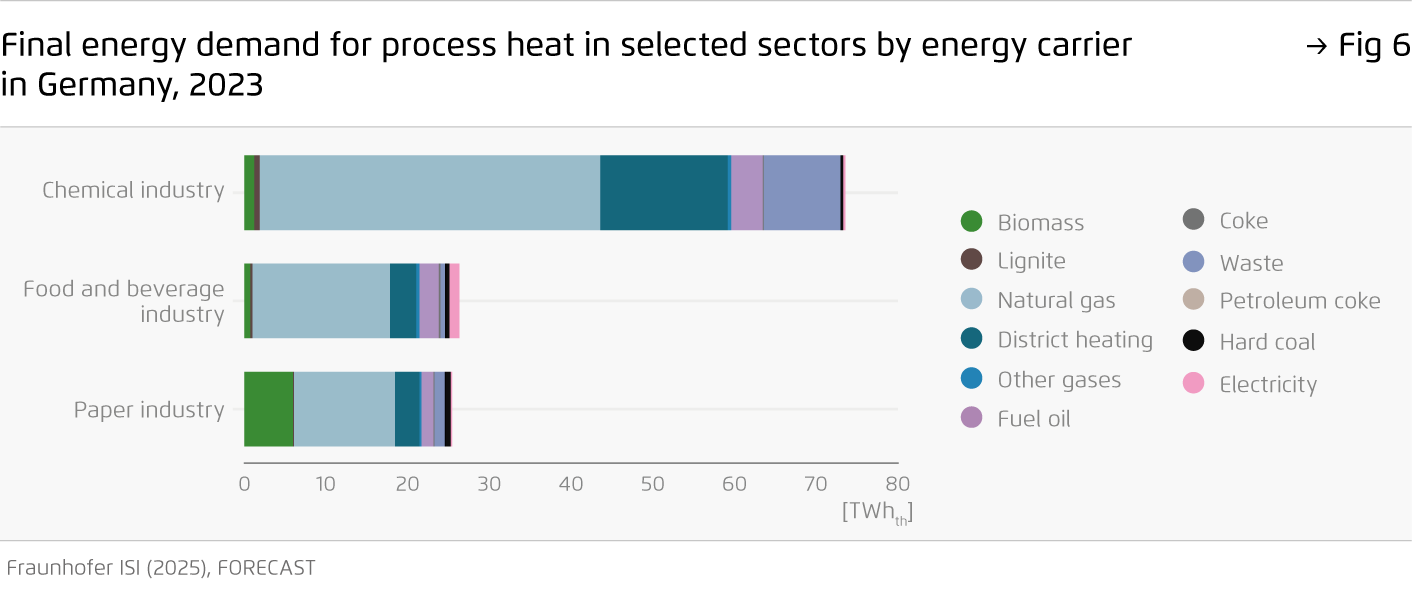
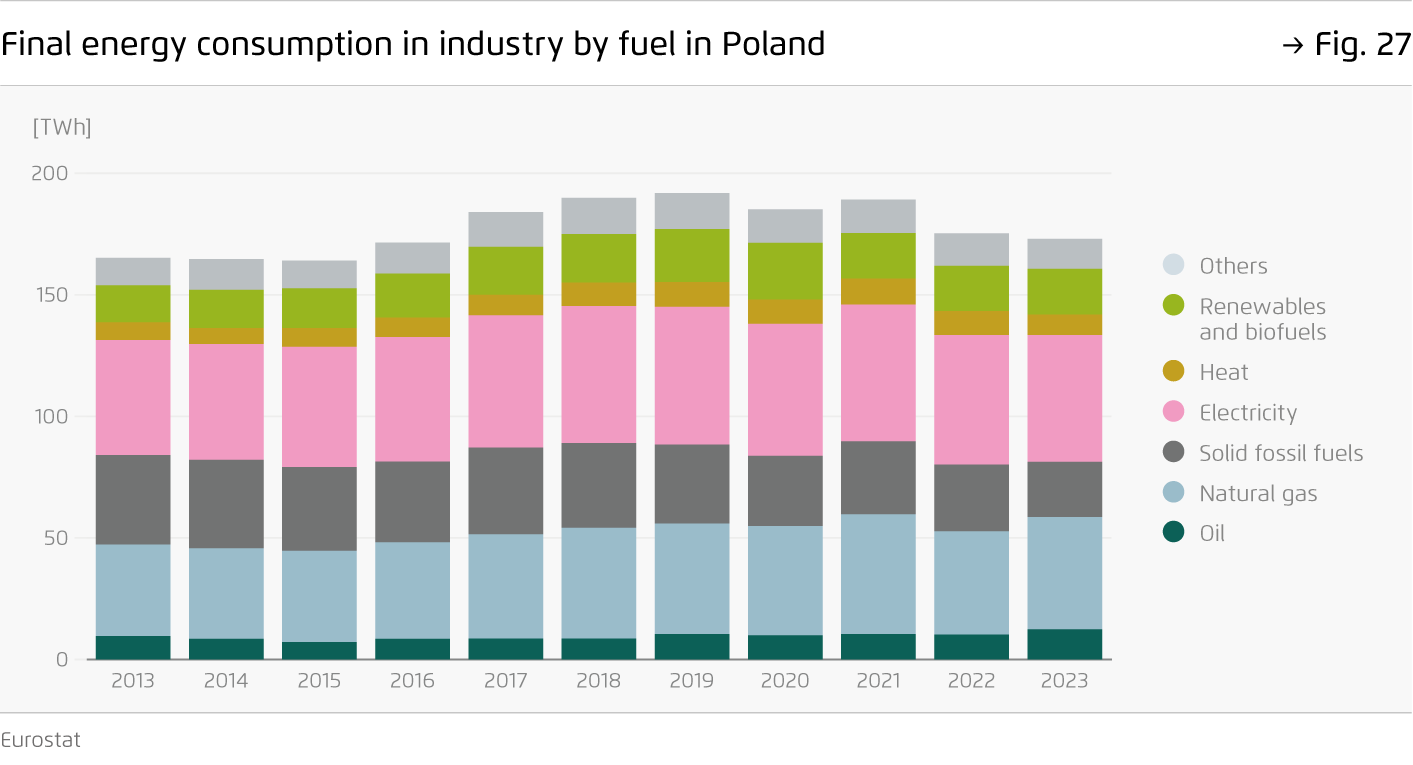
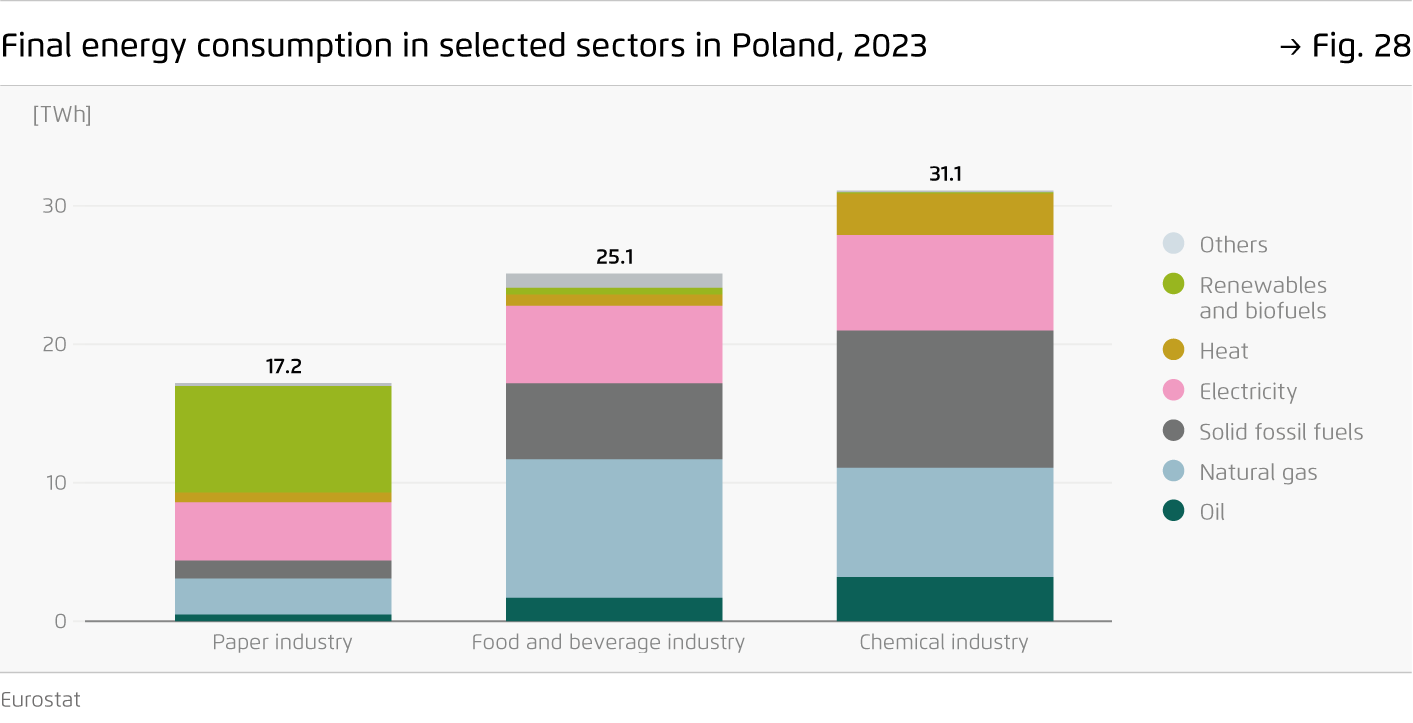
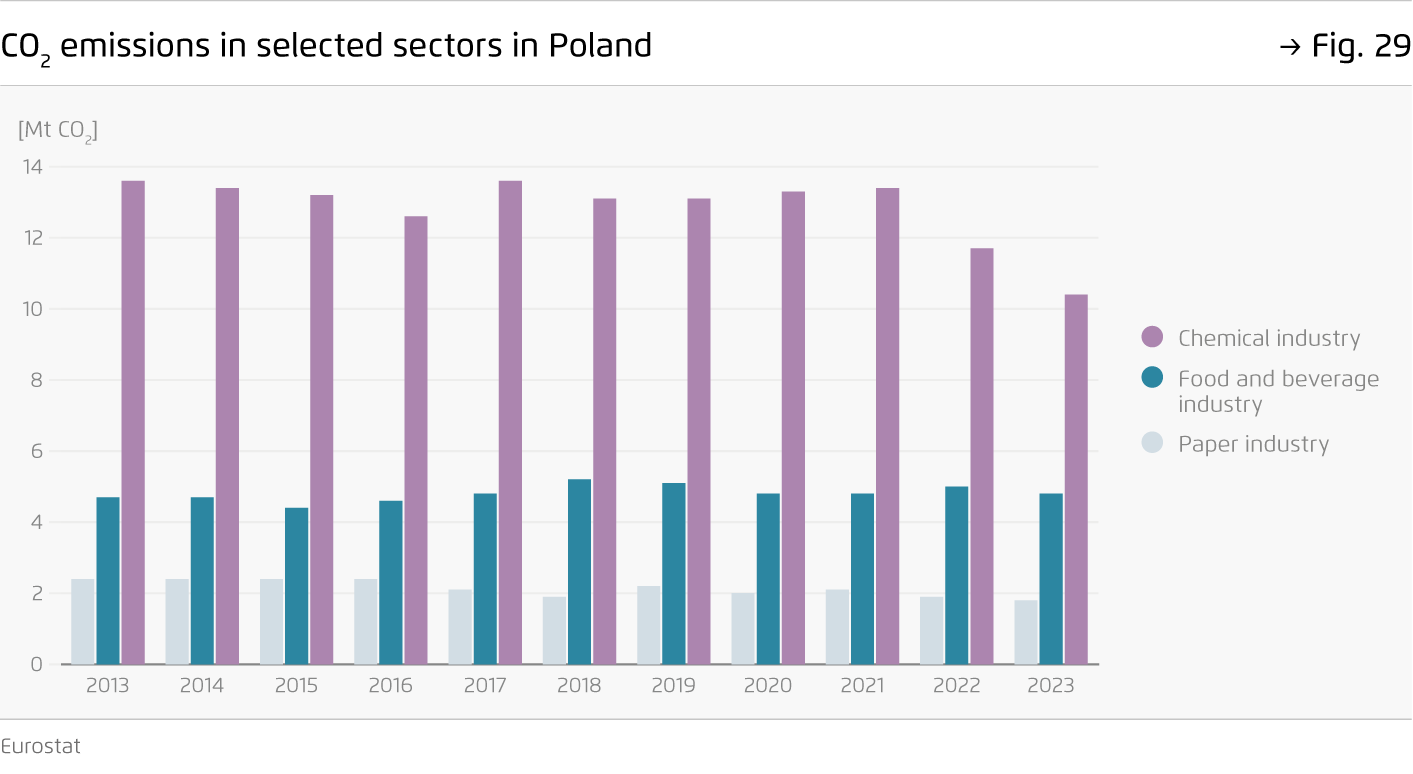
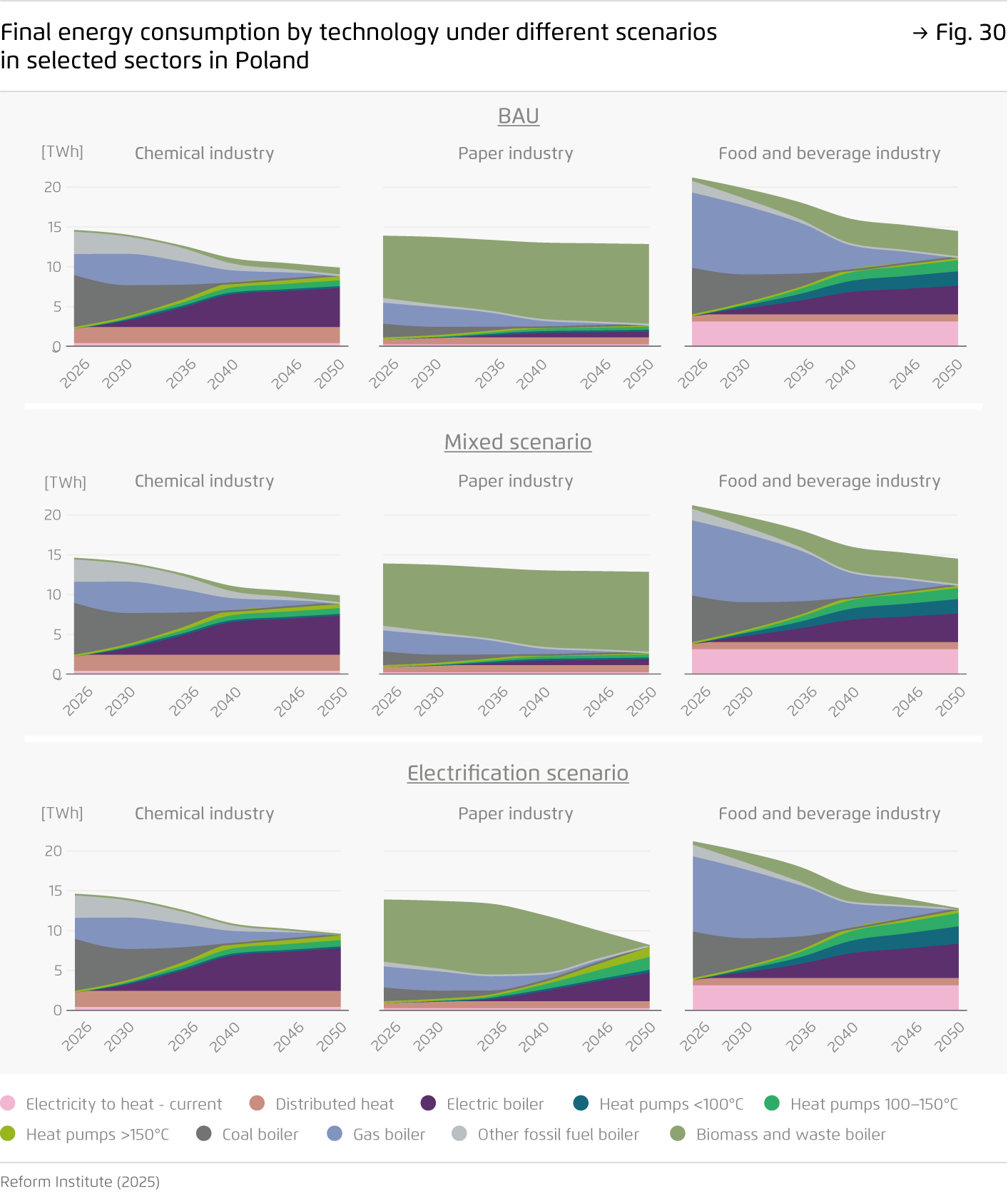
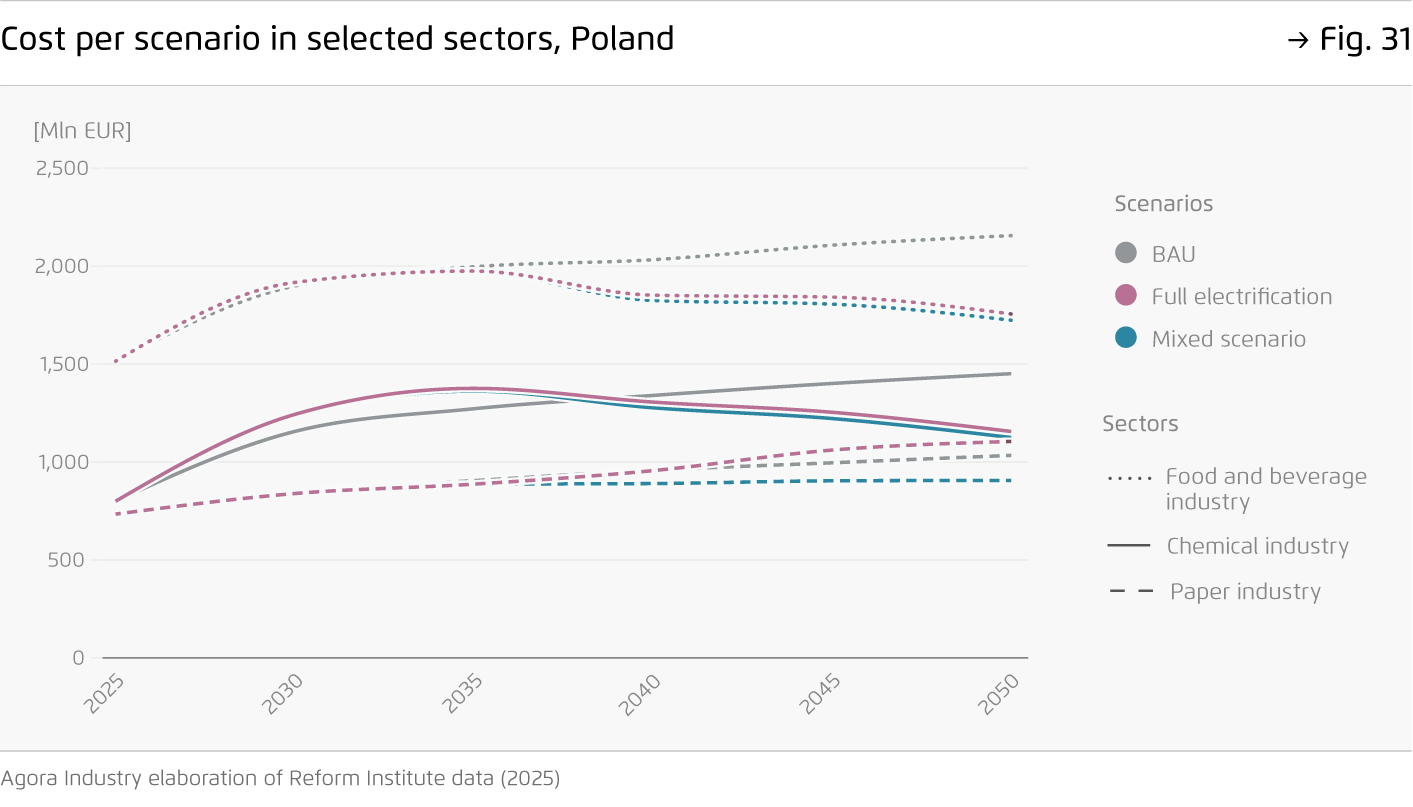
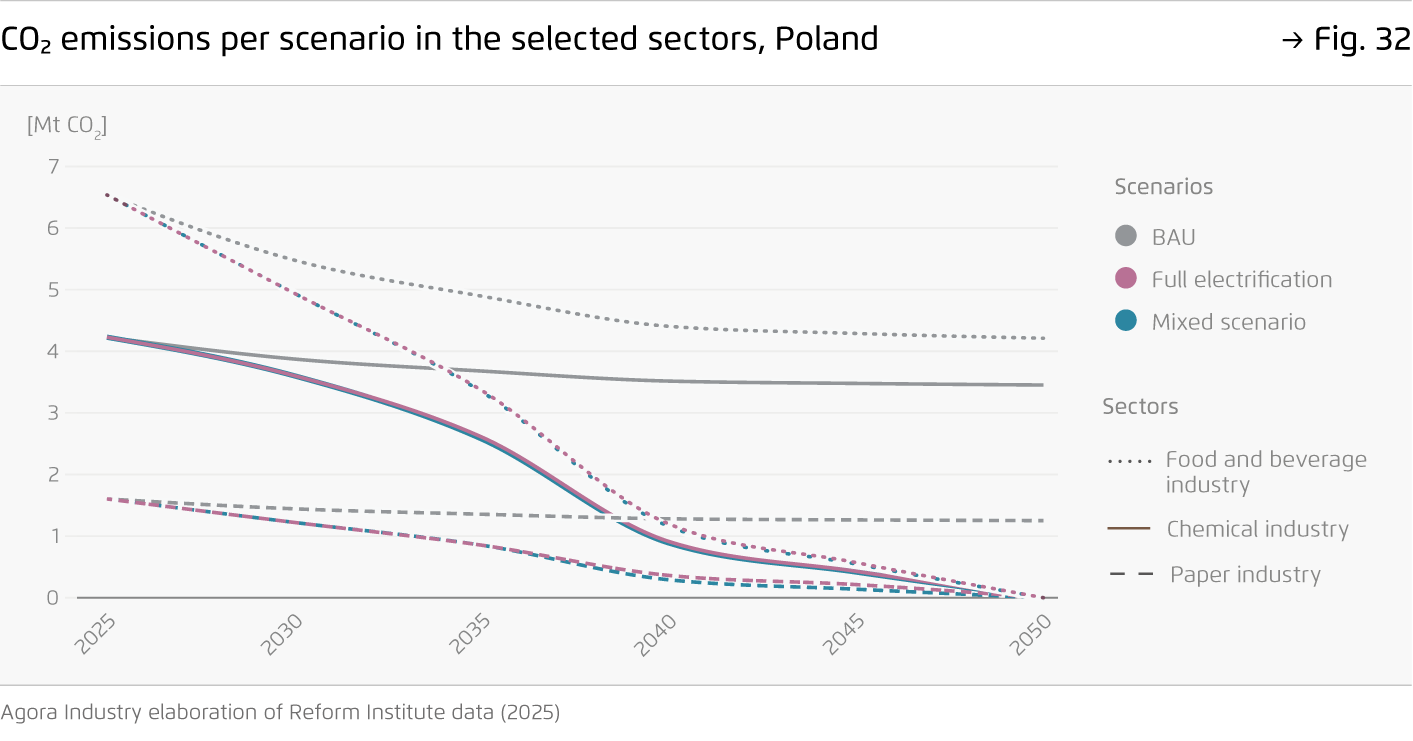
The Poland case study findings reflect the specificities of Poland’s energy mix. While electrification is economically viable given a declining electricity-to-gas price ratio driven by carbon pricing and renewables expansion, the transition path varies by sector due to the differing temperature requirements of specific processes. The food and beverage sector could electrify fully at lower cost, whereas the paper industry will remain more competitive if it deploys an eclectic heat mix that still includes substantial use of biomass. Meanwhile, electrifying low-and medium-temperature processes in the chemical industry will only reach cost parity with the fossil alternative after 2040. Sustainable solid biomass remains cheaper in some contexts but is limited by supply constraints. Also, considering the maturity and scale of biomass-based technologies, fewer efficiency or cost improvements are expected compared with the relatively newer electrification technologies. Remarkably, despite the high emission-intensity of the Polish grid, electrification can achieve emissions reduction due to the high efficiency of heat pumps and the fact the electric boilers would initially replace highly emissive, ageing coal-fuelled heating appliances.
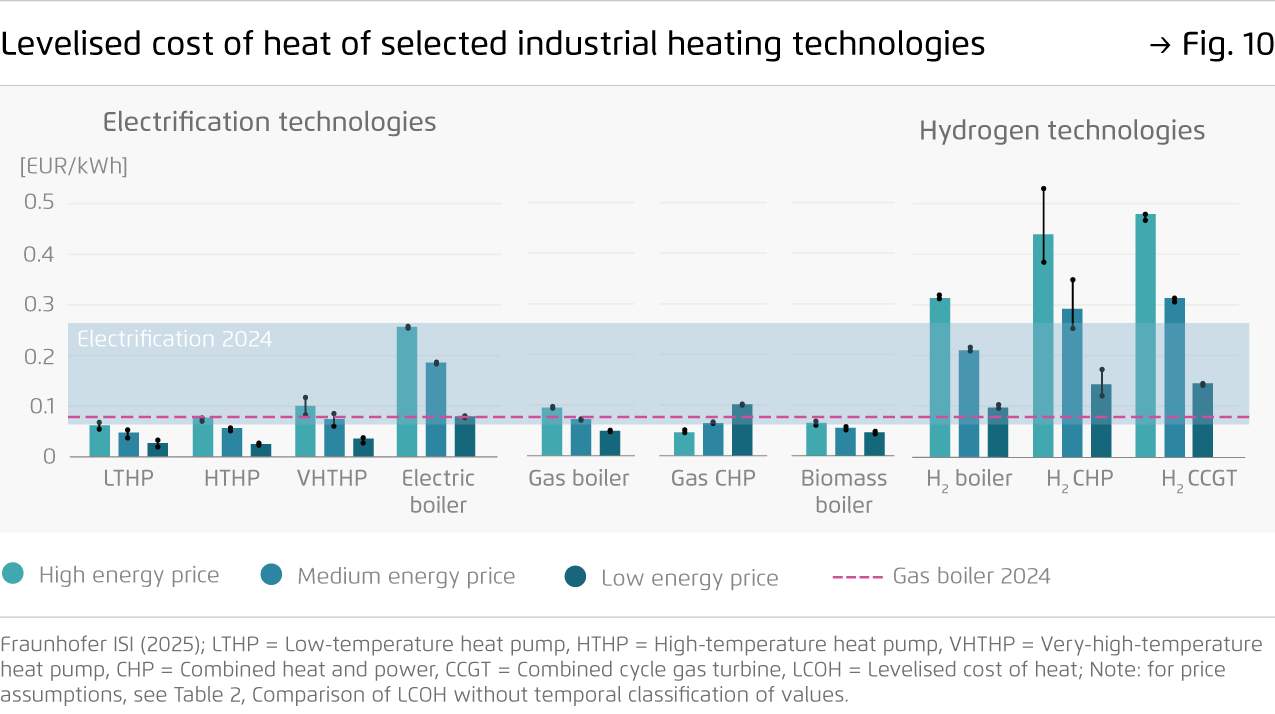
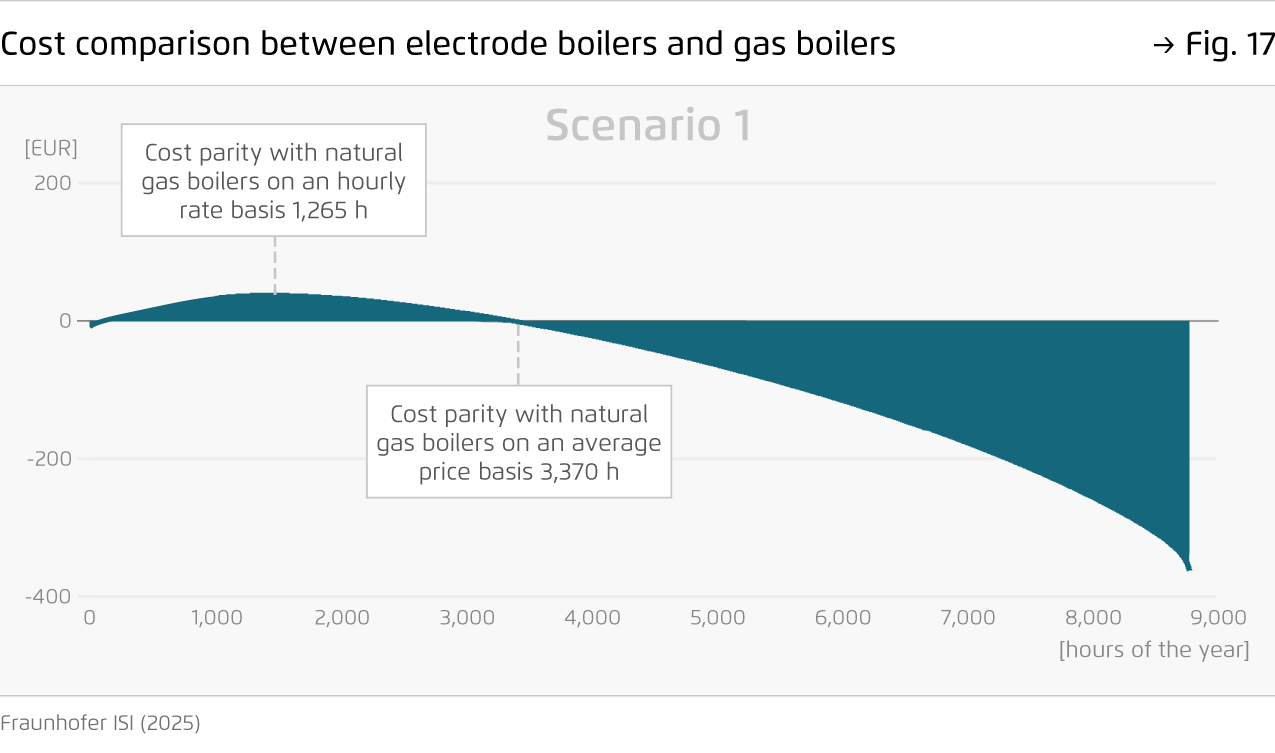
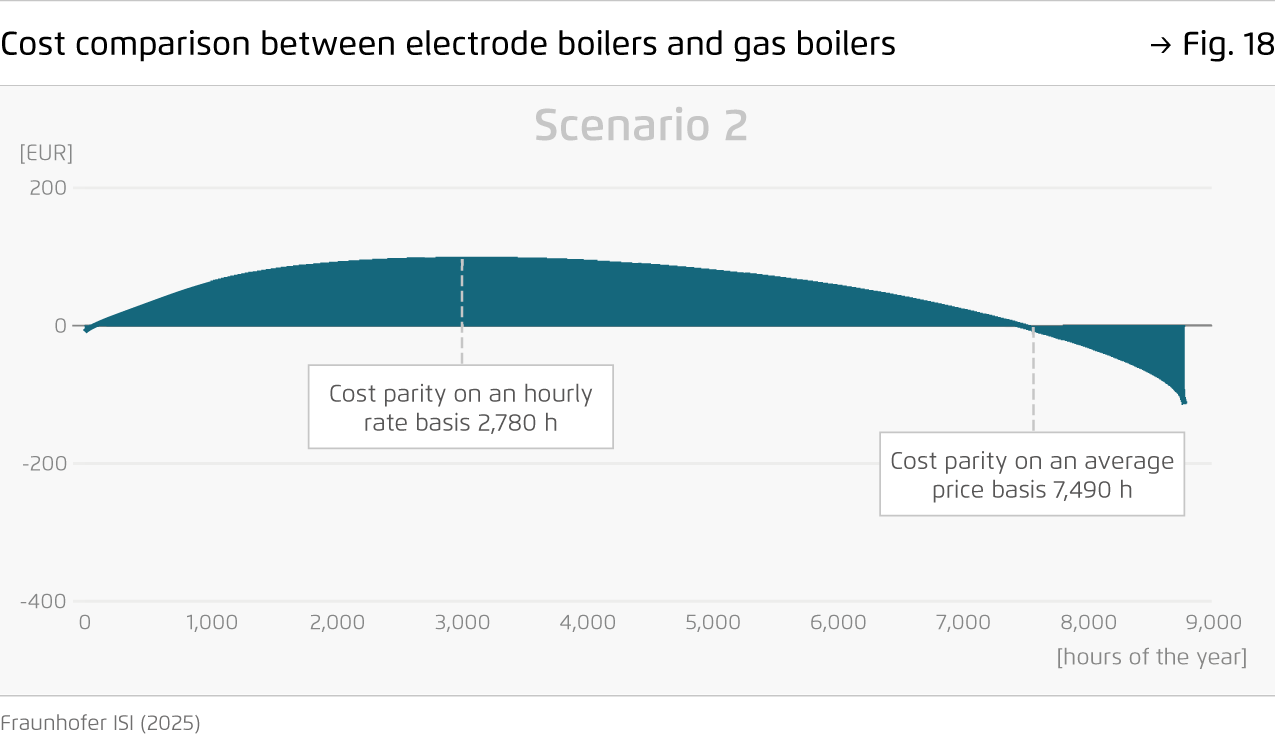
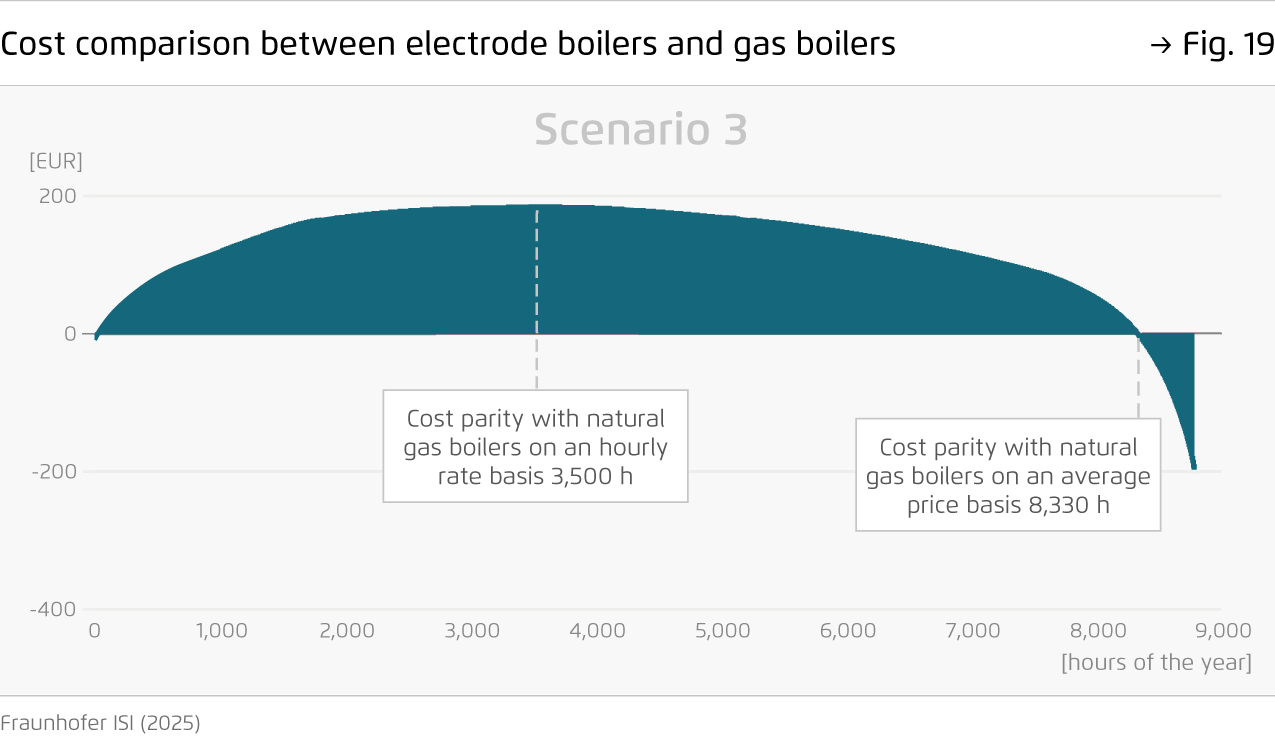
The national case studies in scope in this study reveal important similarities across Member States regarding the barriers to industrial electrification in low- and medium-temperature industrial processes. Given the availability and technological maturity of electrification solutions, these barriers are economic rather than technological in nature and can be addressed via appropriate policy design. Unfavourable electricity-to-gas price ratios limit the competitiveness of high-temperature heat pumps and electrode boilers (Figure 3). Additionally, existing network tariff structures discourage the flexible electricity use that electrode boilers require to operate economically. Grid capacity and connection costs constitute a further constraint given that most industrial sites were designed for fossil-based systems. From an organisational perspective, replacing fossil systems disrupts established production structures and requires skilled expertise. Furthermore, long equipment lifetimes can discourage early replacement. Policy uncertainty, limited knowledge transfer and misguided expectations of alternative fuel availability may also delay investment, underscoring the need for technological and policy clarity, economic support to fill short-term cost gaps and an infrastructural upgrade.
Accelerating industrial electrification requires economic, regulatory and governance levers to be mobilised in a coordinated manner. Economic levers should focus on ensuring that the electricity-to-gas price ratio declines predictably as a result of reduced taxes and levies on electricity, as well as predictable carbon pricing under ETS1 and ETS2. A carbon price of around 130 euros (EUR) per tonne of carbon dioxide (t CO2) by 2030 and EUR 180/t CO2 by 2040, combined with lower electricity taxation, would allow fossil gas to be phased out cost competitively in low- and medium-temperature industrial heat processes in the early 2040s.
However, some limited additional policy intervention will be required even if the business case is positive overall. As the EU is adopting an Electrification Action Plan, ten measures leveraging economic, regulatory, and governance levers have the potential to unleash industrial electrification by addressing economic, infrastructural and organisational barriers. These should include:
- Establish a predictable electricity-to-gas price pathway. Electricity prices are decisive for electrification viability. Member States should rebalance taxes and levies to reduce the relative cost of electricity, using declining gas prices as an opportunity. Tax reform alone will not close current gaps, making carbon pricing and continued deployment of renewable power generation capacity central.
- Close short-term cost gaps with temporary support. National schemes such as carbon contracts for difference help address operating cost gaps. To reduce market fragmentation and overcome limitations under state aid rules, EU-level instruments should complement them with temporary, conditional OPEX support. The recent Innovation Fund heat auction provides a blueprint including: competitive allocation, dedicated electrification baskets, SME access, incentives for flexibility, and a focus on temperature ranges above 80 °C.
- Streamline permitting for industrial electrification. Create standardised fast-track permits for electrification projects by harmonising different local, regional, and national requirements. Establish one-stop-shop permitting portals, clear timelines, and “permit-by rule” pathways. Pre-approve common technologies, strengthen the staff and expertise of permitting authorities, and ensure coordination among utilities and regulators.
- Consider the introduction of gradually phased-in zero-carbon standards for new heat equipment below 500 °C. To avoid fossil lock-in, zero-carbon standards could apply to new industrial heat installations in defined temperature ranges. Eligible technologies include heat pumps, electric boilers, waste heat recovery, solar thermal and geothermal systems. Biomass eligibility should reflect long-term resource constraints. The Industrial Emissions Directive could serve as the legal entry point.
- Support Member States in reforming electricity grid charges that enable flexibility. Current network charge designs often penalise flexible electrification and storage solutions. Member States should introduce time-differentiated grid charges that reward system-serving flexibility and reduce incentives for constant consumption. Commission guidance issued in 2025 should be monitored and, if needed, reinforced through legislation.
- Set indicative deployment and fossil gas phase-out targets. Clear demand signals are needed to unlock investment. The EU should set indicative electrification targets for 2030, 2035 and 2040 by heat class, alongside phase-out dates for fossil gas in low- and medium-temperature applications. An electricity share of 20–30 percent by 2030 and around 50 percent by 2040 is achievable under enabling conditions. Targets should be developed with industry to avoid demand-supply mismatches.
- Embed industrial electrification in the Energy Union framework. The Energy Union governance revision should require Member States to develop dedicated clean industrial heat strategies. These strategies should feed into NECPs for 2030–2040 and transparently address electricity-to-gas price drivers and corrective measures. Electrification should be treated as a core energy security pillar due to its role in reducing import dependence.
- Integrate electrification into grid planning and connections. Grid operators should explicitly account for industrial electrification in adequacy assessments and network planning. EU governance should define maximum connection timelines, support partial cost coverage under defined conditions and prioritise parallel processing of studies and permits. This would reduce delays and investment uncertainty.
- Mobilise public-private de-risking partnerships. Public-private partnerships can reduce financing and operational risks for electrification projects. Electrification should be prioritised in tripartite contracts under the Affordable Energy Action Plan. Demand aggregation for SMEs could unlock cheaper financing, supported by national or EIB guarantees. Credit guarantees for PPAs can further reduce counterparty risk.
- Strengthen the EU electrotech manufacturing base. An industrial electrification alliance should align deployment, manufacturing, skills and finance. By aggregating demand and improving project pipelines, it would provide manufacturers with visibility to invest in EU production capacity. The alliance should coordinate with EU industrial policy tools, including the Net-Zero Industry Act, InvestEU and the Competitiveness Fund. Support for non-yet mature electric heating technology should be mainstreamed in EU cleantech funding instruments including the Innovation Fund and Horizon Europe.
Further reading
An extended version of the Germany case study is available on our German website.
Bibliographical data
Downloads
-
Study
pdf 4 MB
The business case for electrifying industrial heat
Evidence from selected EU Member States
All figures in this publication
Cost per scenario in selected sectors, Germany
Figure 1 from The business case for electrifying industrial heat on page 8
Share:

Cumulative costs by scenario and selected sectors in Italy, 2025−2050
Figure 2 from The business case for electrifying industrial heat on page 9
Share: