-
Policy frameworks to modernise the chemical sector work best hand in hand with reliable protection against carbon leakage.
With intertwined global value chains still built on fossil fuels and feedstocks, this growing sector is particularly exposed to competitors with lower carbon costs. Tailored safeguards are therefore essential: such protection can keep competition fair, signal that clean investments pay off and generate revenues to help fund the transition.
-
While carbon leakage risk is concentrated in relatively few products, a value chain approach is key to coherent and well-targeted leakage protection.
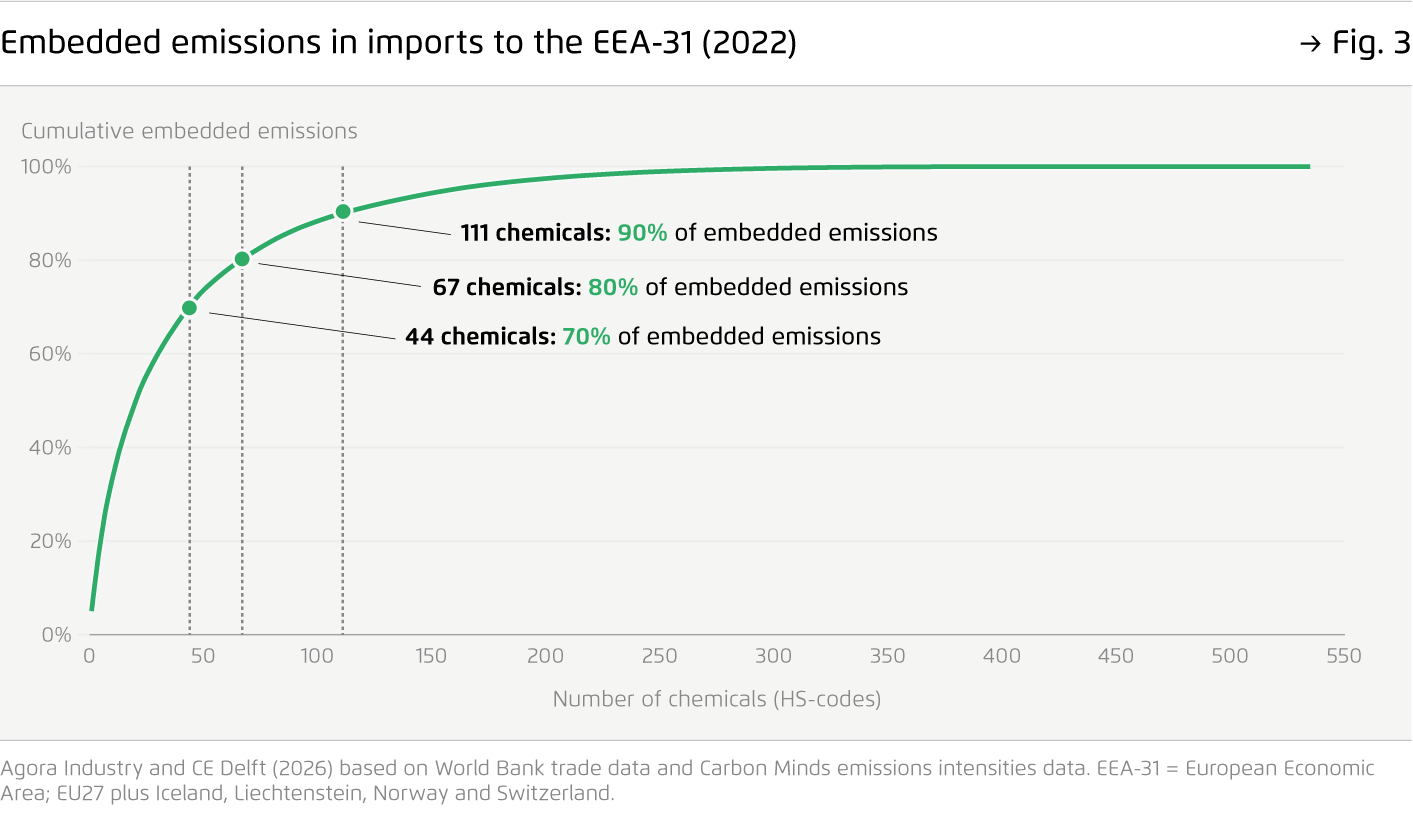
Of the 535 chemical product codes assessed in Europe, just 44 account for 70 per cent of embedded emissions in imports, and 111 for 90 per cent. Identifying these products offers a sound starting point for targeted measures that close loopholes and safeguard well-functioning markets.
-
Effective leakage protection must consider all parts of the value chain where leakage risks arise while keeping administrative complexity manageable.
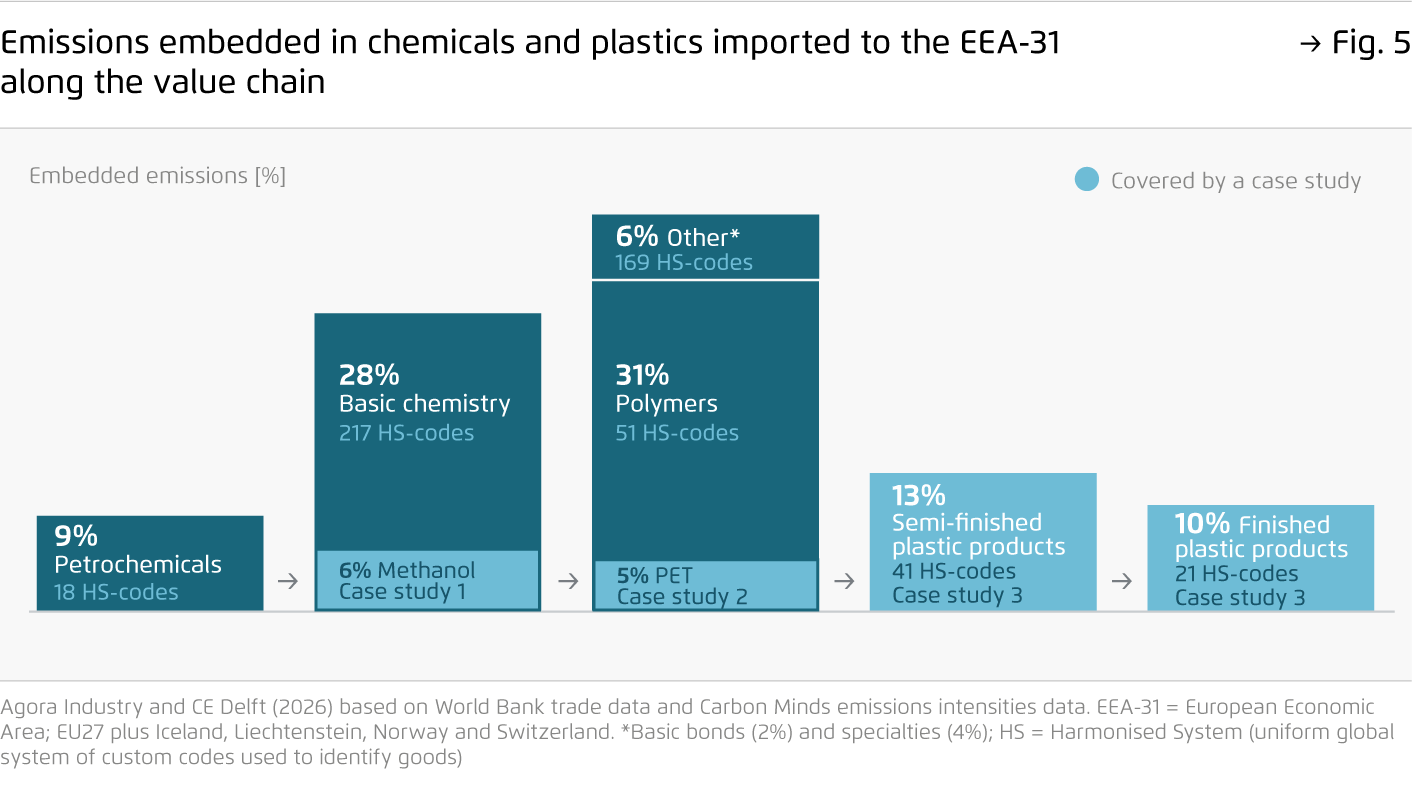
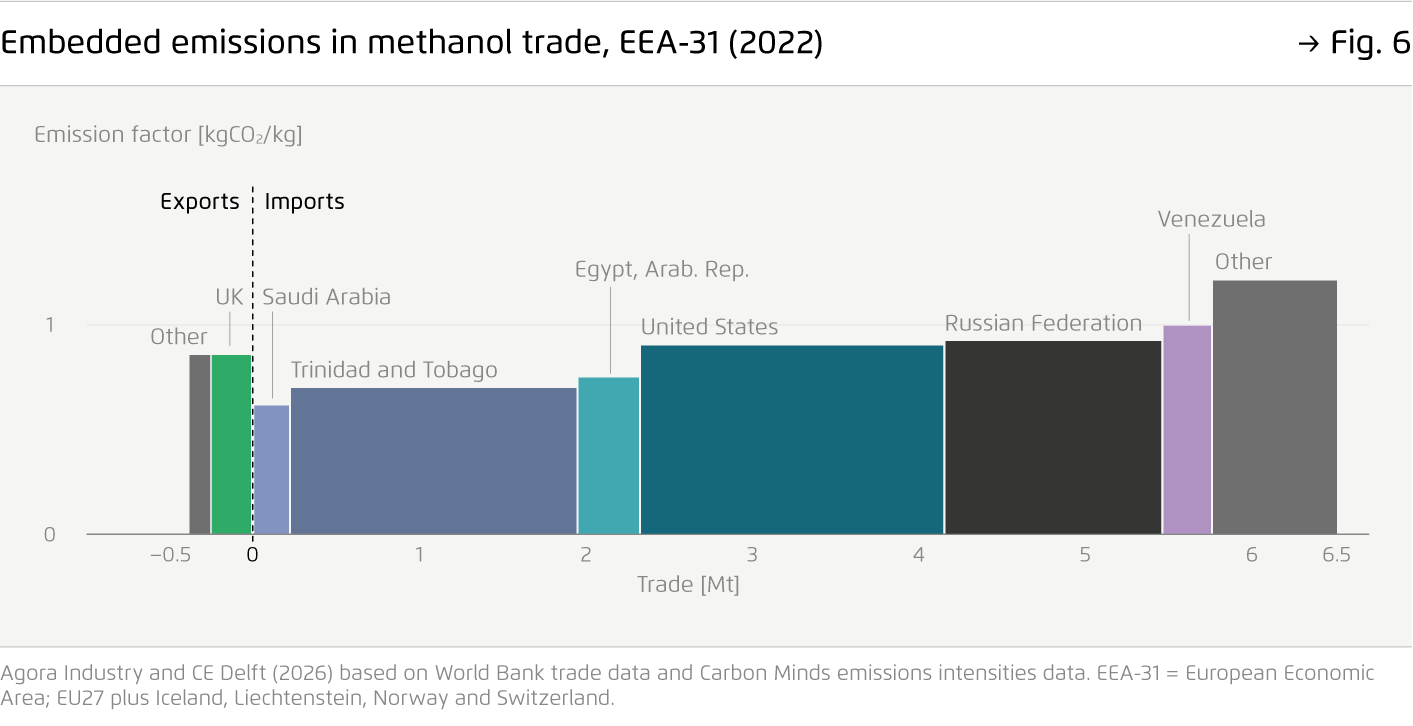
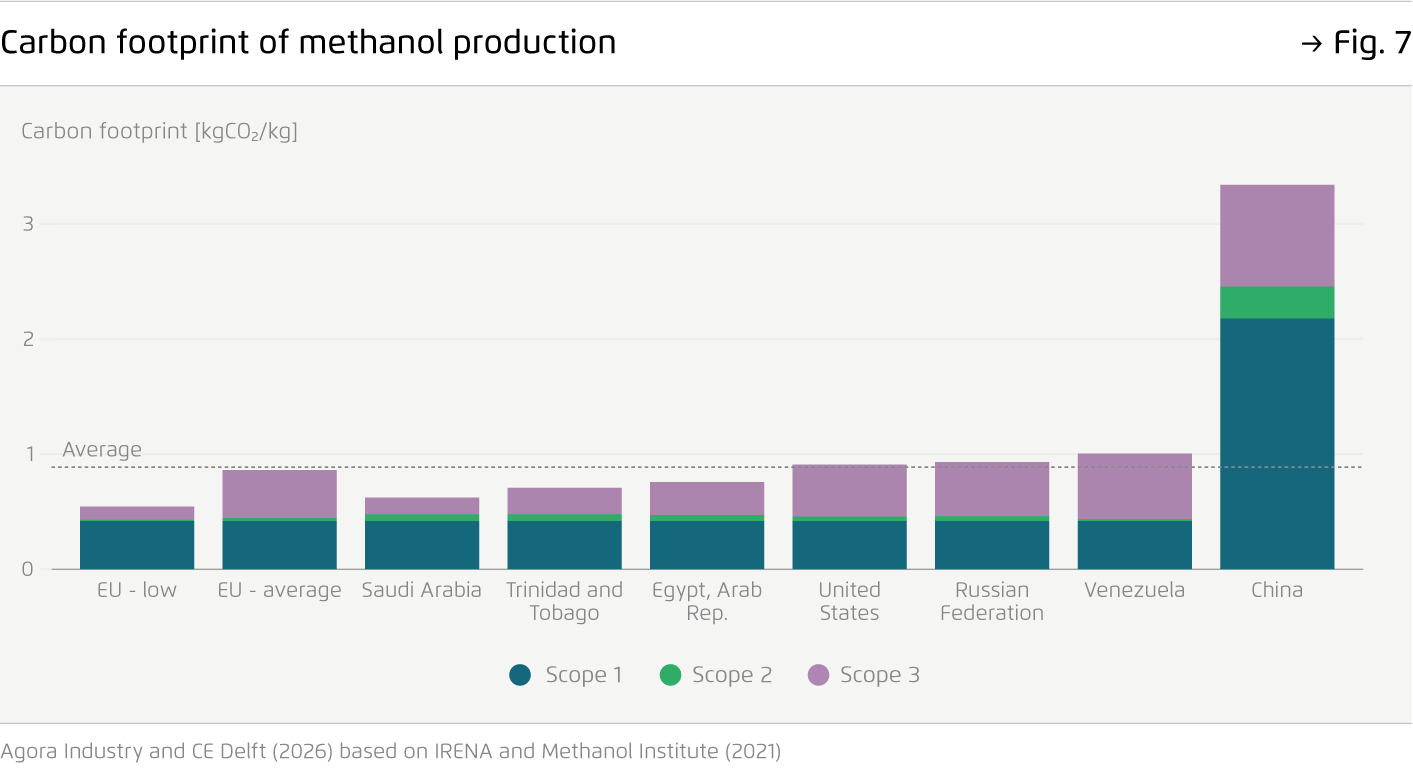
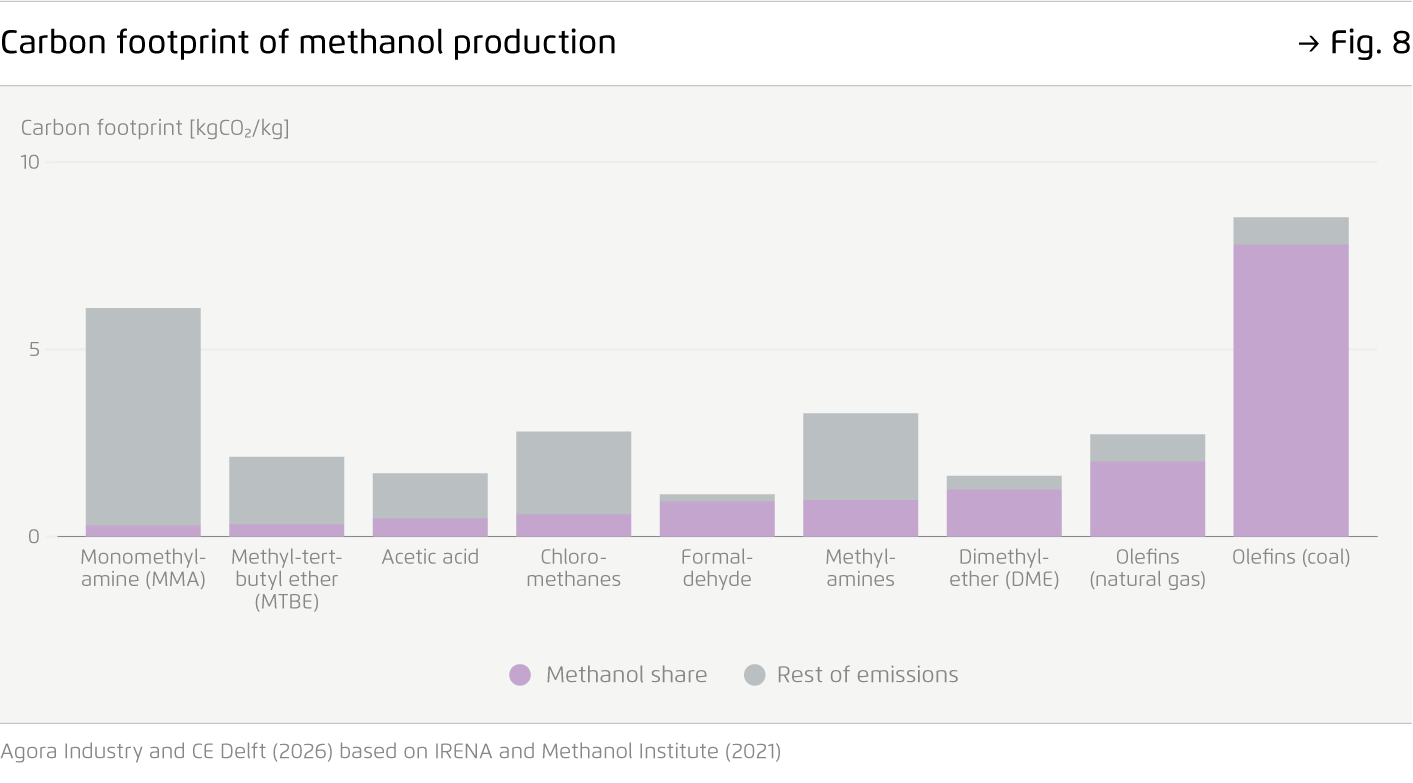
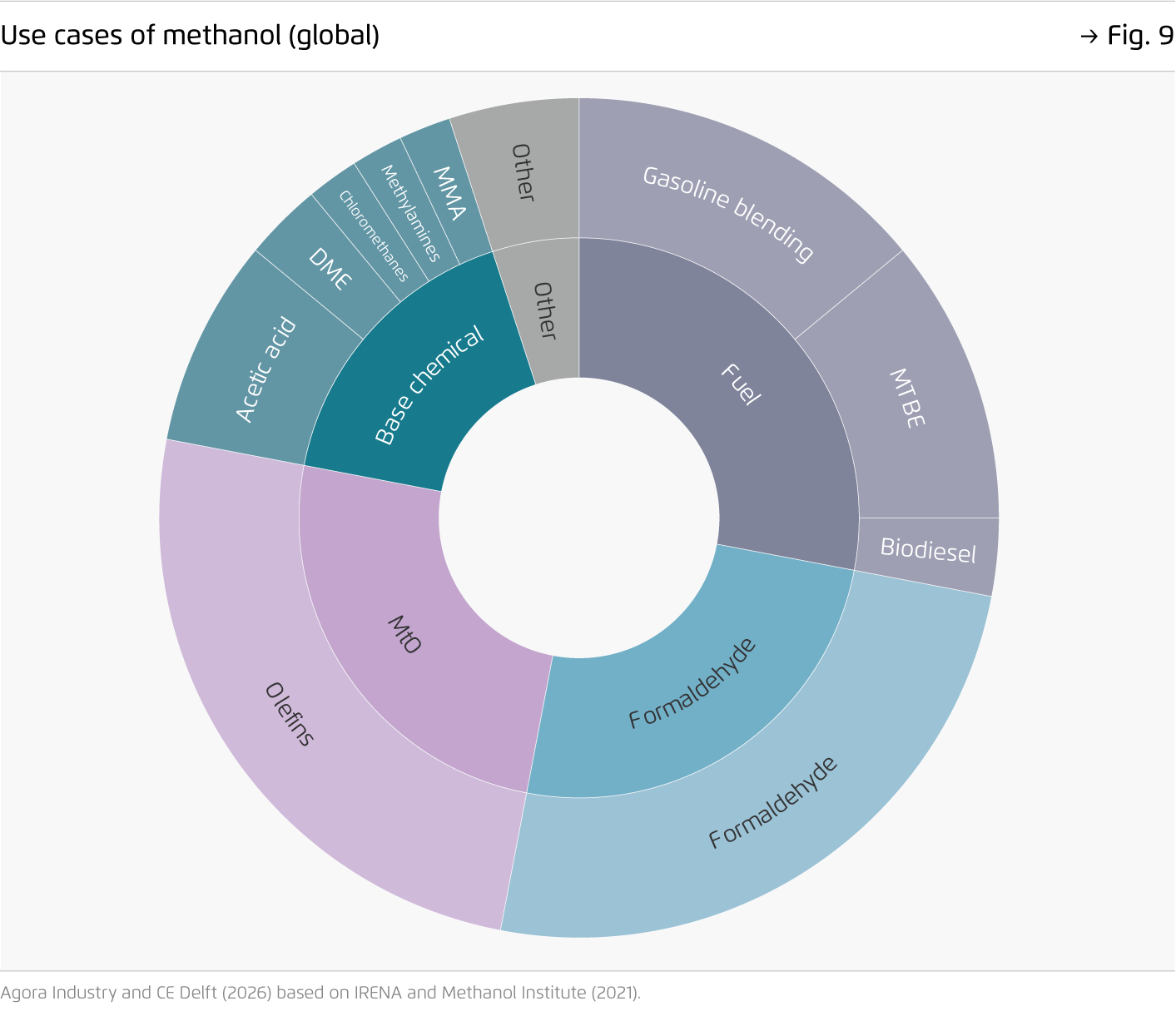
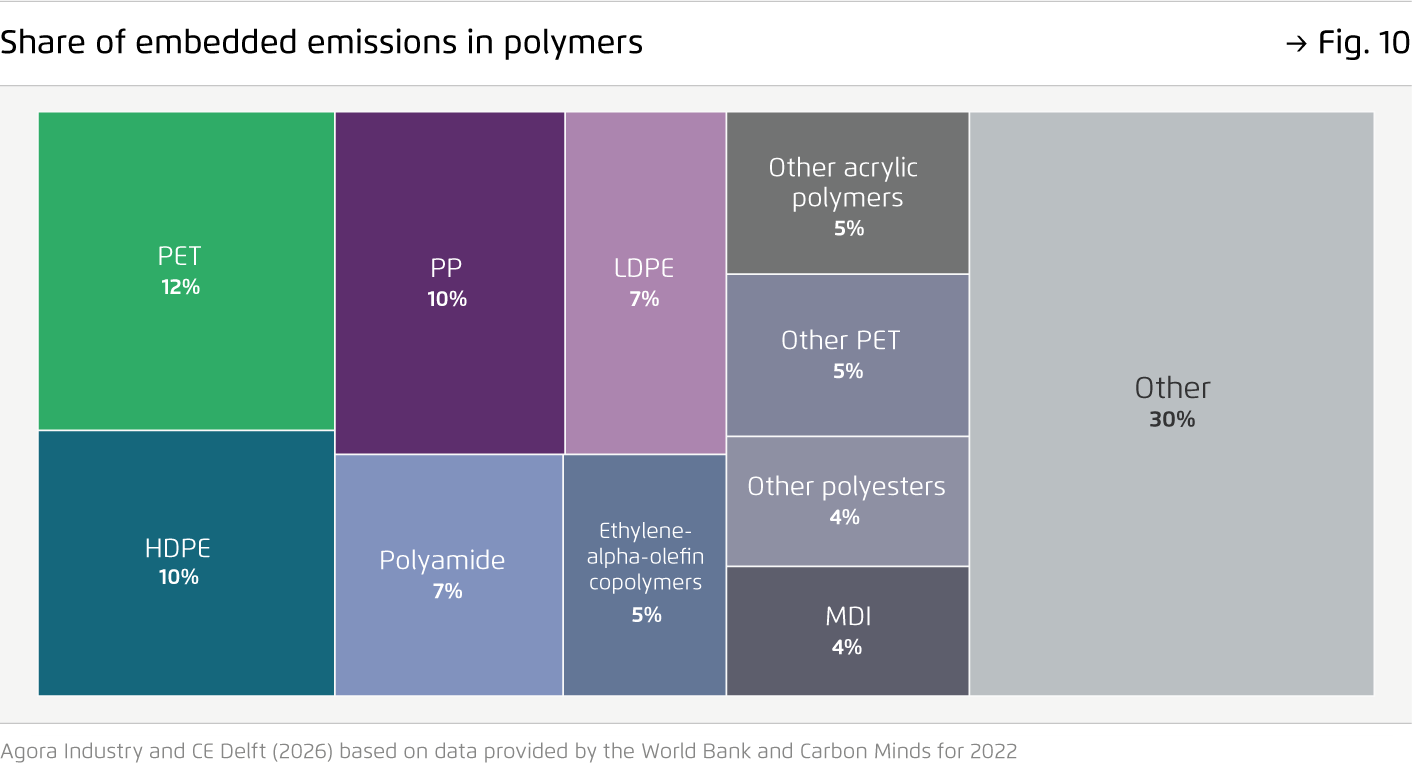
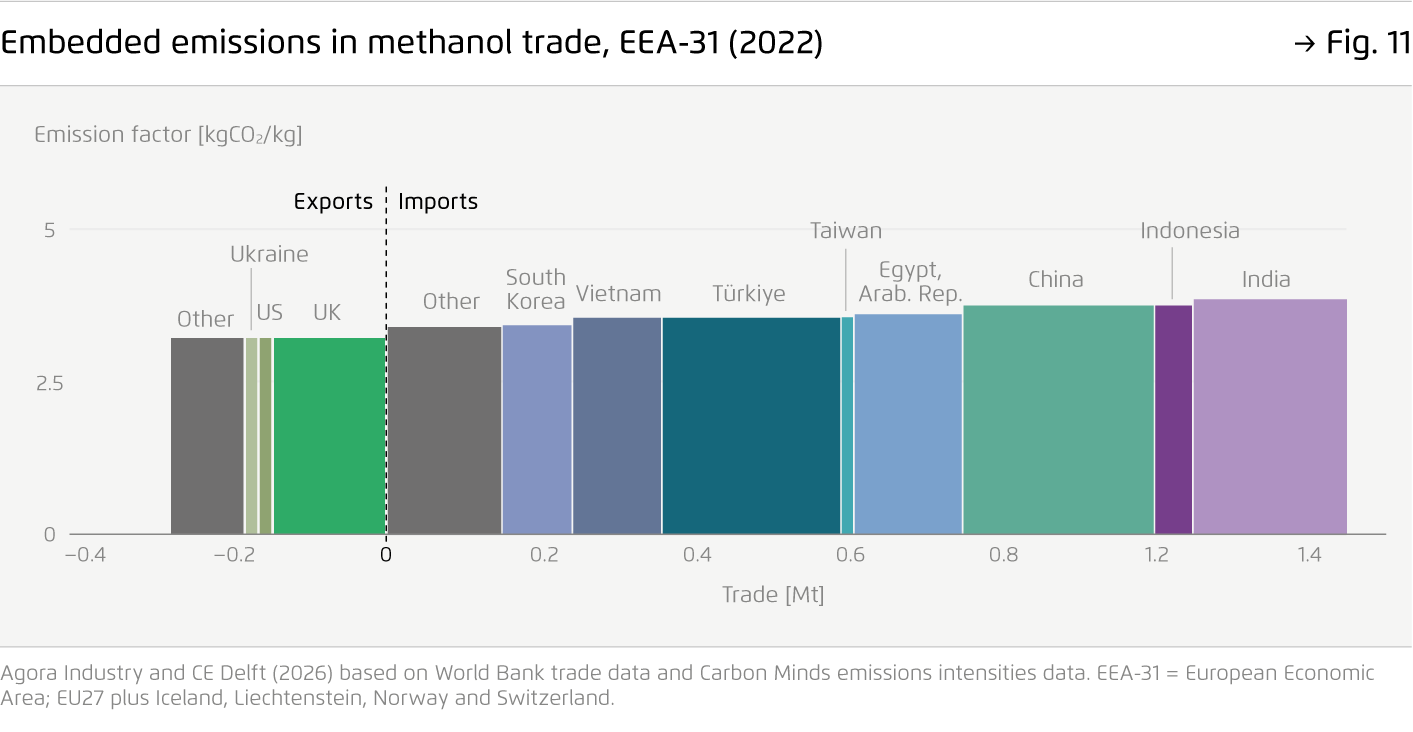
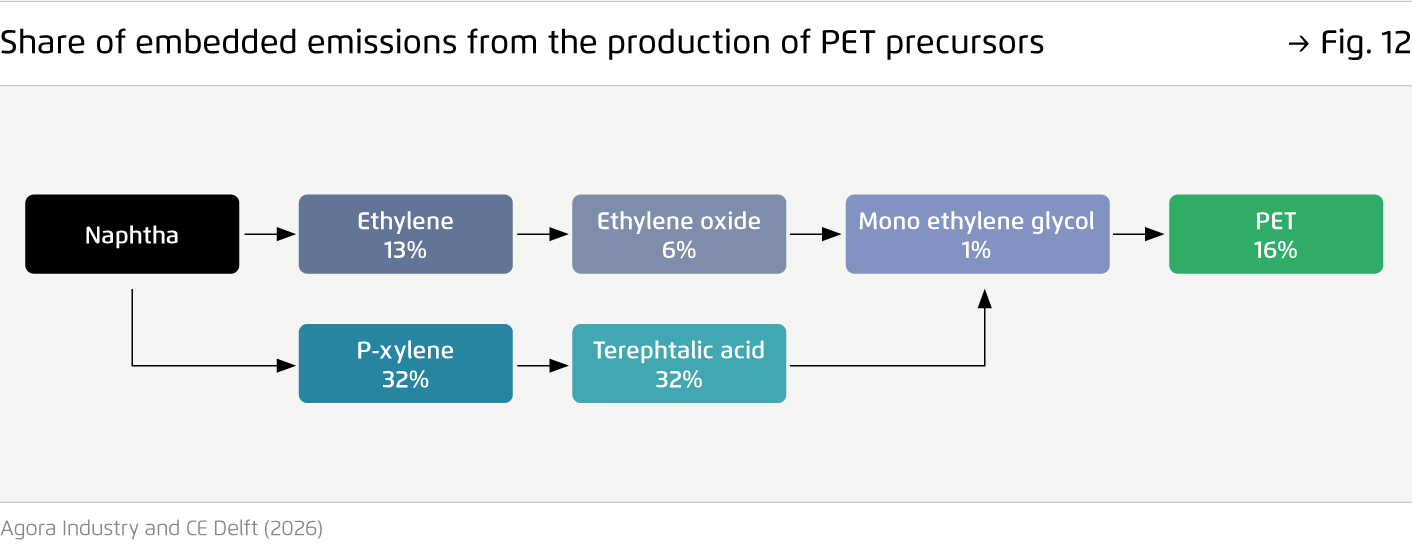
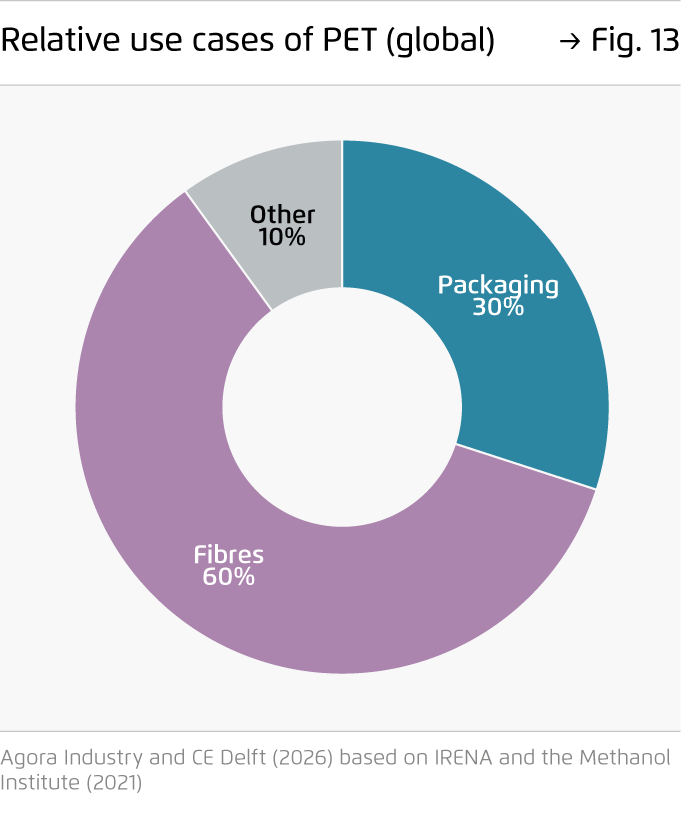
Products with short, simple value chains are the easiest to address: methanol, the largest emission source in EU chemical imports, has few cross-links and is therefore well suited. PET, by contrast, shows the challenge of longer, more complex chains: protection must include its inputs and downstream products and extend to all polymers.
-
International cooperation strengthens carbon leakage protection in the chemical sector.
More and more countries are putting a price on carbon emissions from chemicals, but different price levels distort competition. As chemical value chains span the globe, joint approaches such as shared standards for low-carbon and near-zero chemical products can create a level playing field and unlock large markets for clean chemicals. Together, countries can turn global trade into an engine for the transition.
CBAM and beyond: carbon leakage protection in the chemical industry
An assessment of policy options

Summary
As more countries price greenhouse gas emissions, finding effective ways to contain the risk of carbon leakage in the chemicals sector is becoming more urgent. This paper discusses seven key principles for effective carbon leakage protection in the chemical industry and presents case studies on how leakage protection can be achieved for selected chemical value chains.
For methanol, the complexity of the value chains is similar to that of fertilisers, which are already covered by the EU’s Carbon Border Adjustment Mechanism (CBAM). With renewable methanol as a key platform chemical for climate neutrality, there is a clear case for protecting clean production and enabling industry to pass on the green premium. PET, or polymers more generally, are another candidate, but involve greater complexity. For the European case, one option could be to rely heavily on default values, aiming to phase them in from 2031, and use the interim period to build the database and electronic reporting systems.
Key findings
Bibliographical data
Downloads
-
Impulse
pdf 1 MB
CBAM and beyond: carbon leakage protection in the chemical industry
An assessment of policy options
All figures in this publication
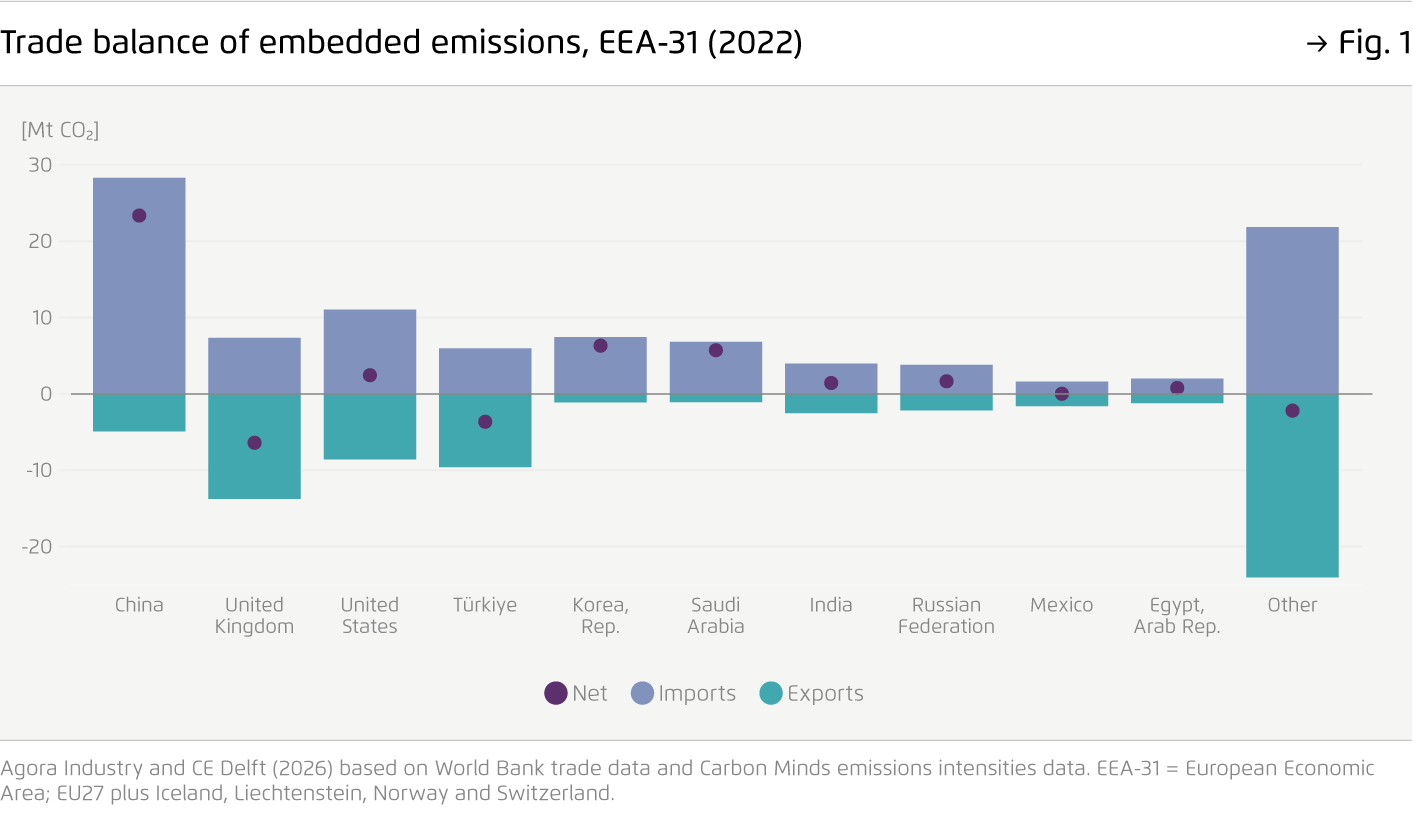
Trade balance of embedded emissions, EEA-31 (2022)
Figure 1 from CBAM and beyond: carbon leakage protection in the chemical industry on page 9

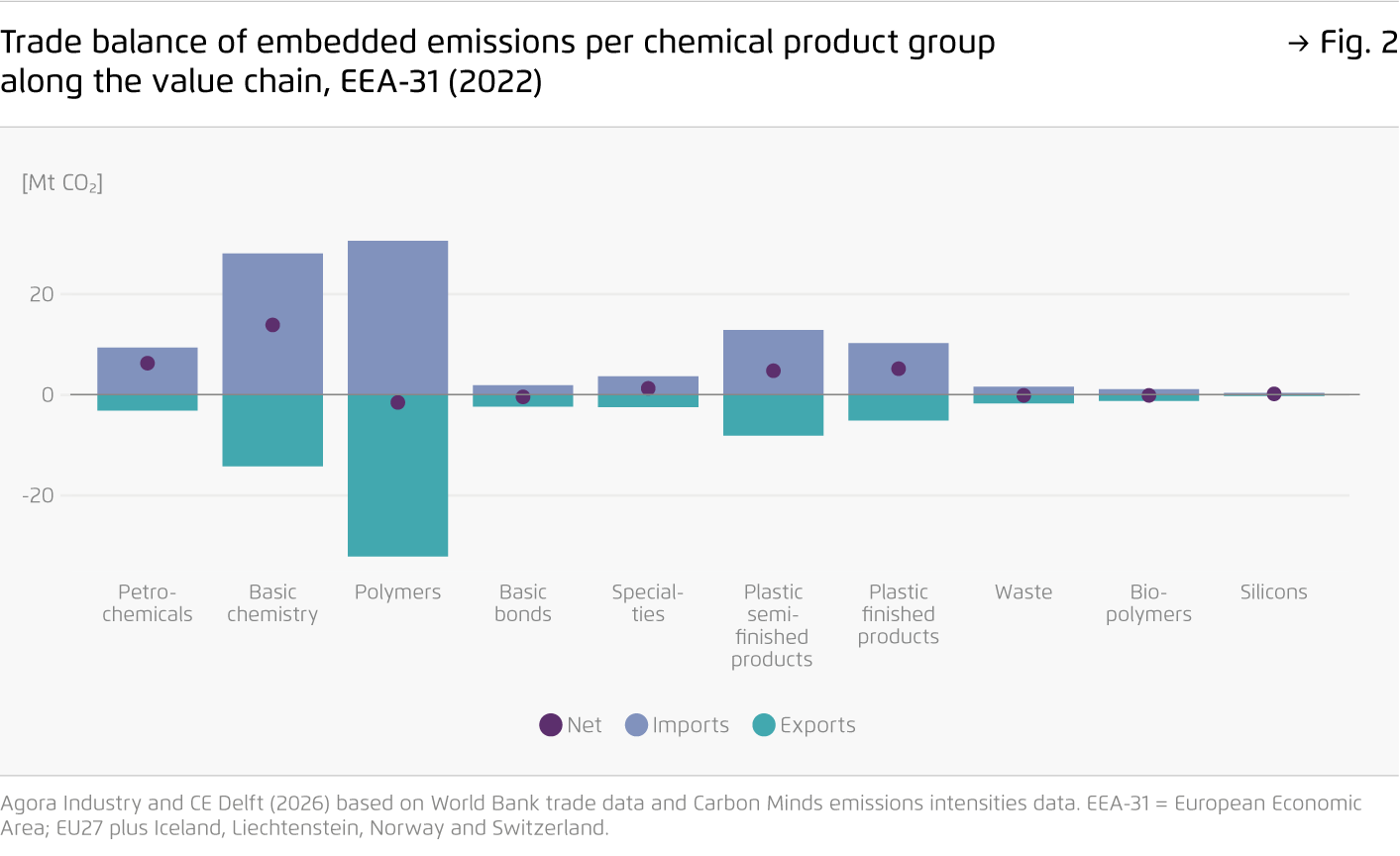
Trade balance of embedded emissions per chemical product group along the value chain, EEA-31 (2022)
Figure 2 from CBAM and beyond: carbon leakage protection in the chemical industry on page 10