-
Geopolitical shifts are challenging the global chemical industry, but they also create a strategic opportunity.
By focusing on innovation, security of supply and good jobs on the path to climate neutrality, the sector can strengthen its resilience and competitiveness. This is particularly evident in Germany, where disrupted fossil fuel supply chains, weak downstream demand and persistently high energy and raw material prices have put the industry under significant pressure.
-
Investing in the bioeconomy, green hydrogen and recycling reduces dependence on fossil imports by increasing the use of regionally available resources.
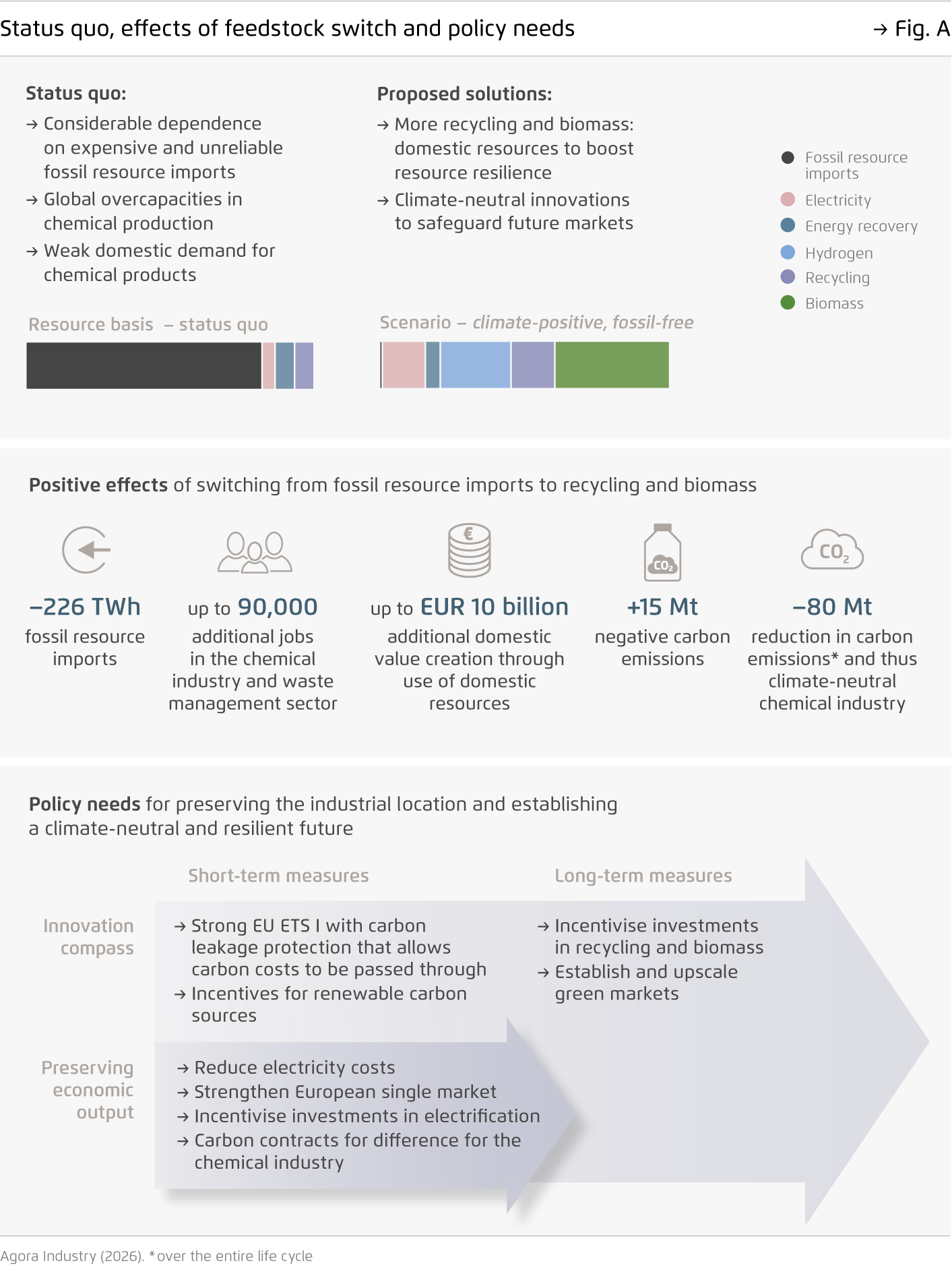
Complementing this approach with international trade partnerships for green methanol, ammonia and ethanol can optimise costs and maintain supply security. For countries that prioritise such measures to enhance resilience, this transformation also creates significant employment value. In Germany this could reach up to 90,000 new jobs and ten billion euros of added value by 2045.
-
Developing new value chains would enable substantial emission reductions across the chemical value chain.
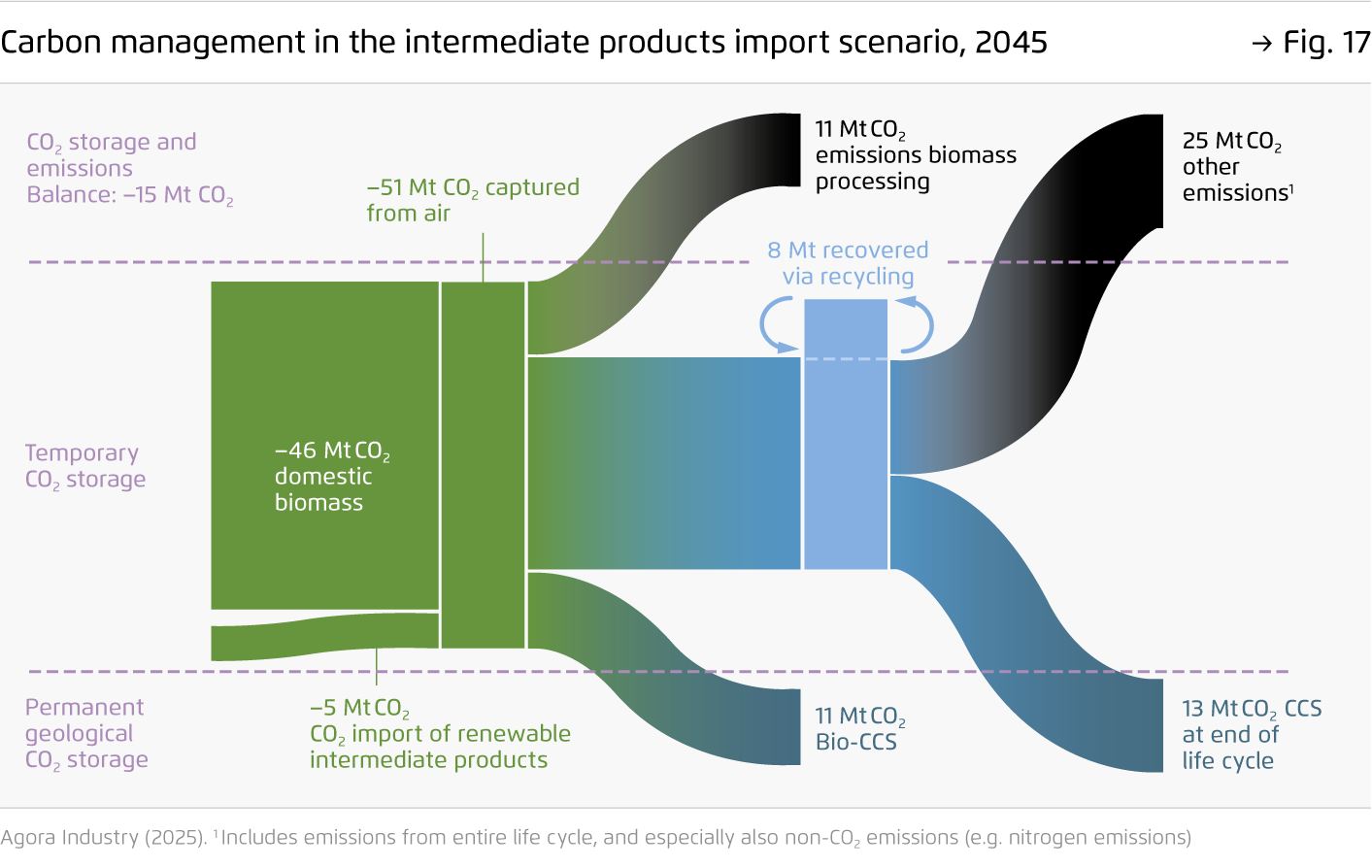
This could reduce the footprint of the German chemical industry by up to 80 million tonnes of carbon dioxide equivalent, alongside up to 15 million tonnes of negative emissions per year. This would allow the sector to make a significant contribution to national climate goals while also positioning itself in emerging global markets for green products.
-
Transforming the chemical sector – the largest industrial consumer of fossil energy – is critical to global efforts to phase out fossil fuels.
The Transitioning Away from Fossil Fuels Conference in Santa Marta earlier this year helped build political momentum, backed by 57 countries representing around one third of global GDP. Strengthening supply and demand for green chemicals and intermediate products such as renewable methanol can accelerate the shift to fossil-free global markets.
This content is also available in: German
Innovations for tomorrow: opportunities for a climate-neutral chemical industry
How transitioning away from fossil fuels boosts industrial resilience and employment

Introduction
The chemical industry is facing a period of significant structural change. Geopolitical shifts, disruptions and volatility in energy markets, global chemical production overcapacity and weak downstream demand are increasing pressure on the sector worldwide. This study examines how a transition away from fossil resources can strengthen the resilience and competitiveness of the chemical industry while reducing import dependencies and creating new opportunities for jobs and value creation.
Using Germany – the world’s third-largest chemical producer – as a case study, the study analyses how a strategic reorientation towards the bioeconomy, recycling and international partnerships for green intermediate products such as methanol could shape future production pathways. The scenario analysis assesses different technology and import pathways, including the use of domestic biomass, recycled carbon and renewable electricity, and evaluates their implications for investment, operating costs, employment and value creation.
The study identifies key opportunities and trade-offs associated with different resource strategies and provides policy recommendations to support the chemical industry’s transition towards climate neutrality while safeguarding industrial activity and economic value creation. Originally published in German, the study has been translated into English.
Key findings
Benefits of a climate-neutral chemical industry
Summary
The chemical industry in Germany has traditionally been characterised by its core strengths: its innovative capacity and its high-quality and specialised products. It has always continued to thrive despite a high-price environment and growing international competition. This study highlights ways in which focusing on innovation and resilience can pave the way to a future-proof climate-neutral chemical industry in Germany.
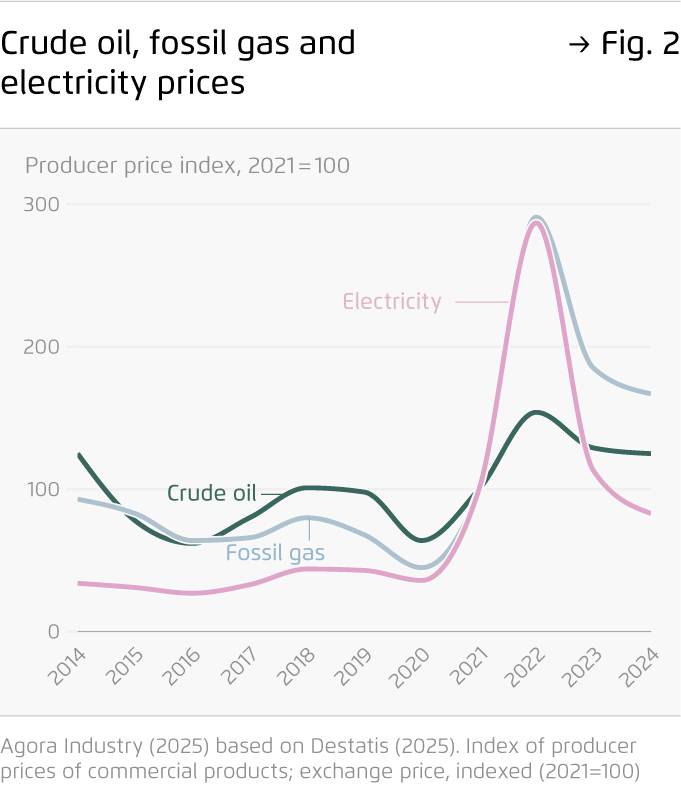
The chemical industry is currently facing considerable economic pressure. Weak domestic demand, growing international competition and high fossil energy prices are putting a strain on a sector of central importance for Germany. The two energy crises of recent years have highlighted the risks associated with a high level of dependence on imported fossil energies and fuels. This difficult situation is not the result of climate policy; it is the consequence of global overcapacities, fossil dependencies and structural disadvantages inherent to Germany. Investor reticence and plant closures are adding to the uncertainty in the sector. At the same time, the chemical industry remains a fundamental part of the German economy; it is closely interwoven with many other branches of industry and is the basis for key value chains. The German and European chemical industries are experiencing tough global competition and have been losing shares of the global market for around 20 years now. One thing is obvious from the current discussion of plant closures and the associated job losses: Germany as a location for chemicals production is facing major competitiveness challenges on global markets – regardless of climate policy measures, and even if fossil production continues.
At the same time, the German chemical industry boasts a diverse portfolio of companies and products and an excellent research network. These structural advantages can serve as a springboard for innovating its way towards a more resilient and climate-neutral future. The sector needs to identify markets in which it can leverage its core competencies, such as its innovative capacity and ability to develop high-quality and specialised products, in order to keep value creation in Germany and Europe. It must ask itself which areas offer long-term competitiveness and decide, together with policymakers, where domestic production is needed to ensure Germany’s resilience as an industrial powerhouse.
Discussions and news about plant closures make it clear that a profound structural shift is already underway given that the current business model, being reliant on fossil resource and energy imports, is seeing energy costs soar. The dynamic nature of this transformation makes it vital to understand that maintaining the competitiveness of the European chemical industry, increasing Europe’s energy security and resilience and transitioning to fossil-free resources and energy sources are inextricably linked goals that must be pursued with ambition and resolve. In a challenging environment, shifting consistently towards a sustainable business model that is less dependent on fossil resource markets presents an opportunity to be a global technological pioneer and tap into key segments of green markets at an early stage. Transitioning to renewable carbon sources offers the chance to create new jobs and additional value, and to generate negative emissions. The chemical industry can thus make an important contribution to a climate-neutral society overall.
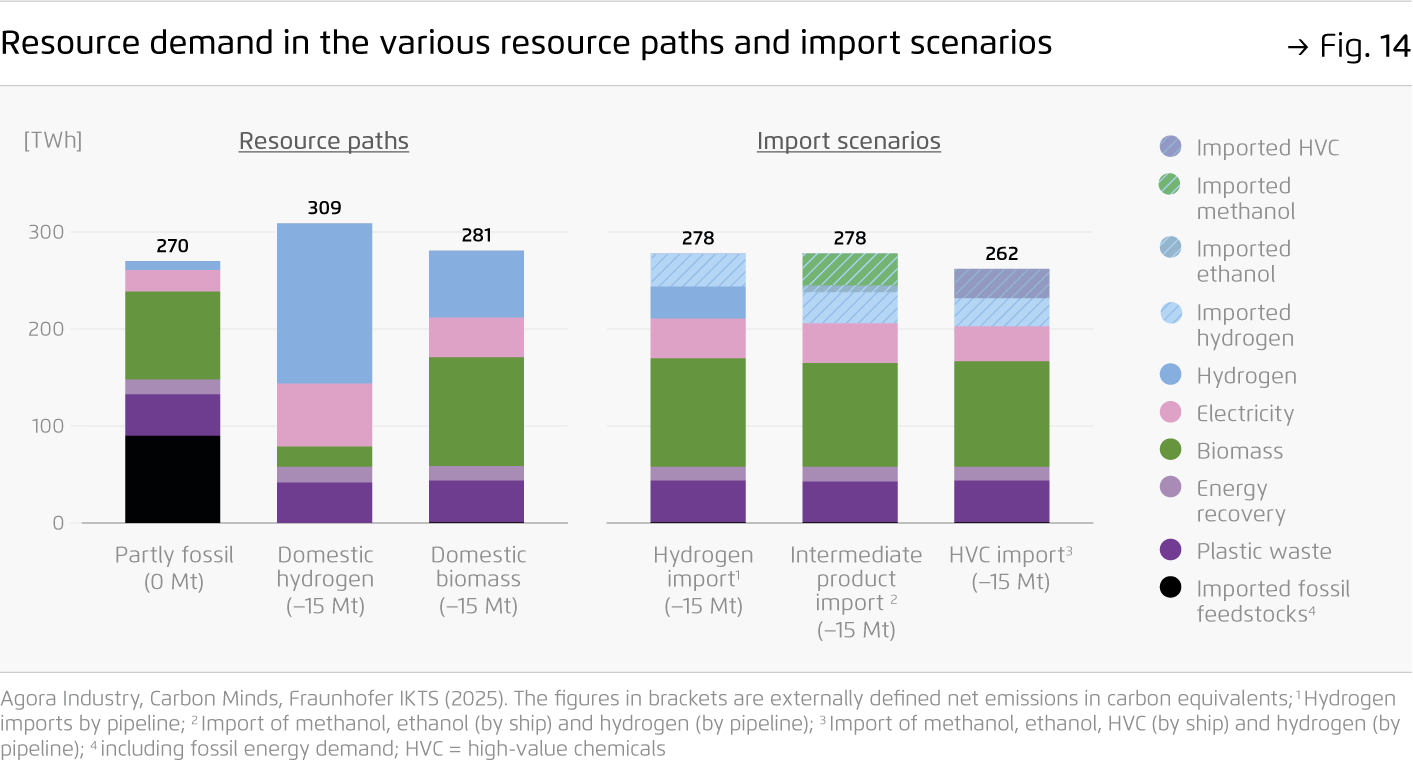
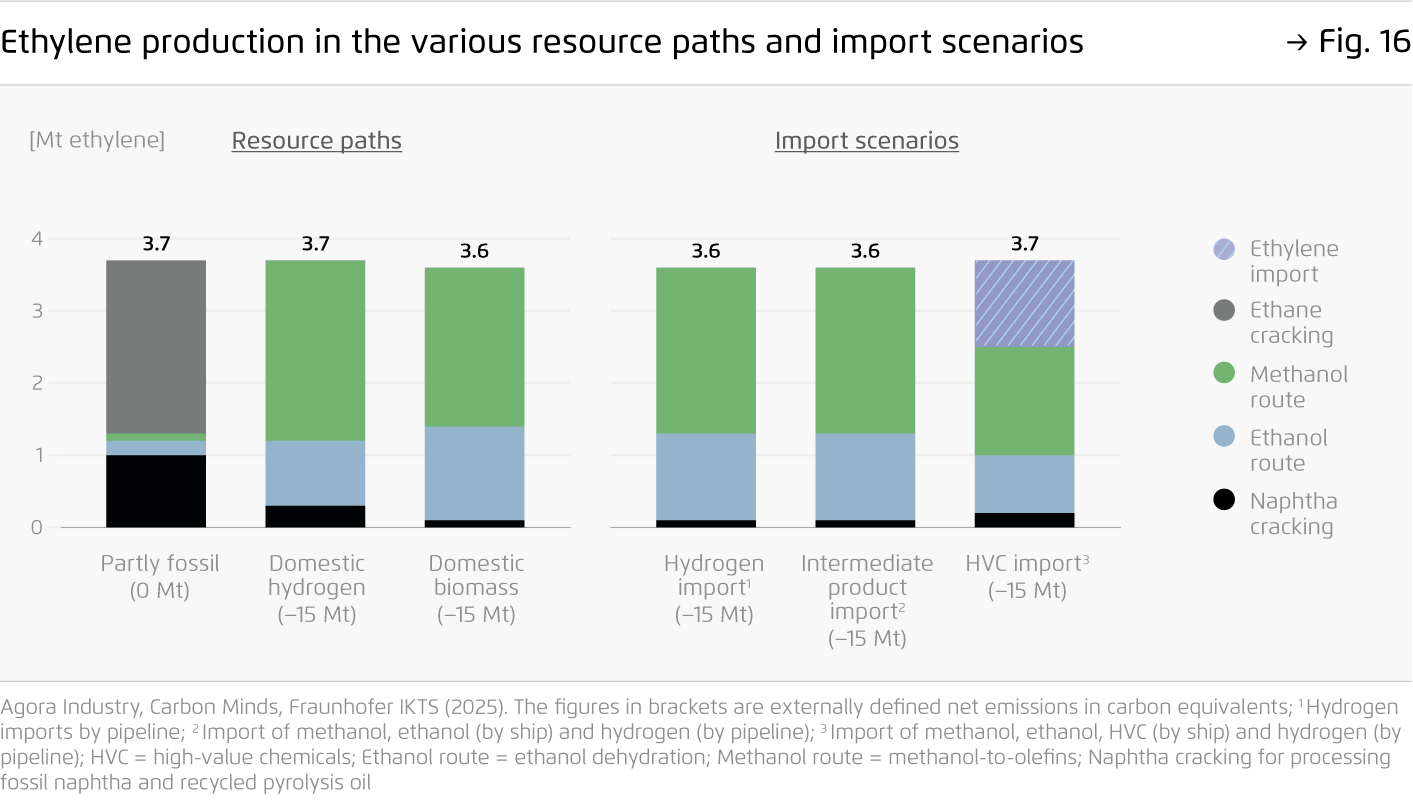
This study analyses possible pathways to a climate-neutral chemical industry from an ecological, economic and social perspective. It looks at various resource and technology paths in which imported fossil resources can be replaced by renewable resources produced domestically, such as biomass, plastics recycling, electricity and hydrogen. It then compares these pathways in terms of their energy demand, investment requirements and operating costs and their impact on value creation and employment. The study additionally explores the option of incorporating climate-neutral imports at different stages of the value chain – such as green hydrogen, the intermediate products methanol, ethanol and ammonia, and green basic chemicals – complementing domestic production by up to one third.
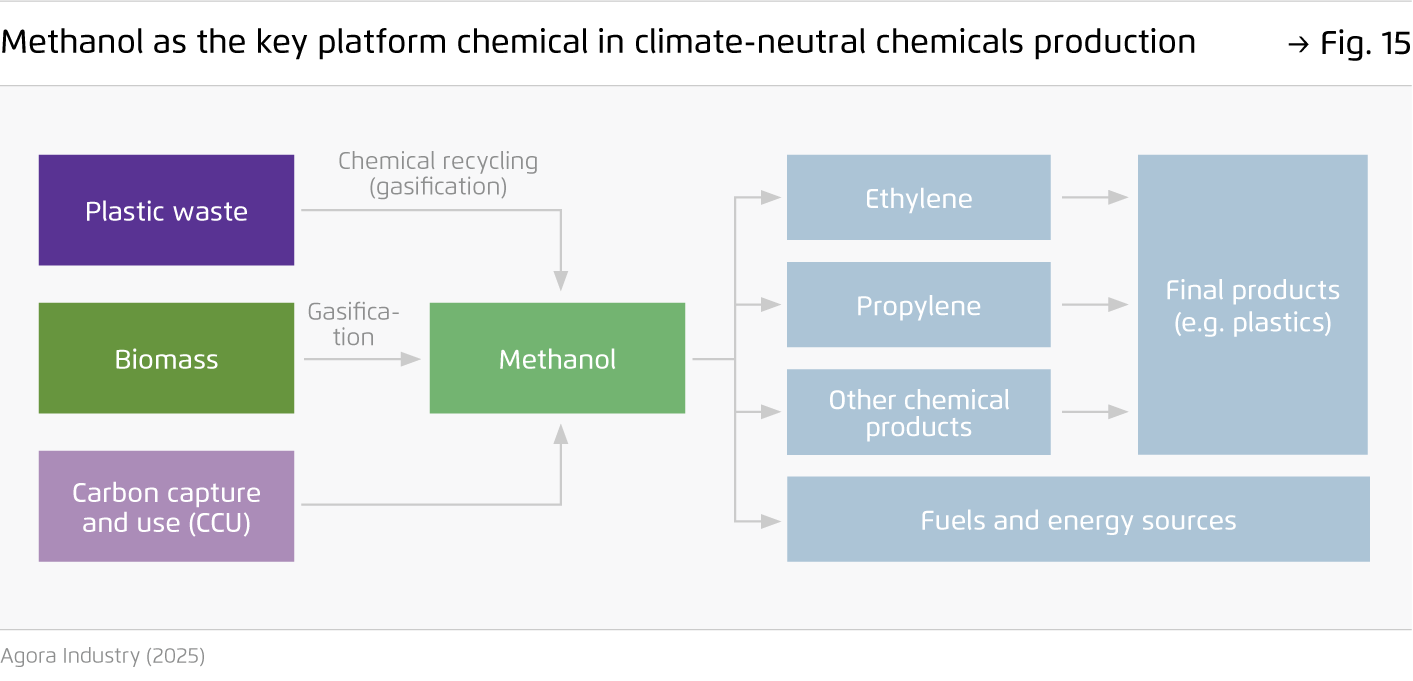
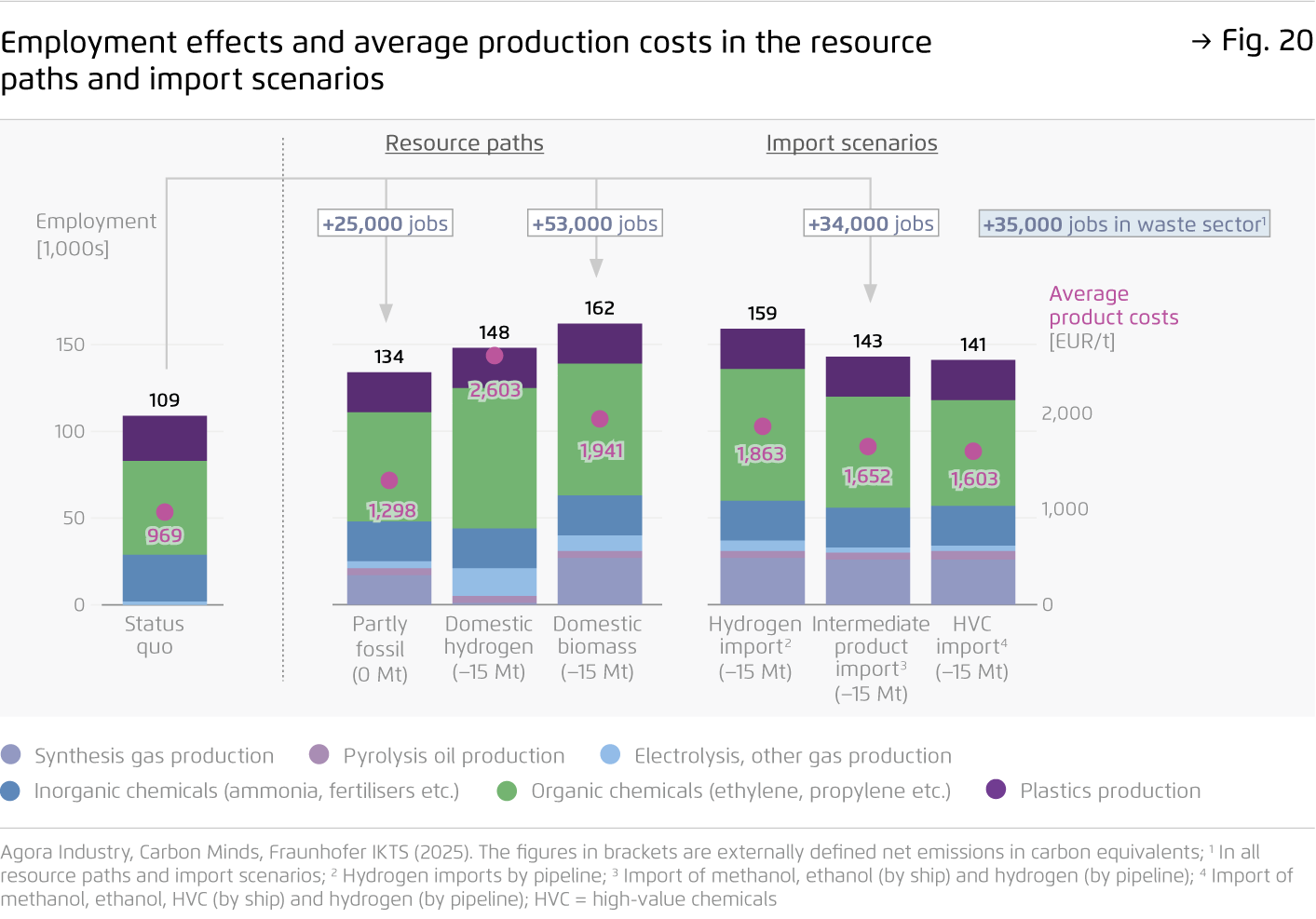
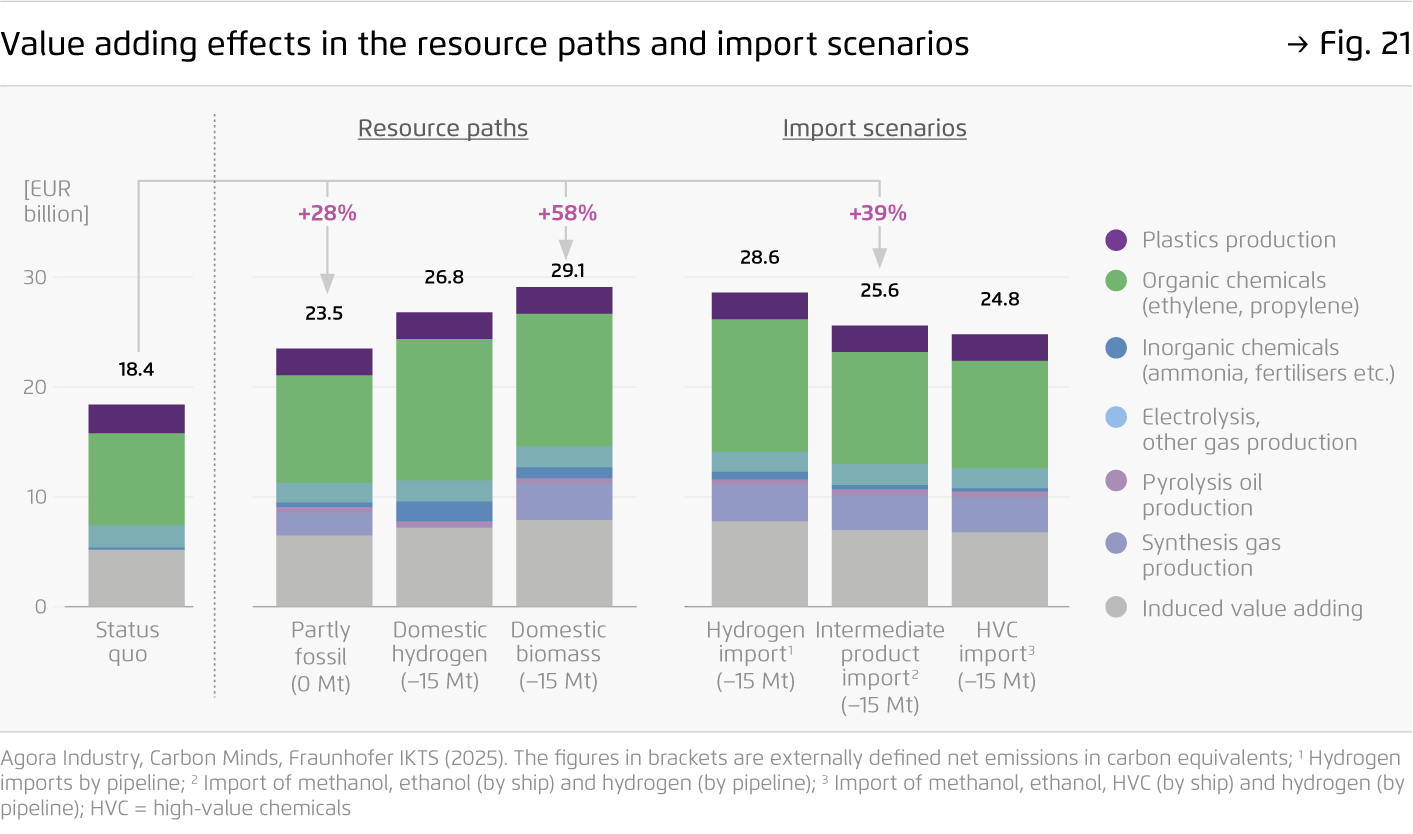
Transitioning from fossil resource imports to homegrown renewable resources such as biomass and plastics recycling will create up to 88,000 new jobs and additional value of upto 10.7 billion euros in Germany. The methanol economy will be the interface between biomass production and the chemical industry. Production and value chain stages that to date have taken place abroad can thus be brought to Germany. Biomass, being a decentralised resource, offers opportunities for rural areas in particular to profit from a future methanol economy.
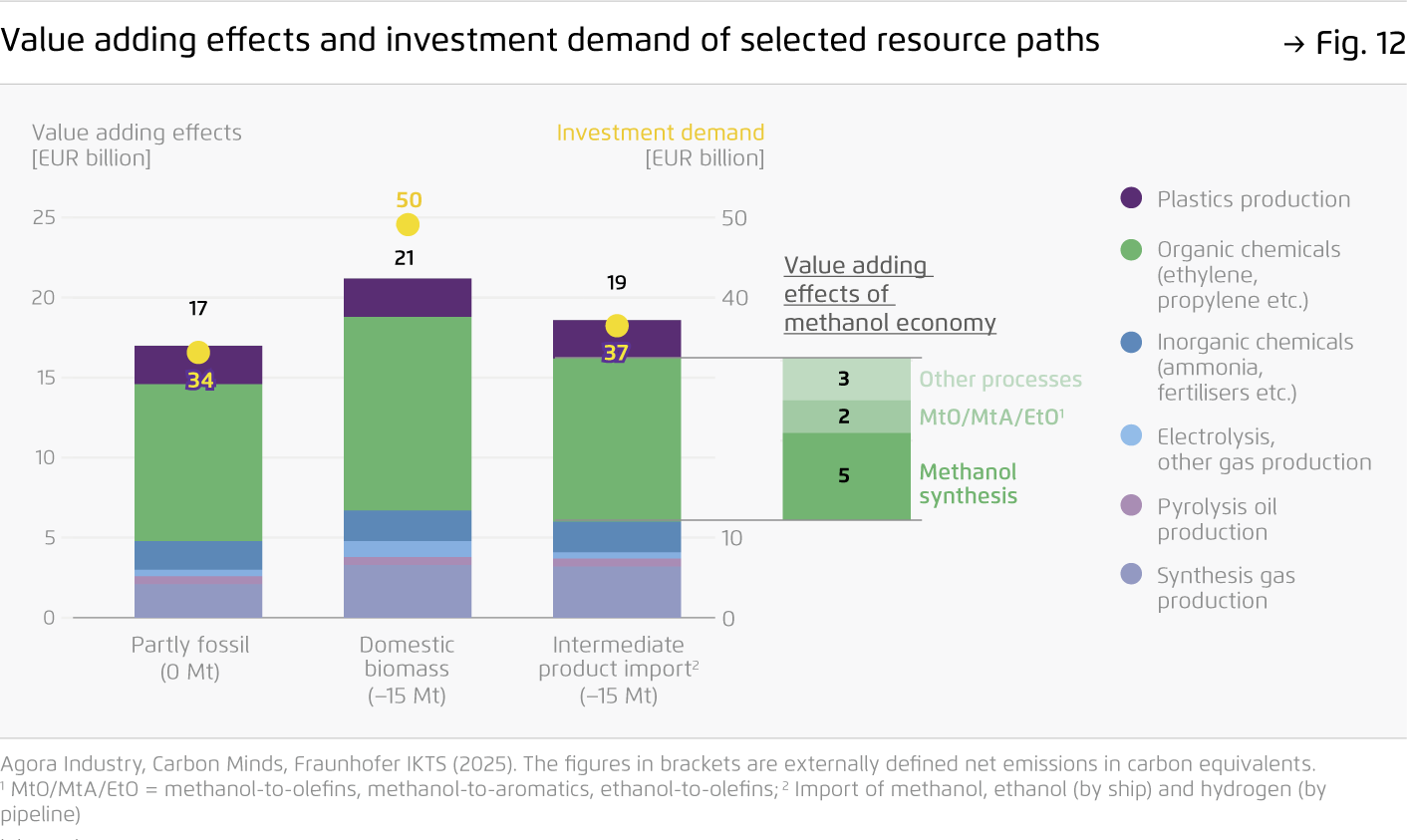
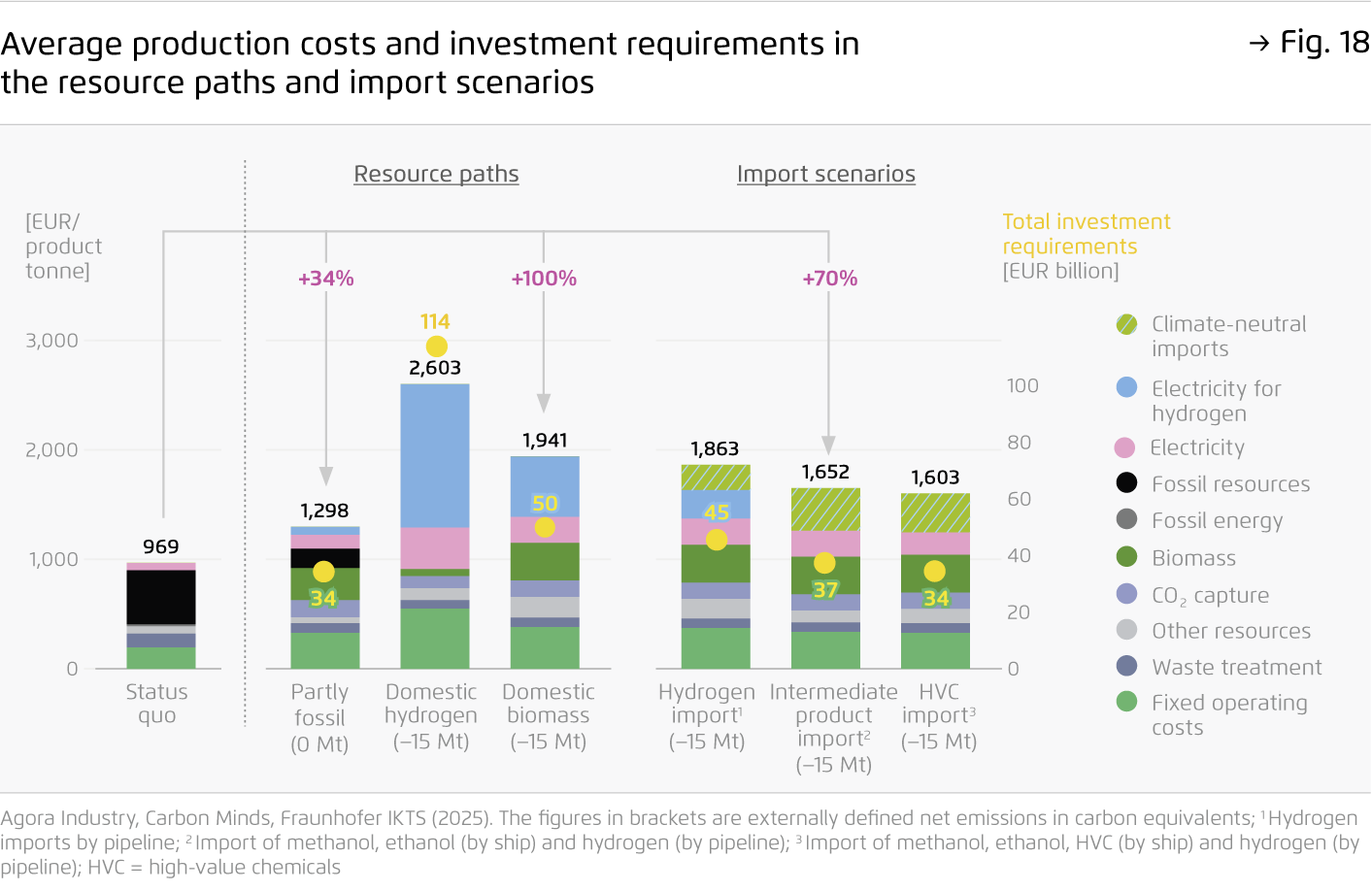
Combining domestic resources with imports of climate-neutral intermediate products is a “sweet spot”: compared with scenarios based entirely on domestic resources, it reduces the total amount of additional investment needed in new facilities from 50 to around 37 billion euros. The remaining investment required – assuming a linear investment path – of around 1.85 billion euros per year equates to roughly twelve percent of the chemical industry’s typical current annual investments. Even if up to one third of selected green intermediate products are imported, switching to renewable resources offers great potential for domestic job and value creation. 69,000 new jobs could be created and value adding increased by 7.2 billion euros. Hydrogen production is proving to drive up costs significantly while having comparatively low employment effects. Across various scenarios, plastics recycling, biomass processing and methanol synthesis prove to be no-regret technology choices – every additional tonne of plastics waste and homegrown biomass that is used as feedstock creates new jobs and value while at the same time increasing strategic autonomy.
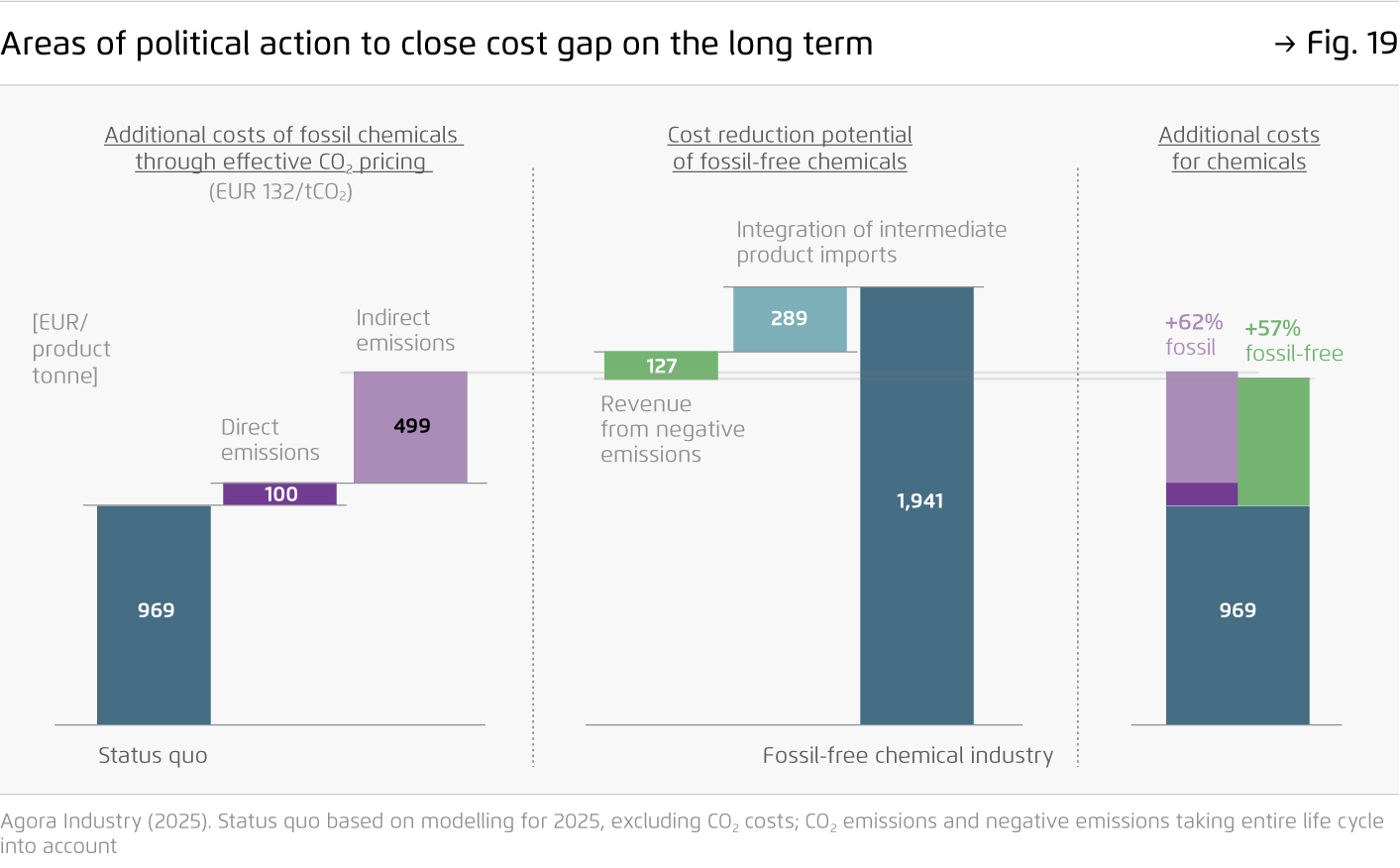
The ramp-up of climate-neutral chemicals requires effective carbon pricing and the ability to pass on CO₂-costs to end products. Because of international trade in chemicals, the price of chemicals tends to be determined by global markets. Prices on these markets do not currently reflect the environmental costs of producing, using and disposing chemical products. The cost of carbon pricing via the EU ETS I (European Union Emissions Trading System) is currently not passed on to the final product level; instead, it is offset by the free allocation of emission allowances to companies and Germany’s indirect carbon cost compensation scheme reimbursing the cost of carbon in the electricity price. For renewable and recycled products to become established on the market, their social costs and benefits must eventually be able to be priced in instead. The approach pursued by the European Commission is the Carbon Border Adjustment Mechanism (CBAM), which is intended to replace free allowances. Taking into account the complexity of the sector, the risk of downstream circumvention and the high export share that needs to be considered, efforts to ensure effective carbon leakage protection for the chemical industry need be accelerated.
Pricing direct CO₂ emissions during production must be complemented by a financial incentive for switching from fossil resources to renewable carbon sources. The lion’s share of the emission reduction achieved by switching to renewable carbon sources comes from avoiding upstream emissions when fossil resources are extracted and downstream fossil emissions when chemical products are used and disposed of. This benefit for society should also be rewarded by a financial incentive. To date, however, emission trading puts a price almost solely on direct emissions generated during production.1 Purely domestic production with a focus on biomass use increases operating costs (excluding the carbon price) per product tonne by around 100 percent – from just shy of 1,000 euros at present to roughly 2,000 euros per product tonne. Putting an effective price on direct production-related emissions would increase costs by 100 euros per product tonne, based on a carbon price of 132 euros per tonne of CO₂.2 If climate-neutral intermediate product imports were included, however, the average production costs of fossil-free chemicals would decrease by around 300 euros or 15 percent. Assuming that negative emissions would also be remunerated (likewise at 132 euros per tonne of CO₂), the costs of fossil-free chemicals could be lowered by an additional 130 euros to approximately 1,500 euros per product tonne. This would leave an average cost gap of around 450 euros per product tonne (cf. Figure 19). An additional levy on fossil feedstocks or on up- and downstream emissions could help closing this gap. In many cases, using more expensive climate-neutral basic chemicals affect the final product price and end consumers only marginally. For example, a drink sold in a fossil-free plastic bottle is estimated to cost up to three percent more, while using fossil-free plastic in a car would add around one percent to its price (cf. Infobox on Additional costs at the product level, p. 42).
Transitioning to renewable energies and resources is an extraordinary innovative challenge to the industry. The climate crisis can only be mitigated by also transforming the chemical industry. However, due to the enormous global ramp-up of renewable energies and the declining production costs of green electricity, it will likely only be a question of time before the industry also switches to renewables and green electricity. While Europe can take a lead role in this transition, political action is needed for it to be successful. Effective carbon pricing with no exceptions, clear guidelines for electrification, a focus on renewable raw materials and recycling, plus targeted support for investment and infrastructure are vital to obtain planning security and kick-start the transition.
The study shows that a forward-looking climate-neutral chemical industry is possible and offers innovation opportunities for Germany. It can open up new markets and thus ensure long-term competitiveness, while at the same time making an important contribution to resilience and climate neutrality.
1 In this context, the planned inclusion of waste incineration plants in European emission trading is an important first step.
2 The chemical industry is currently allocated free allowances for the majority of its emissions, meaning that its carbon emissions are hardly priced effectively (cf. Chapter 2.1).
Bibliographical data
Downloads
-
Study
pdf 2 MB
Innovations for tomorrow: opportunities for a climate-neutral chemical industry
How transitioning away from fossil fuels boosts industrial resilience and employment
All figures in this publication
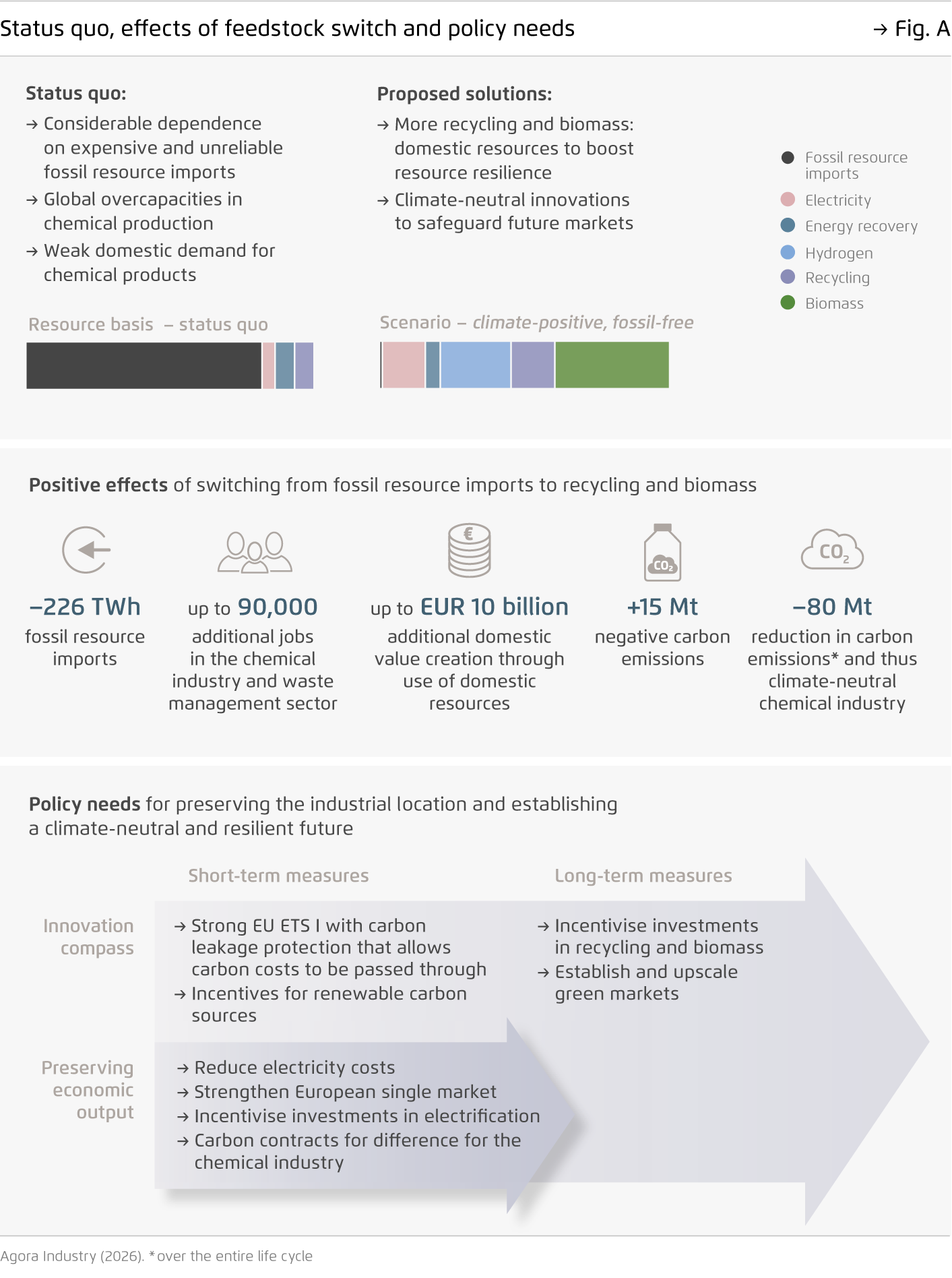
Status quo, effects of feedstock switch and policy needs
Figure A from Innovations for tomorrow: opportunities for a climate-neutral chemical industry on page 5
Share:

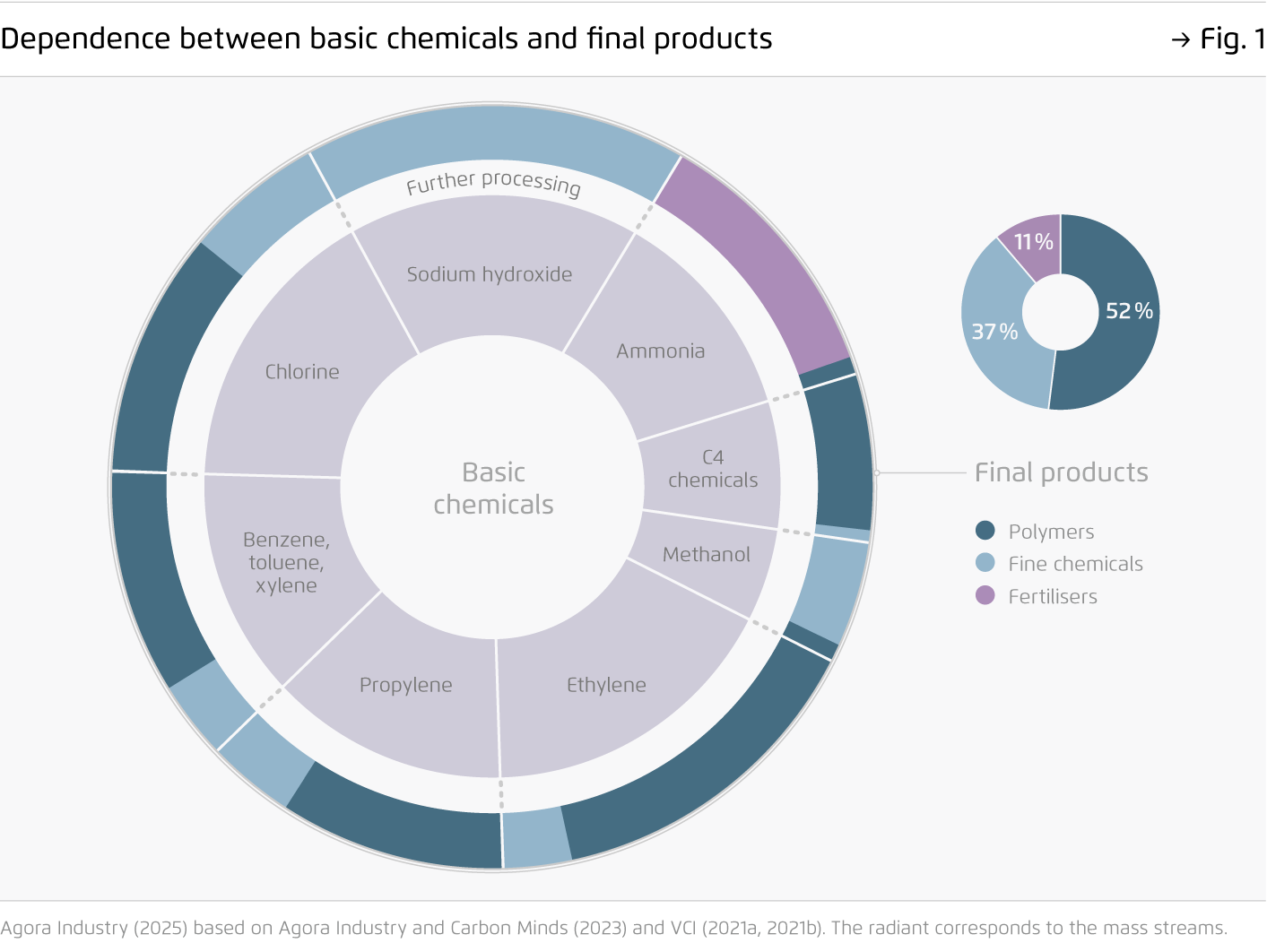
Dependence between basic chemicals and final products
Figure 1 from Innovations for tomorrow: opportunities for a climate-neutral chemical industry on page 9
Share: