-
Steel is indispensable for Europe’s industrial economy, yet European steelmakers’ global competitiveness now depends on accelerating low-carbon production.
Ensuring sufficient demand is critical to making projects financially viable. Designed well, the EU Industrial Accelerator Act (IAA) public procurement requirements could serve as a powerful demand driver, de-risking investments in low-carbon steel production.
-
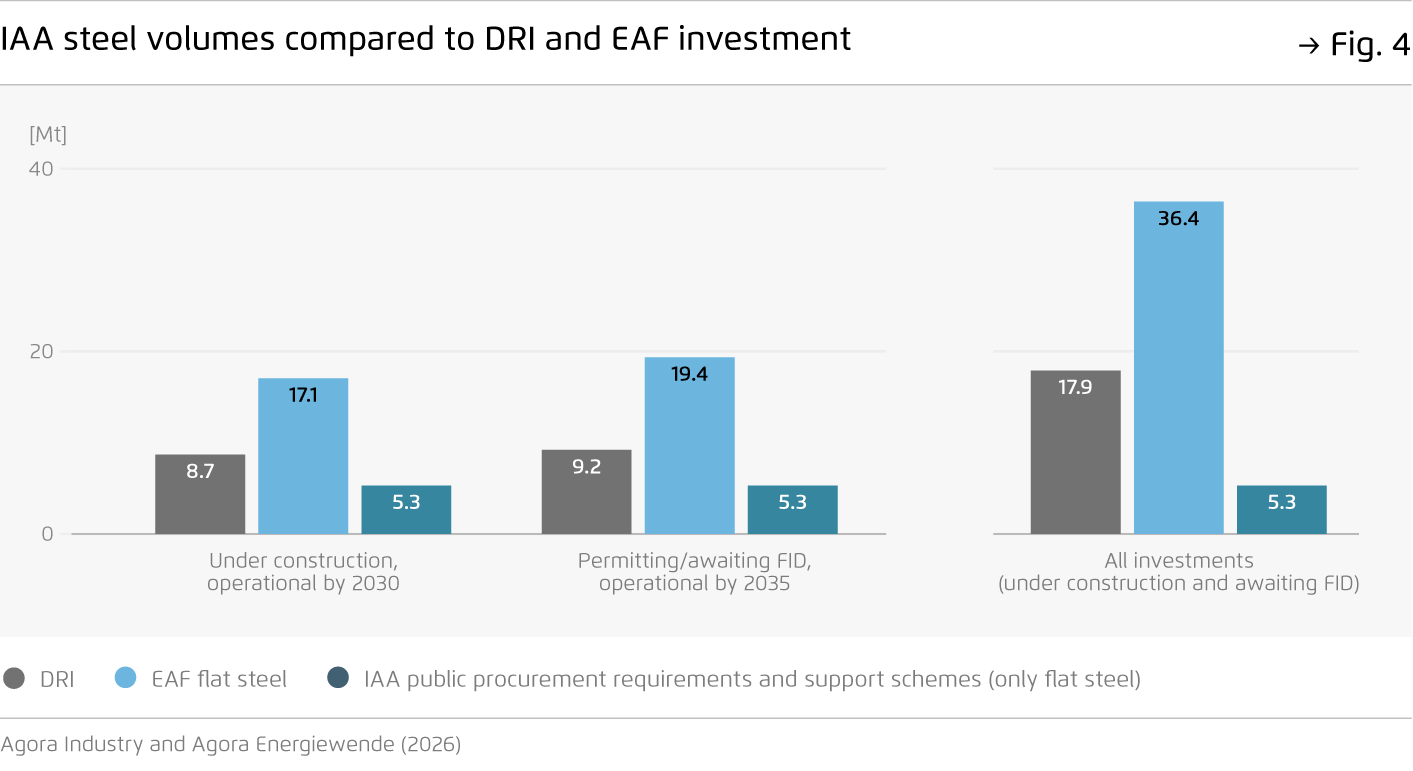
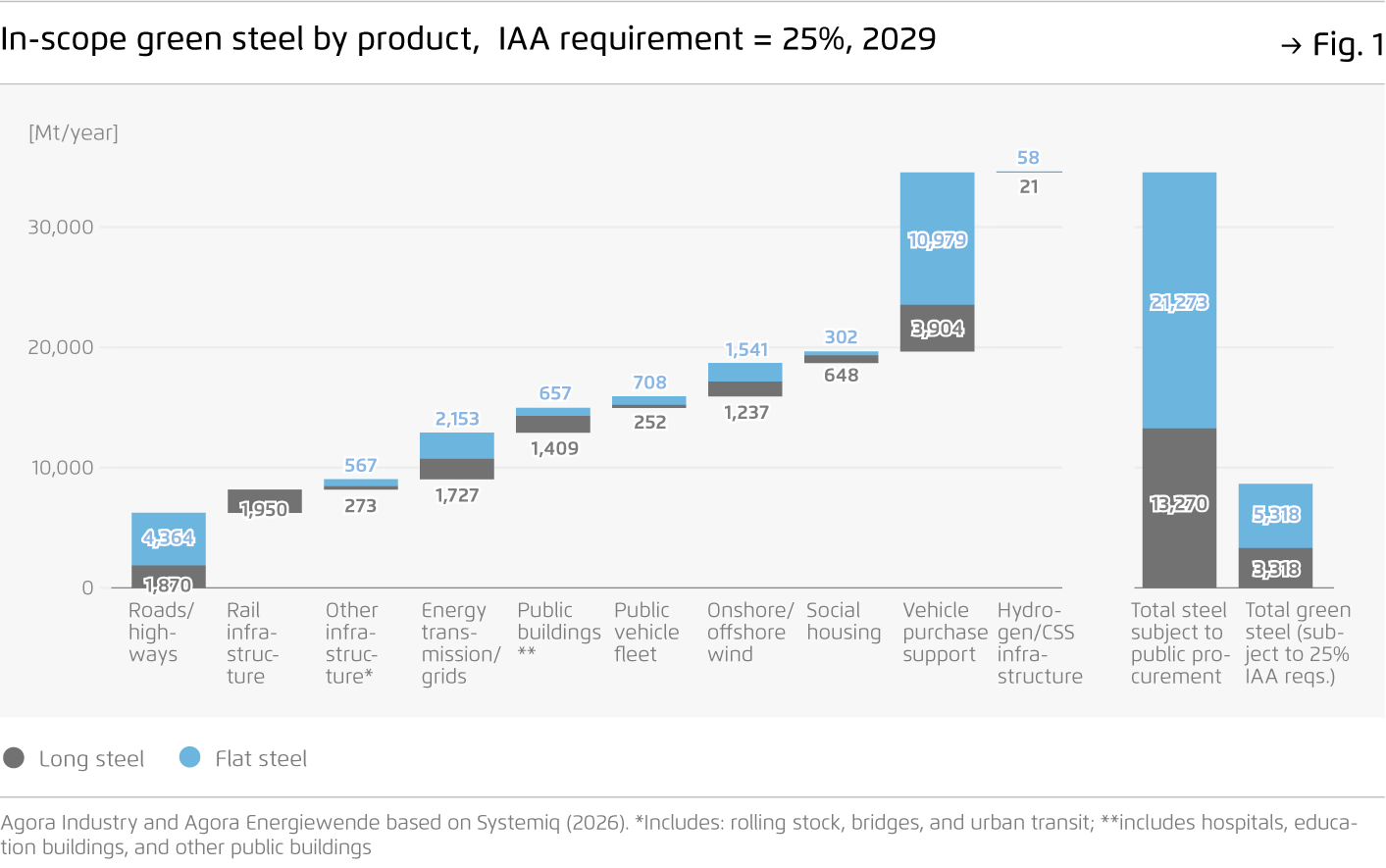
The IAA could help generate demand for up to five million tonnes of low-carbon flat steel by 2030.
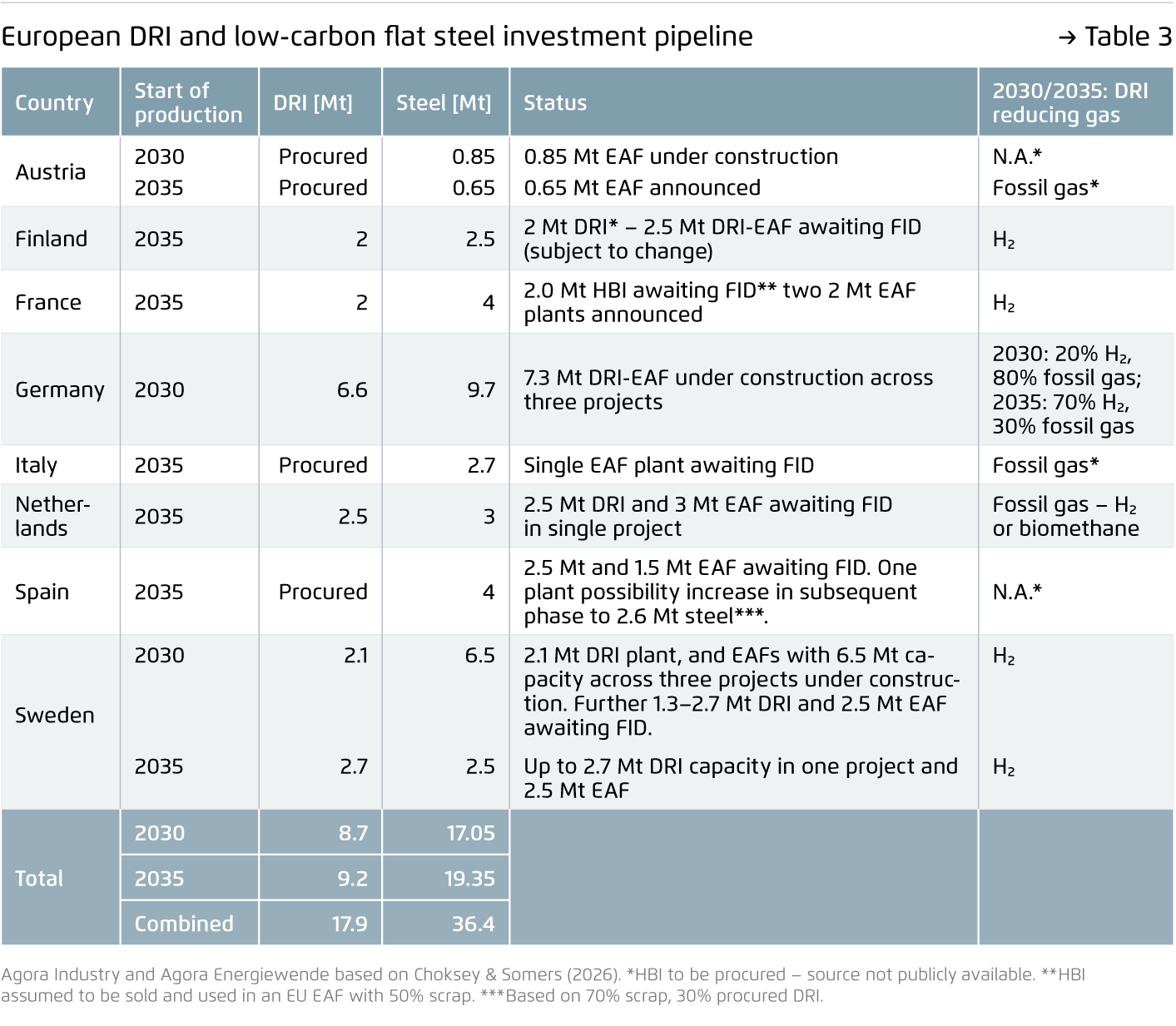
This could be equivalent to up to 60 percent of direct reduced iron (DRI) and 31 percent of electric arc furnace (EAF) steelmaking capacity under construction to produce flat steel in Europe. However, these volumes remain uncertain due to factors like the future scope of national electric vehicle support schemes after 2029, evolving definition of low-carbon steel, and potential “Union-origin” requirements.
-
Low-carbon steel requirements must therefore be dynamic – adapting to evolving market conditions – to provide clear signals for the 2035 investment pipeline.
An adjustment mechanism allowing the Commission to raise the 25 percent minimum threshold if demand proves insufficient could help low-carbon steel projects reach final investment decisions. The requirements should balance ambition to drive transformation with alignment to current investment plans and market realities.
-
Establishing robust lead markets requires policies that extend beyond public procurement.
A coherent industrial policy framework – covering regulations that shape steel supply – is necessary to deliver strong and consistent market signals. The IAA should align closely with initiatives like the Automotive Package and the EU Steel Regulation. Together, such measures chart a path to a globally competitive, low-carbon European steel sector, leading its transformation by 2030 and beyond.
Scaling European low-carbon steel
An assessment of the Industrial Accelerator Act’s potential to drive investment
Summary
Europe is moving towards low-carbon steel production. If carefully calibrated, the Industrial Accelerator Act (IAA) can be an instrument to support generating demand for investments in new European direct reduced iron plants and electric arc furnaces to produce flat steel.
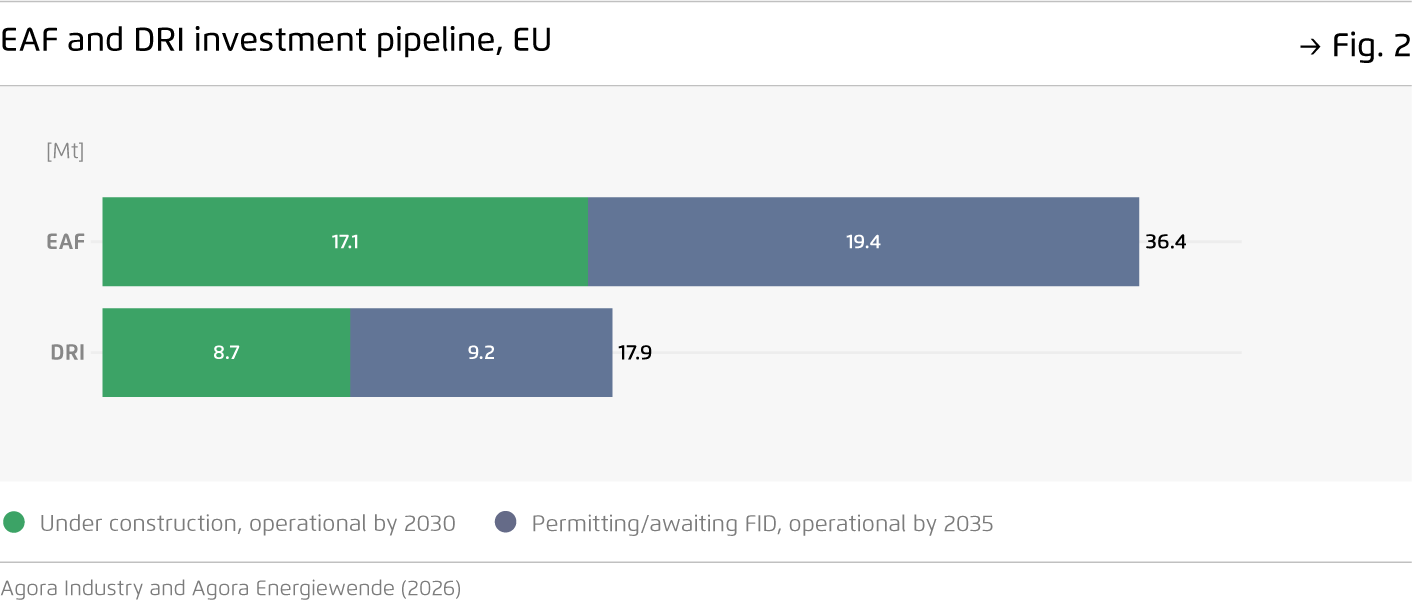
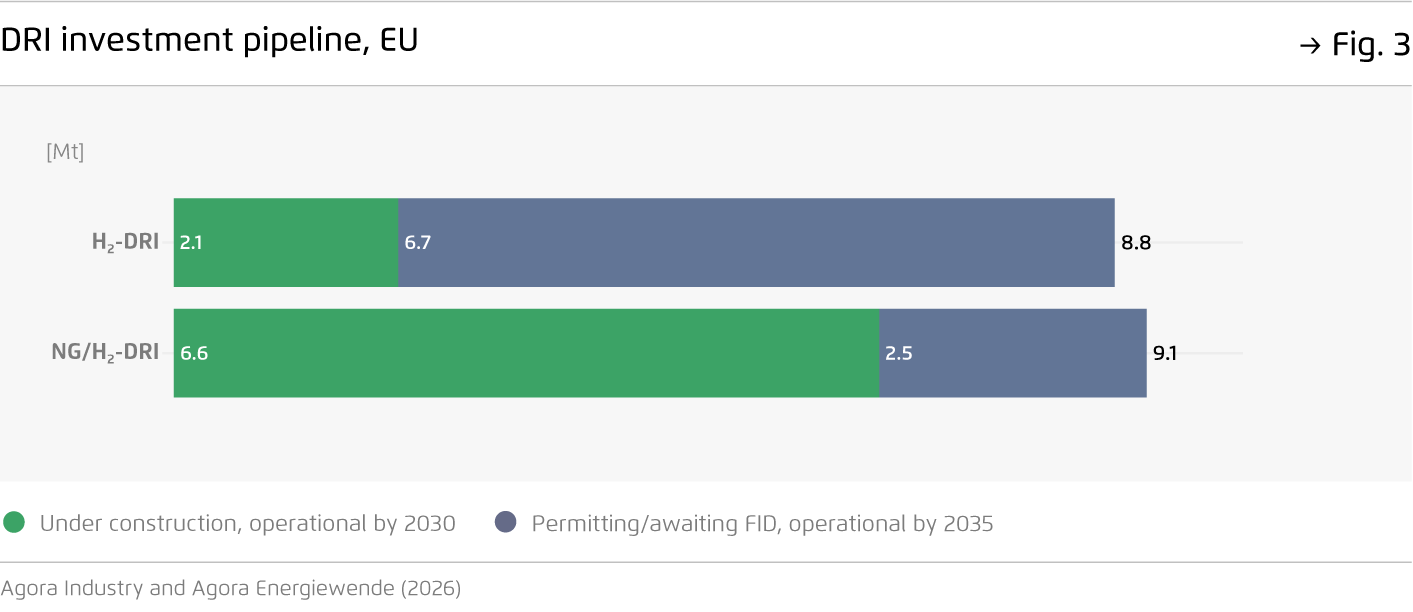
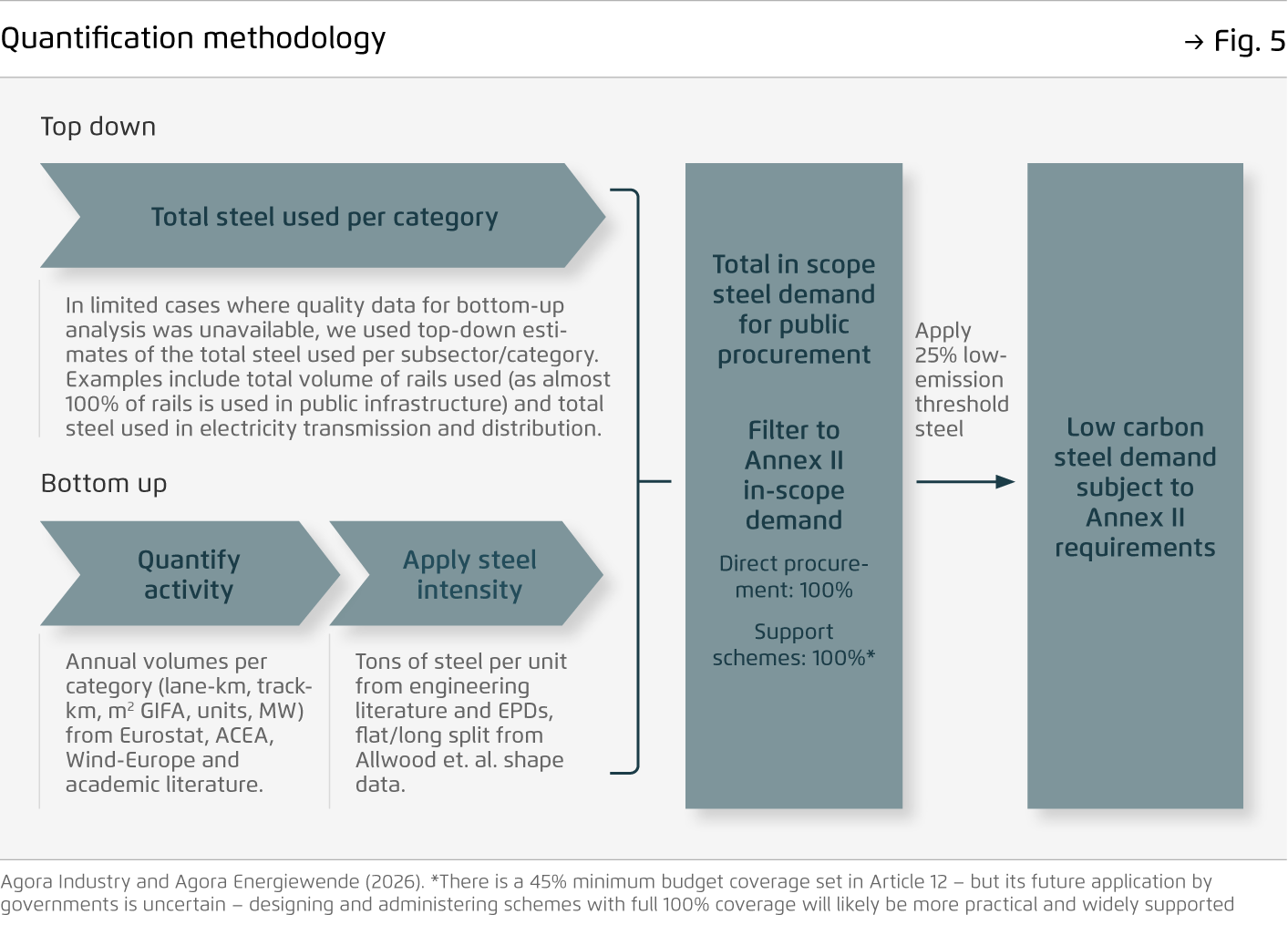
This study quantifies steel volumes generated by the IAA, comparing it with the announced investment pipeline for low-carbon steel capacity in Europe. It shows that the IAA has potential to generate substantial demand by 2030 for low-carbon steel projects already under construction, but it highlights that the potential steel volumes are subject to significant sensitivities. The policy brief concludes with policy design options that would enable the IAA to support de-risking investments and supporting final investment decisions of additional projects announced for 2035, thereby contributing to low-carbon steel production in Europe.
Key findings
Bibliographical data
Downloads
-
Policy Brief
pdf 443 KB
Scaling European low-carbon steel
An assessment of the Industrial Accelerator Act’s potential to drive investment
All figures in this publication
In-scope green steel by product, IAA requirement = 25%, 2029
Figure 1 from Scaling European low-carbon steel on page 5

EAF and DRI investment pipeline, EU
Figure 2 from Scaling European low-carbon steel on page 9