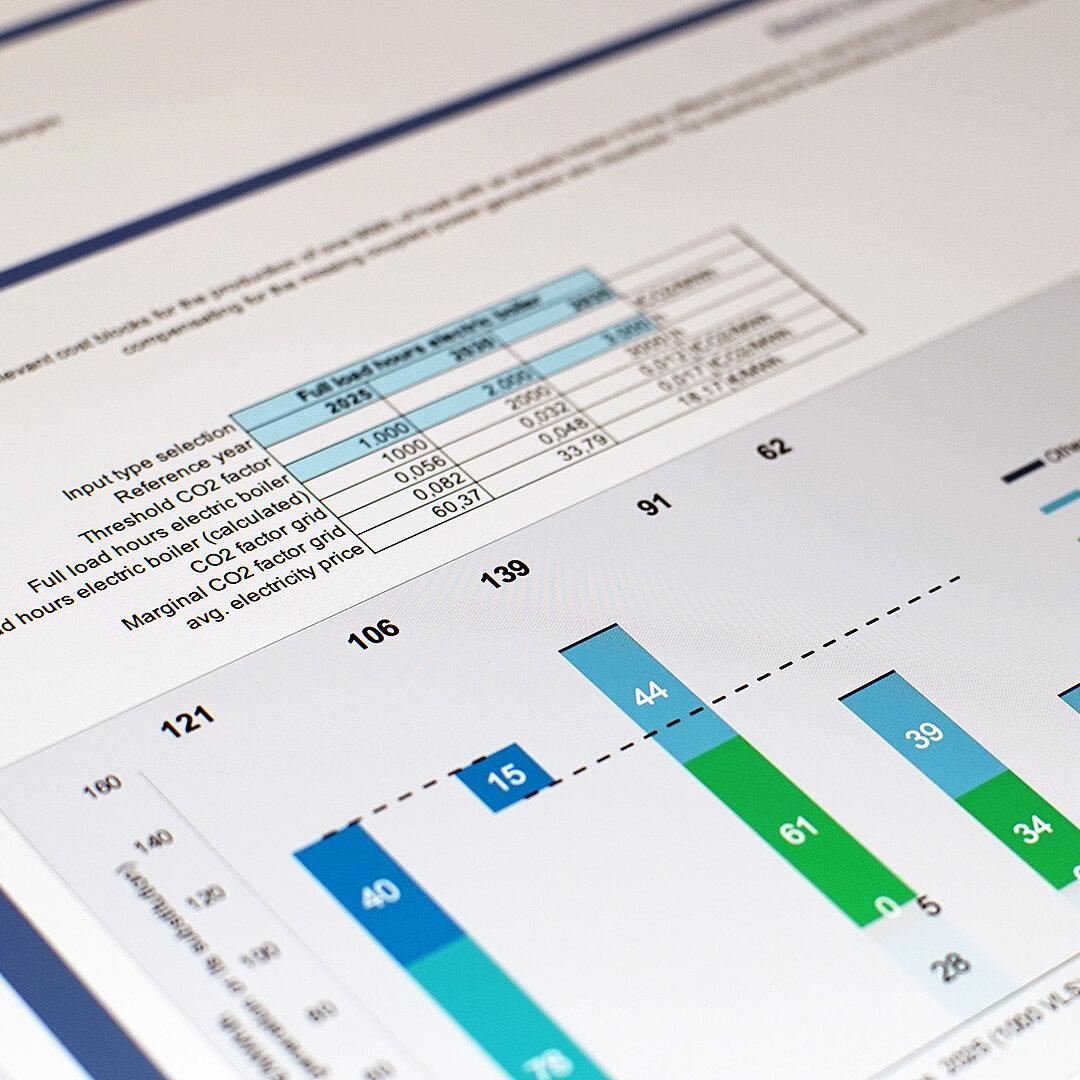
Thermal storage can significantly cut industrial heat costs and accelerate electrification
A new Agora study shows that upgrading existing heating systems with electro thermal energy storage offers a cost-effective way to turn clean power into reliable process heat. Simpler grid access and better rewards for industrial flexibility are key to scaling it up.

Industrial companies can cut their heating costs by up to 70 per cent by pairing existing systems with electro thermal energy storage (ETES). At the same time, this technology can help speed up electrification rates in process heat to 75 per cent whilst significantly reducing carbon emissions. These are the findings of a new study by Agora Industry which shows that this mature technology makes electrification a more attractive business case for industry. The publication comes at a timely moment, as the COP31 climate conference currently underway in Antalya is putting a spotlight on electrification as a key lever for decarbonisation.
Europe’s energy system is shifting rapidly towards renewables. ETES provides a simple complement to make the most of low-cost clean power. The technology stores electricity as heat in cheap materials such as rock or sand. This gives companies flexibility: they can draw electricity when prices are low and use their stored heat when prices are high, ensuring a constant heat supply for their operations. Ultimately, this allows businesses to lower costs, decrease their dependence on imported gas and help balance the wider electricity grid.
Driving industrial electrification and cost reduction across markets
The study assesses ETES' potential for competitively electrifying industrial processes and reducing emissions in Germany, France, and Spain. It covers three industrial use cases: steam generation for paper production, low-temperature steam for the food industry, and high-temperature heat treatment in steel processing. The results show that fully electric systems with ETES are becoming increasingly competitive, particularly in countries with high shares of clean power. For now, combining ETES with existing heating systems is the most economical option in all three countries, with varying benefits.
Spain demonstrates the strongest results: a hybrid ETES system slashes heat generation costs by roughly 70 per cent down to 20 euros per megawatt-hour (MWh). France presents an equally compelling case, more than halving costs to around 30 euros per MWh. In both countries, electrification rates reach about 75 per cent, with payback periods of around 1.5 years. In Germany, the business case remains positive but is more constrained: costs fall by a third to around 60 euros per MWh, achieving an electrification rate of about 50 per cent with a payback period of around two years. Key factor for these returns is trading electricity flexibly across several markets: day-ahead, intraday and balancing markets. The resulting savings, combined with relatively low upfront investment, mean that ETES systems pay for themselves quickly.
Emission reductions depend on the power mix
How much ETES reduces emissions depends on the carbon intensity of the local power grid. In France and Spain, ETES already delivers clear carbon reductions today: up to 74 per cent in France and 41 per cent in Spain. In Germany, where the share of fossil power is still higher, hybrid systems have roughly the same emission level as traditional gas plants. As the German power mix decarbonises, systems installed today will deliver substantial emission reductions over their lifetime.
ETES also contributes to a balanced overall storage mix: By relying on readily available, domestic materials such as rock or sand, it offers a reliable technology that is less dependent on contested supply chains.
The right market framework can mobilise investments
Realising the potential of ETES requires updating existing rules so that they reflect today’s energy needs. Building on the EU Electrification Action Plan, this means for example ensuring faster and simpler grid connections, grid fees that reward rather than penalise flexible consumption, and better access to flexibility markets for industrial companies. Together with predictable carbon prices, these measures can unlock investments in a secure and cost-effective energy system.
The 70-page study Unlocking industrial flexibility with thermal storage: evidence from EU countries” was conducted in collaboration with Fraunhofer Institute for Systems and Innovation Research ISI. It is available below for free download.