-
Green iron trade can enhance economic resilience globally while transforming the high-emitting steel sector.
In an increasingly multipolar world, strategic partnerships between resource-rich countries with abundant renewable potential and major steelmaking economies in Europe and Asia can diversify steel supply chains and help navigate the competitiveness pressures on the industry.
-
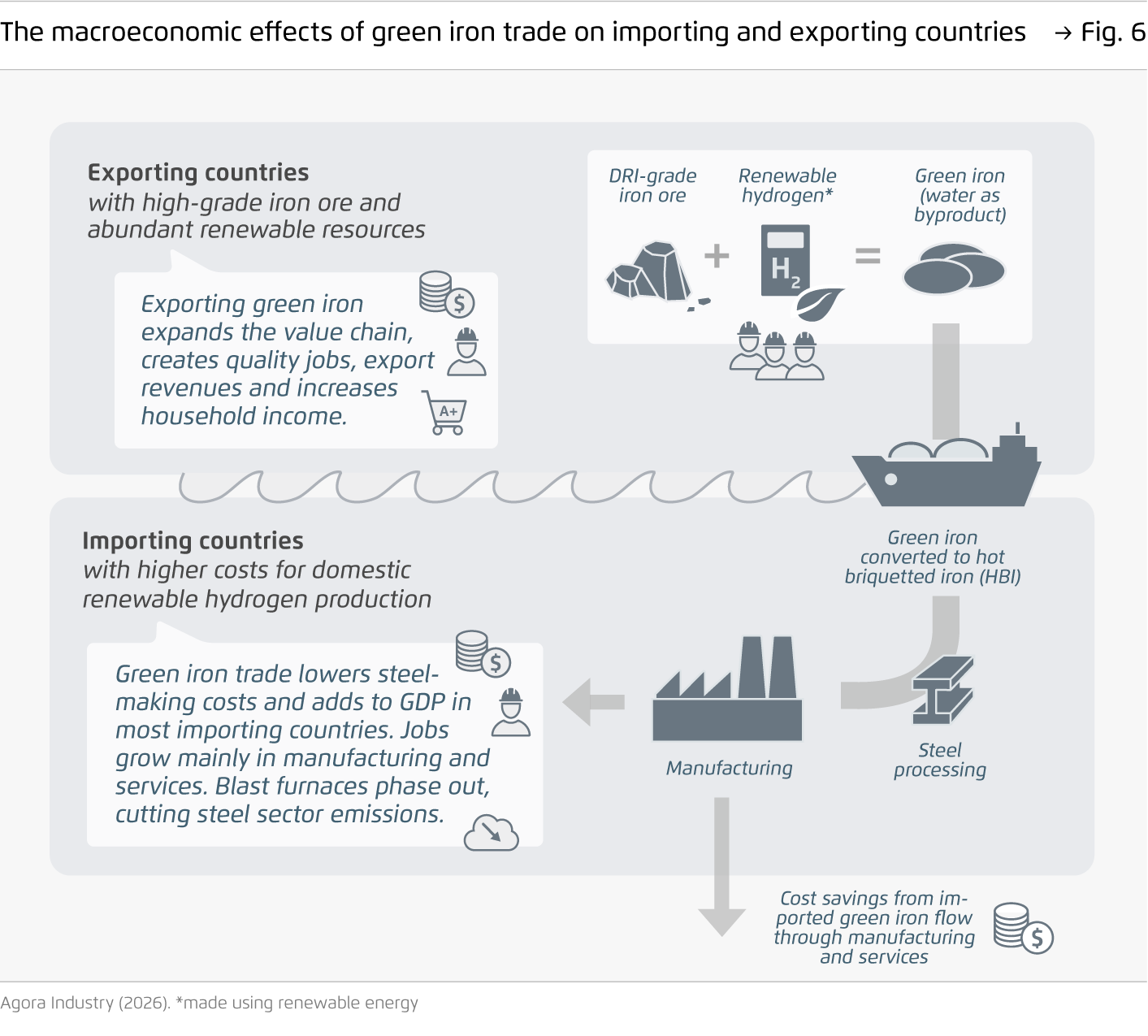
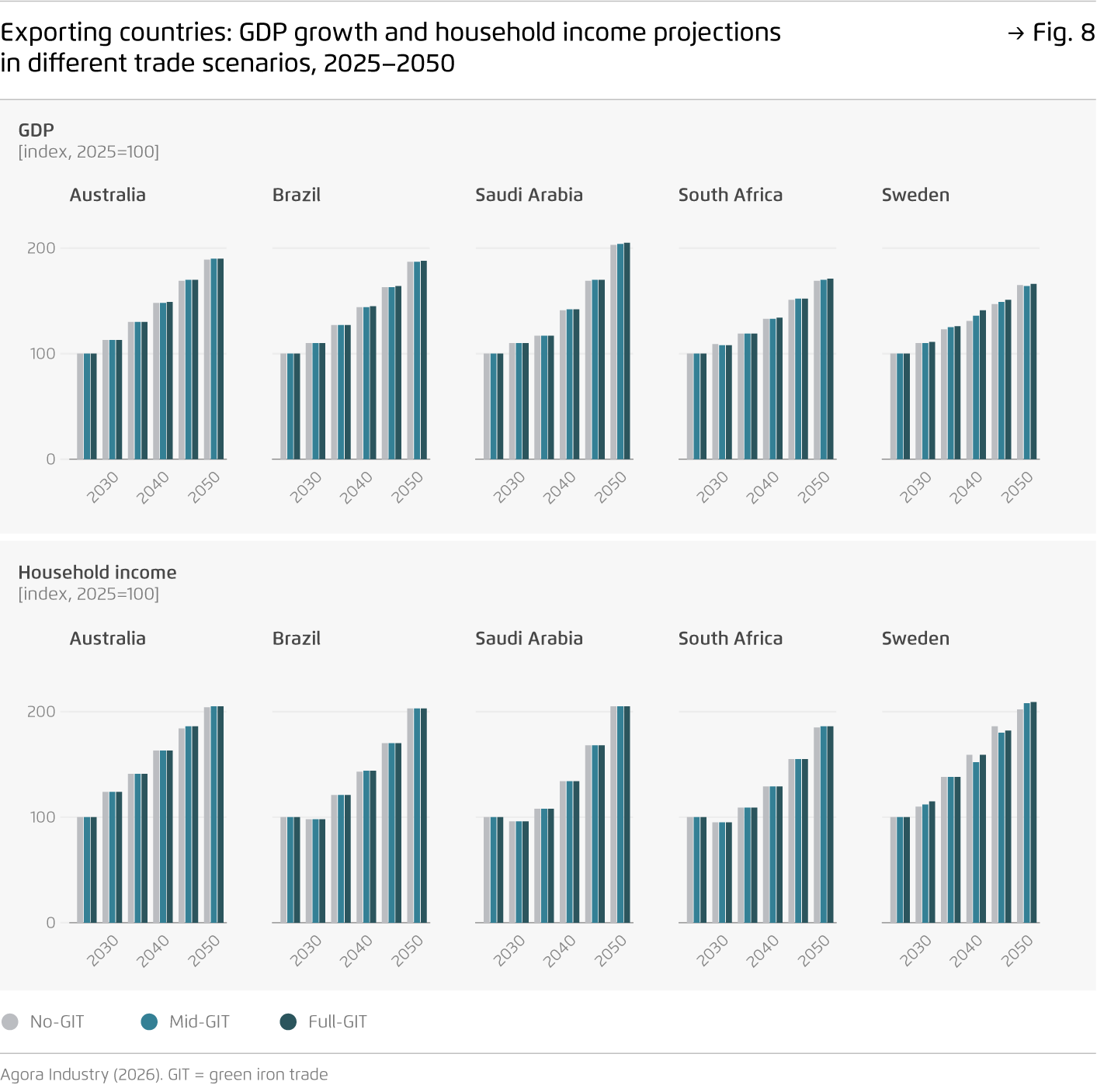
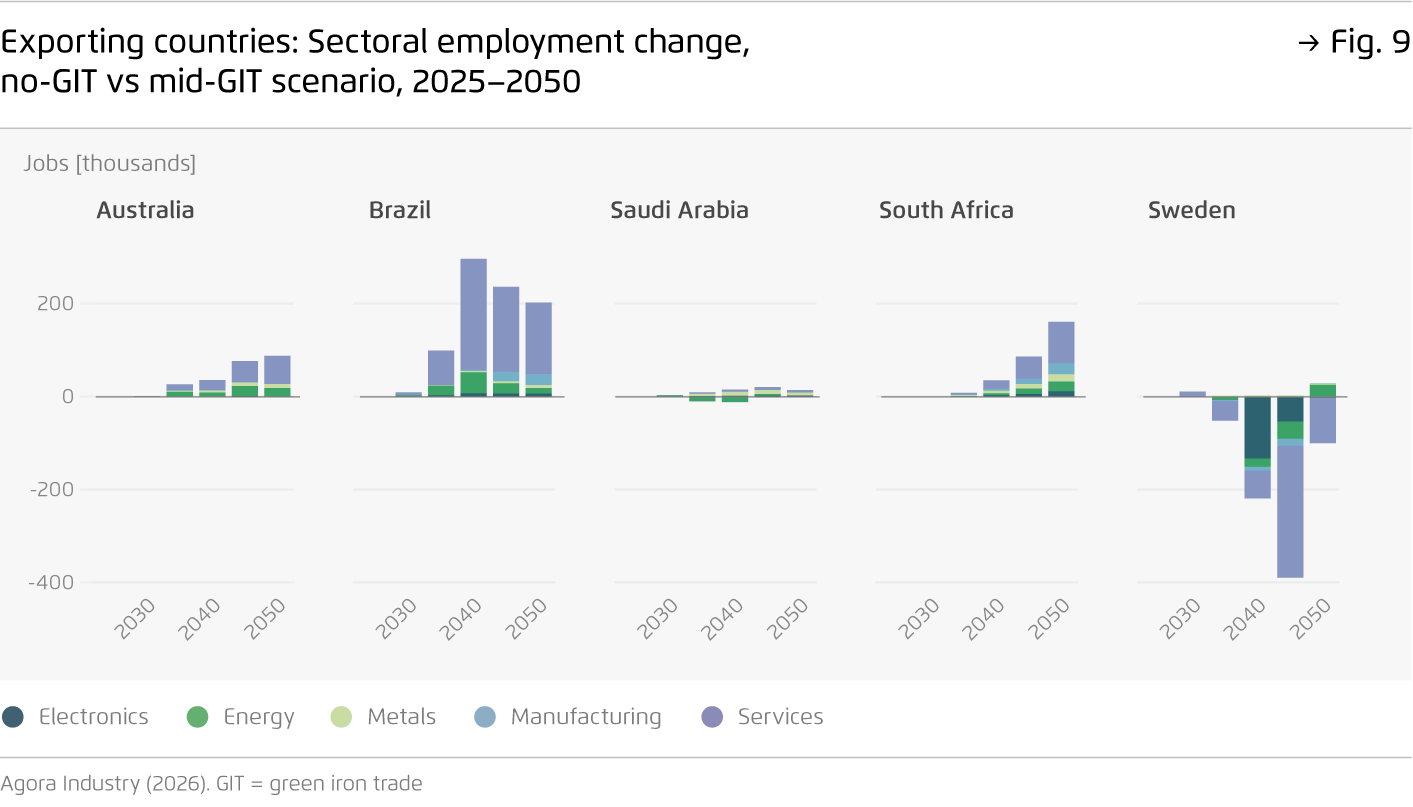
Countries exporting green iron can become new hubs of clean industrial development, capturing greater economic and employment gains as trade volumes grow.
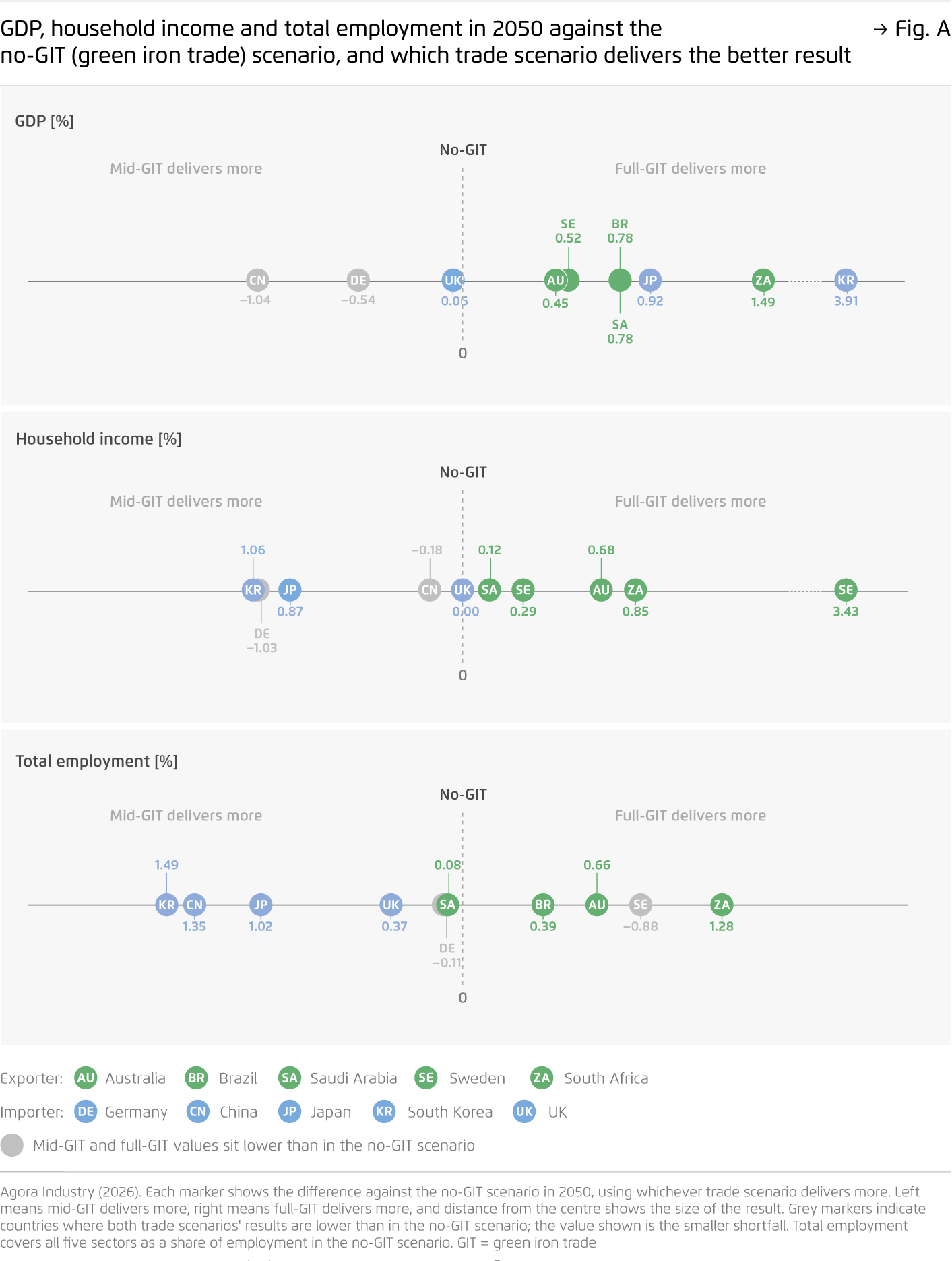
Depending on trade intensity, Brazil could gain up to 40 billion US dollars in additional GDP by 2050 compared to a scenario without green iron trade, and Australia up to 16 billion – alongside additional jobs reaching into the hundreds of thousands.
-
Green iron imports allow established steelmaking economies like Germany and Japan to phase out coal-based production while preserving economic activity and employment.
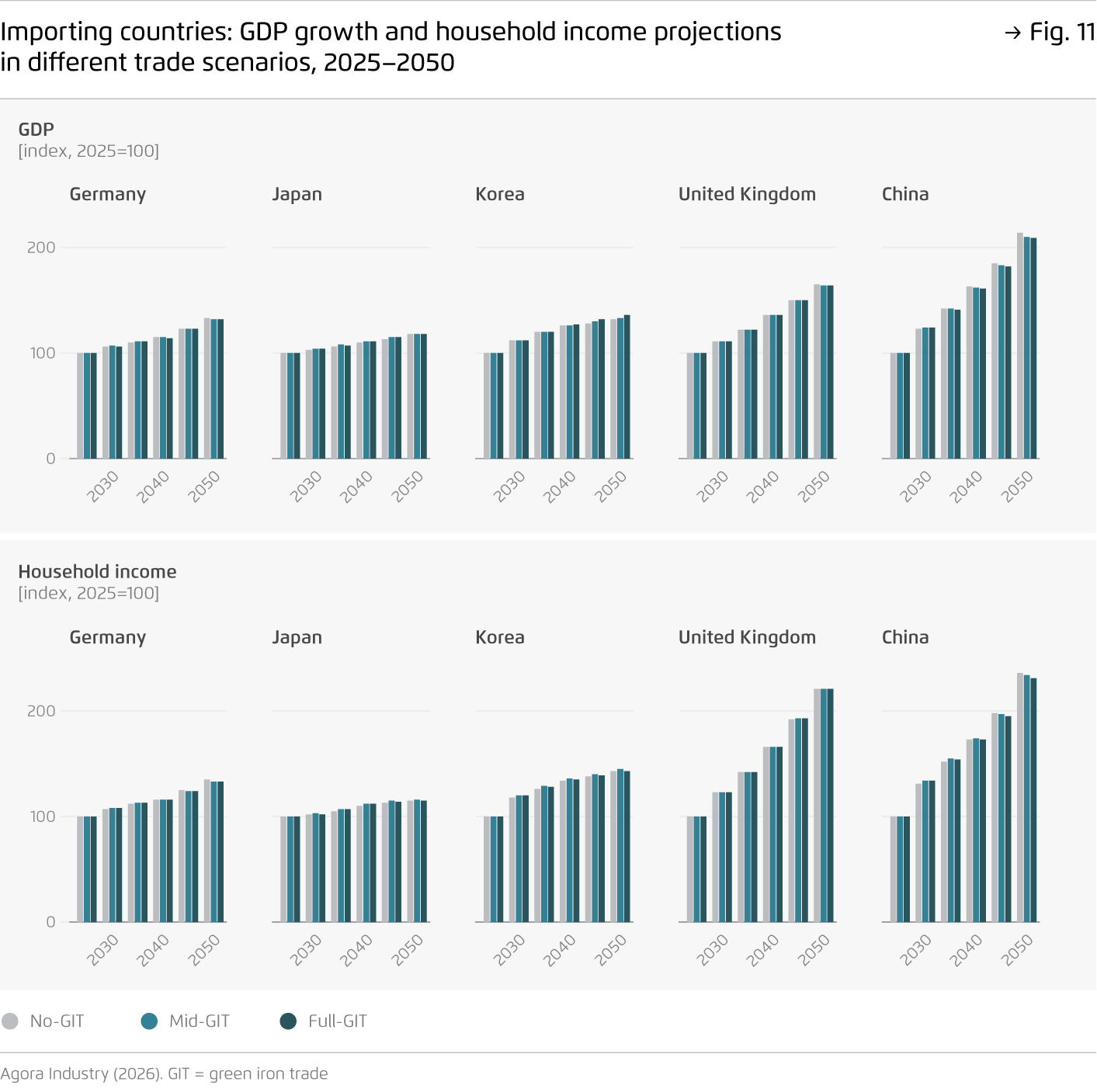
On average, economies are larger with green iron trade than without it. In Germany, GDP gains from green iron trade peak in 2035 – reaching 72 billion US dollars – in line with the highest level of green iron imports, while household income is 1.27 percent higher. GDP remains above the no-import scenario until 2045, Germany’s climate neutrality target year. Japan gains around 50 billion dollars in GDP by 2050. In both countries, importing green iron supports hundreds of thousands of jobs.
-
Trade agreements are a key tool for institutionalising green iron trade and capturing its associated gains.
Examples include the EU’s agreements with Mercosur and South Africa, the RCEP across Asia and bilateral partnerships between Australia, Japan and Korea. Exporters can use concessional finance and public guarantees to deploy low-carbon iron production, while importers can spur demand via green procurement. Securing long-term offtake agreements by 2030 will de-risk projects for financiers, and worker retraining initiatives support a just transition.
Green iron, shared gains
The macroeconomic benefits of global green iron trade

Summary
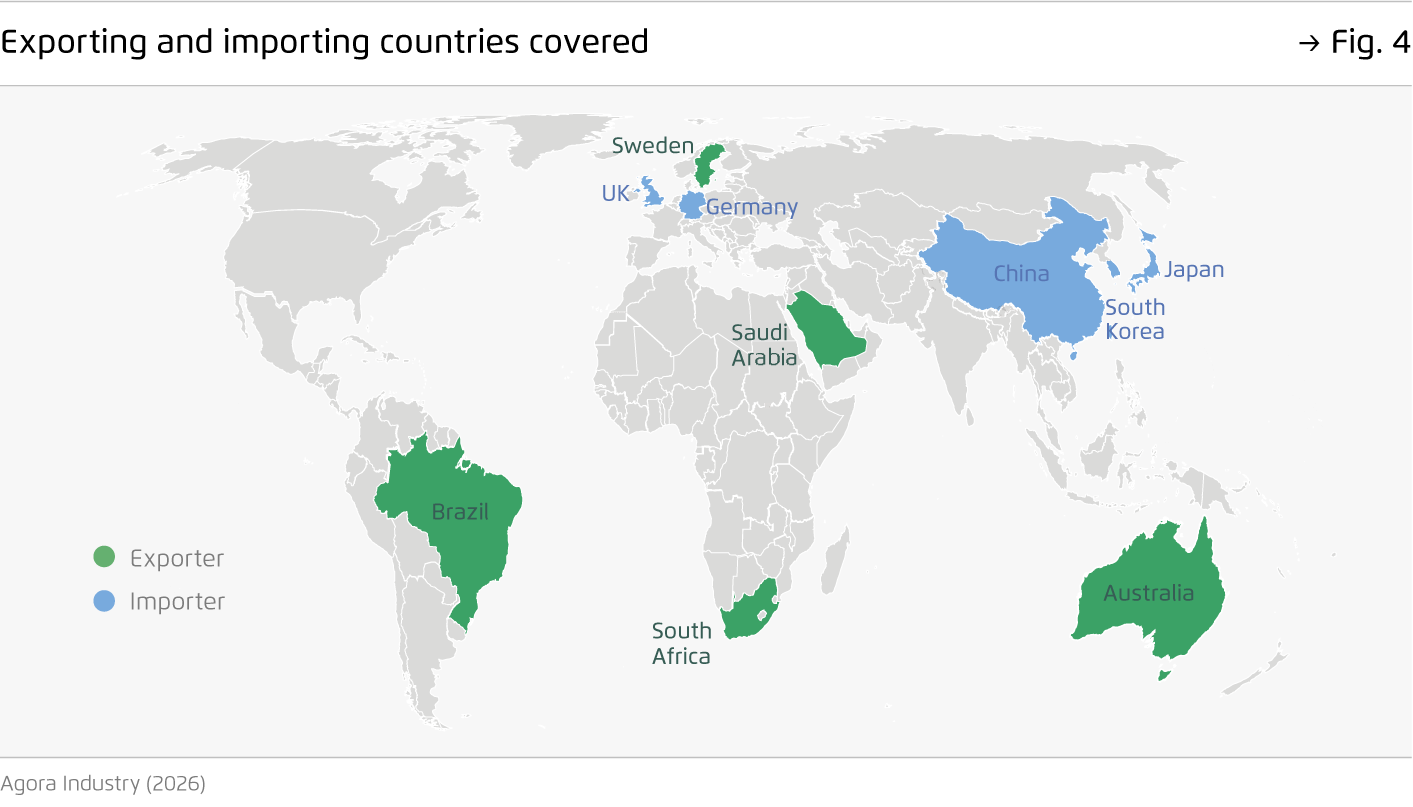
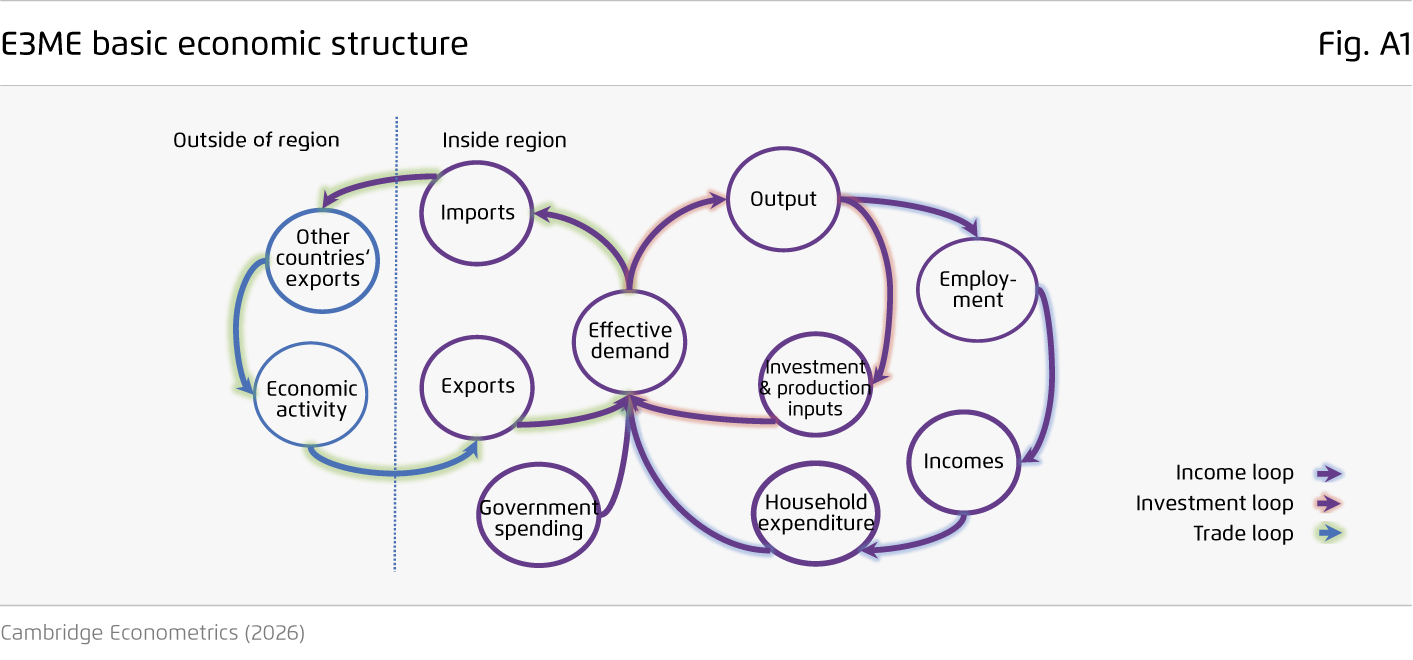
Steel is responsible for around 9 percent of global greenhouse gas emissions, making rapid decarbonisation of the sector essential to achieving global climate targets. This study examines how green iron trade – the production of hydrogen-based direct reduced iron (H₂-DRI) in countries with abundant, low-cost renewable energy, followed by its export as hot briquetted iron (HBI) to established steelmaking economies – could accelerate the transition to climate-neutral steel while creating economic opportunities. Using Cambridge Econometrics’ E3ME global macroeconomic model, the study assesses two green iron trade scenarios across ten major steel-producing and steel-consuming economies: Brazil, Australia, South Africa, Saudi Arabia, Sweden, China, Germany, Japan, South Korea and the United Kingdom.
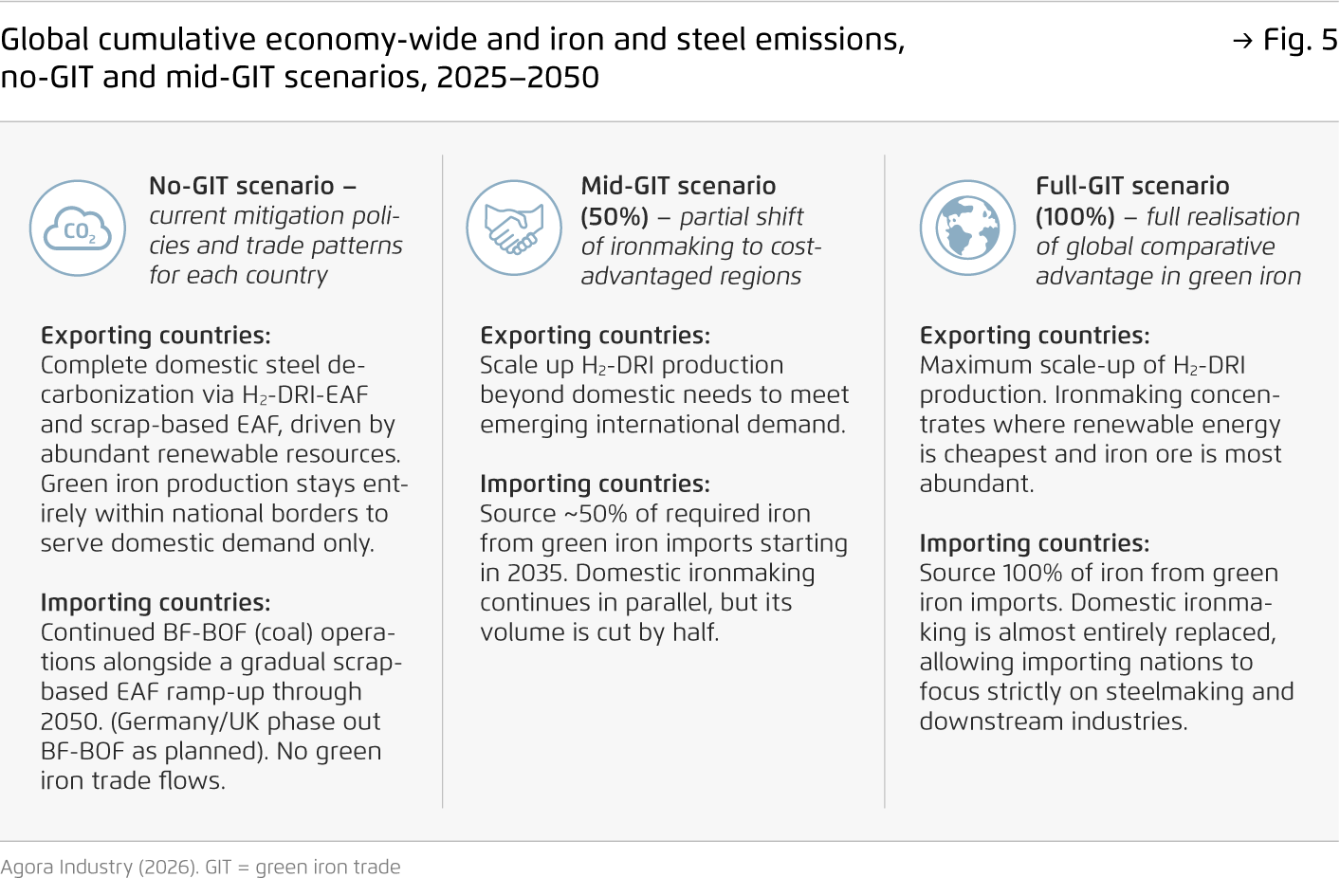
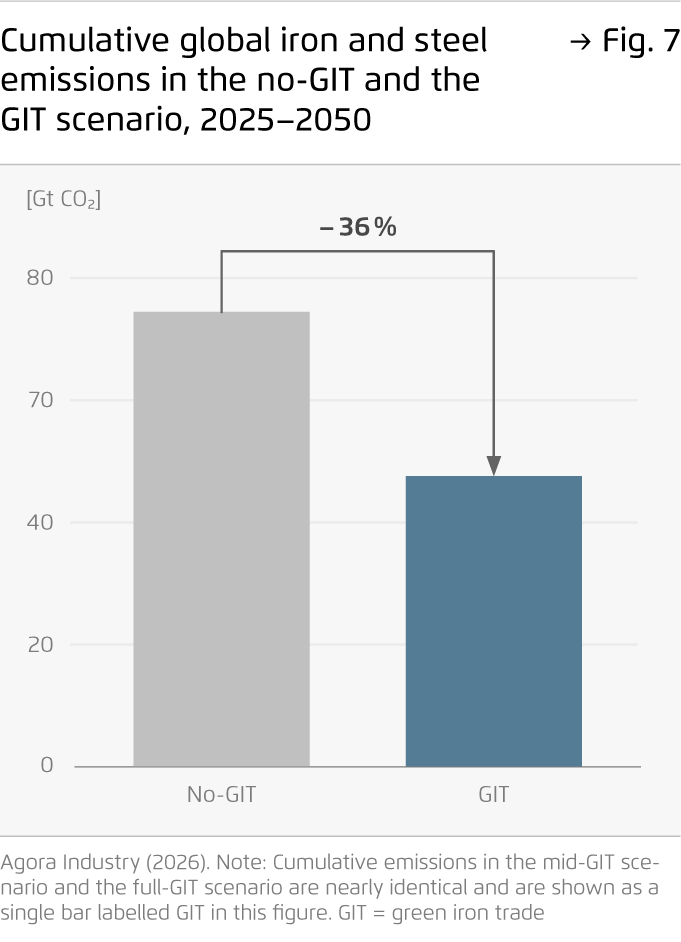
The findings show that green iron trade can deliver economic gains for both exporting and importing countries while significantly reducing emissions. Exporting countries can capture more value from their iron ore resources, stimulating GDP growth, employment and investment in renewable energy and green hydrogen infrastructure. For importing countries, green iron provides a cost-effective pathway to phase out coal-based blast furnaces while maintaining industrial competitiveness and supporting employment in downstream manufacturing and services. The study also finds that green iron trade could reduce cumulative global emissions by more than 48 percent between 2025 and 2050, while cutting iron and steel sector carbon emissions by almost 30 gigatonnes.
The macroeconomic modelling and analysis find that green iron trade can become a cornerstone of global steel decarbonisation, connecting regions with low-cost renewable hydrogen to major steel-consuming markets. Realising these benefits will require long-term offtake agreements, concessional finance, investment in renewable energy and hydrogen infrastructure, stable policy frameworks and strategic international partnerships. The study highlights a critical window for governments and industry to shape emerging green steel supply chains and ensure that the economic benefits of the transition are broadly shared.
Click on the country names to jump directly to the relevant factsheet within the report. The full report is available in the downloads section at the bottom of the page.
Key findings
Australia
Australia’s natural advantages in renewable energy, iron ore and green hydrogen position it to become a major green iron exporter. Green iron trade could add up to USD 15.6 billion to GDP and create up to 113,000 jobs by 2050, supporting growth across services, mining, agriculture and energy. Capturing these benefits will require long-term offtake agreements, supportive investment policies and stronger trade partnerships, including with Japan.
Brazil
Brazil could gain up to USD 41.4 billion in additional GDP and 414,000 jobs by 2050 through green iron exports. By producing hydrogen-based direct reduced iron using its abundant renewable electricity, Brazil can move iron ore processing and more value-added activity into the country. The opportunity depends on securing long-term offtake, lowering the cost of capital and scaling renewable energy, hydrogen, grids and port infrastructure.
Saudi Arabia
Green iron exports could add up to USD 14.3 billion to Saudi Arabia’s GDP, while creating a new source of industrial growth and employment. The iron and steel sector would see the strongest growth in the economy as investment in hydrogen-based direct reduced iron, renewable energy and export infrastructure scales up. Long-term offtake agreements with European and Asian steelmakers, workforce training and investment in downstream manufacturing can help turn green iron into a broader industrial opportunity.
South Africa
Green iron exports could create 161,000 additional jobs in South Africa by 2050, with services, mining and agriculture accounting for 89,000 of them. The economy grows in every scenario modelled in the study, with the strongest gains arriving after 2045 as investment in hydrogen-based direct reduced iron and renewable energy begins to pay off. Lower-cost finance, shared infrastructure, domestic demand and local skills development will be critical to capturing these benefits.
Sweden
Sweden’s renewable energy and industrial capabilities position it to benefit from the growth of green iron trade. Household income could reach 3 percent above a scenario without green iron trade by 2050, while employment in iron and steel and energy production could rise by 6.2 percent and 6 percent, respectively. Securing long-term offtake and expanding the skilled workforce will be key to scaling production.
China
Green iron imports, combined with strategic domestic direct reduced iron capacity, can help China phase out coal-based steelmaking while maintaining its industrial and manufacturing strengths. China’s economy continues to grow strongly across the scenarios modelled, reaching up to USD 35.6 trillion by 2050, while investment in electric arc furnaces and electricity infrastructure supports the transition. Diversified green iron supply partnerships, phased blast-furnace retirement and investment in downstream manufacturing can keep more value and jobs within China.
Germany
Green iron imports can complement Germany’s growing domestic hydrogen-based direct reduced iron capacity, providing an additional supply route as the country phases out coal-based ironmaking. The modelling shows GDP 1.43 percent higher than in a scenario without green iron imports, while household income is 1.27% higher. Building domestic hydrogen-based direct reduced iron capacity and green iron imports together, alongside investment in electric arc furnaces and a strong green steel market, can strengthen Germany’s transition.
Japan
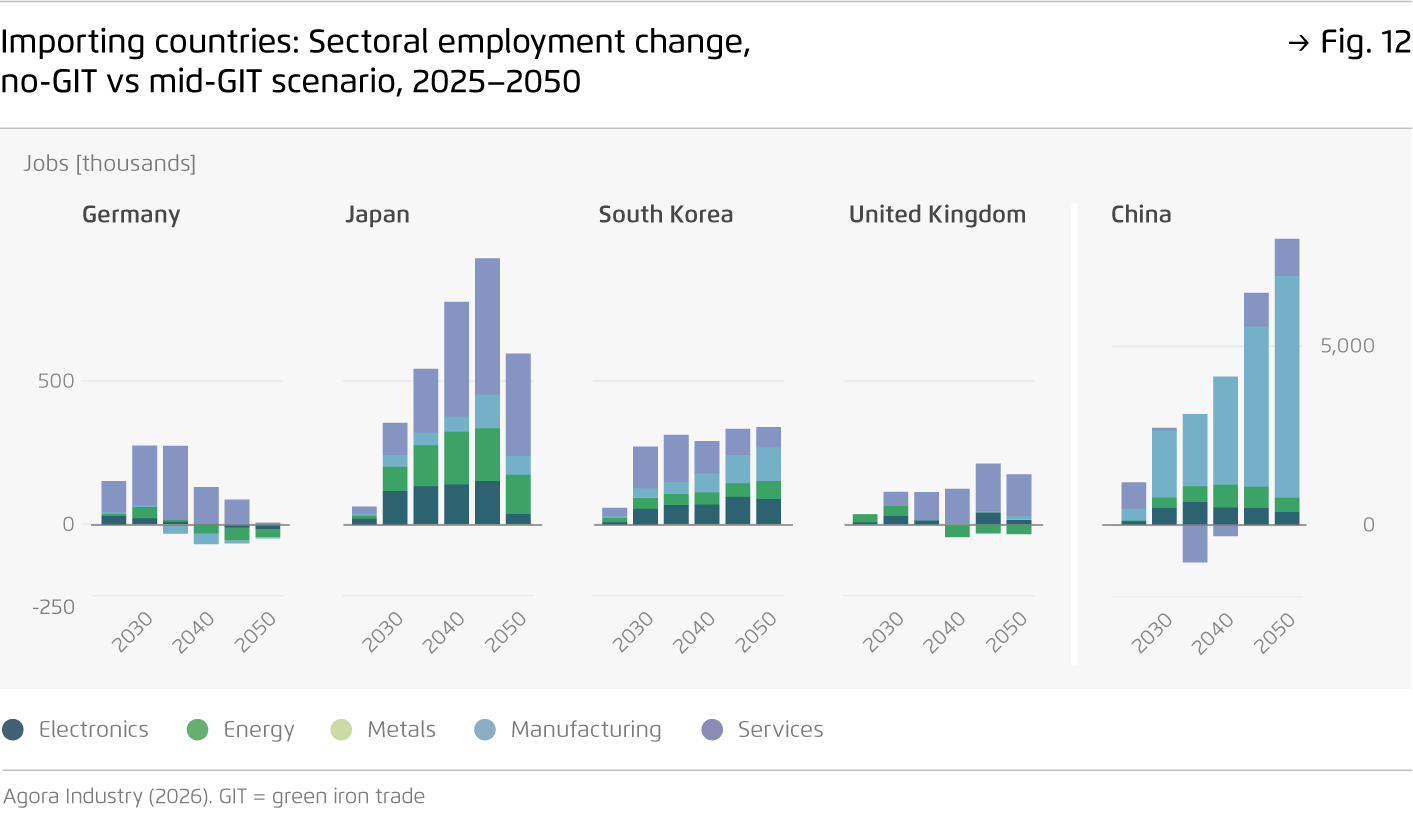
Green iron imports can help Japan decarbonise steelmaking while supporting employment, investment and household incomes as its workforce tightens. Green iron trade keeps Japan’s GDP above a scenario without green iron imports throughout the modelling period, with up to 925,000 additional jobs in 2045 and GDP USD 162 billion higher in 2045. Investment in electric arc furnaces and electricity infrastructure would create additional fiscal room for skills and workforce development.
South Korea
Green iron imports can help South Korea phase out coal-based ironmaking while preserving its downstream steel industry and strengthening jobs across manufacturing and processing. Employment would remain above a scenario without green iron imports throughout the period, reaching 336,000 additional jobs by 2050, including 117,000 in raw materials processing and 88,000 in electronics, machinery and vehicles. Importing around half of Korea’s iron delivers the strongest employment and household income gains.
United Kingdom
Green iron trade can boost the UK economy and employment while providing a low-carbon supply of primary iron for domestic steelmaking. GDP could reach up to USD 20.1 billion higher than in a scenario without green iron imports in 2035 and USD 24.3 billion higher in 2045, while employment could reach 138,000 additional jobs by 2050. Long-term offtake agreements, green steel standards and investment in electric arc furnaces can help build a competitive UK green steel market.
Bibliographical data
Downloads
-
Analysis
pdf 6 MB
Green iron, shared gains
The macroeconomic benefits of global green iron trade
All figures in this publication
GDP, household income and total employment in 2050 against the no-GIT (green iron trade) scenario, and which trade scenario delivers the better result
Figure A from Green iron, shared gains on page 8
Share:

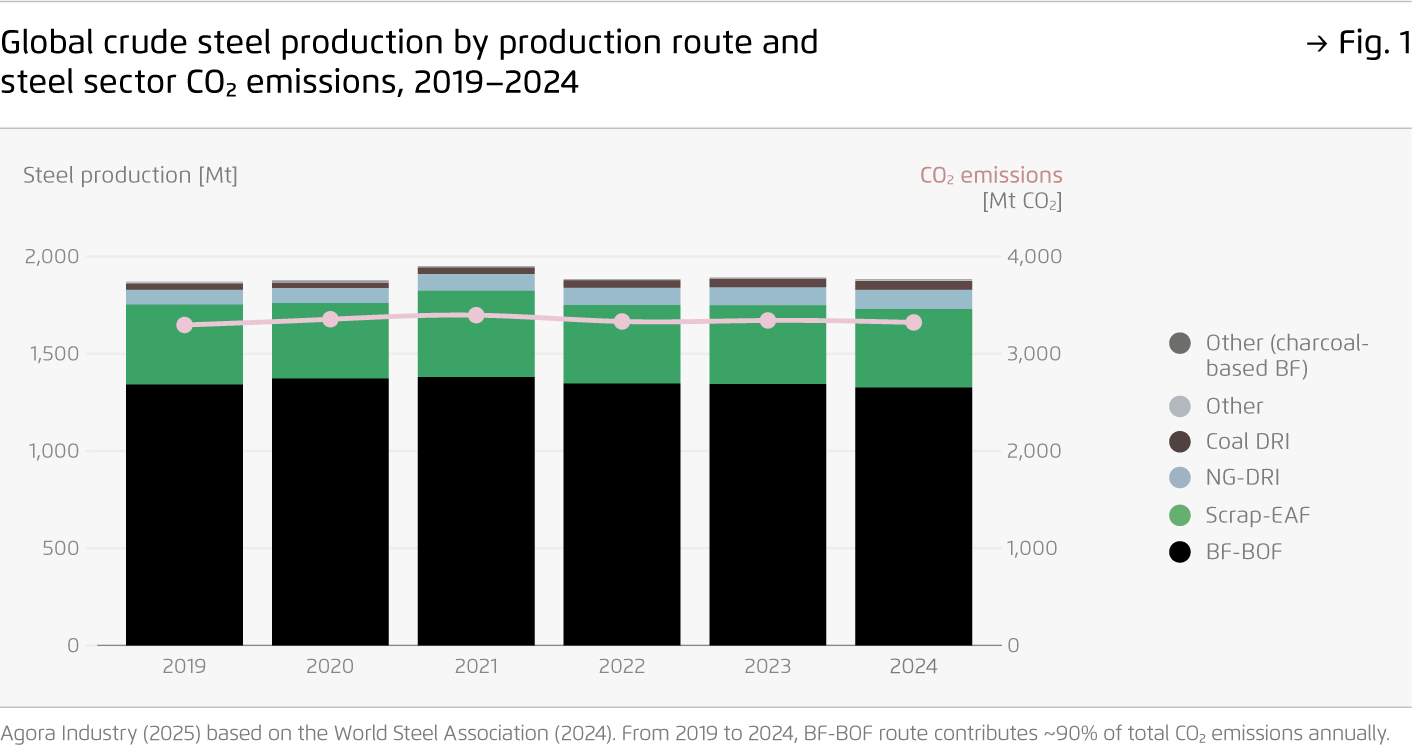
Global crude steel production by production route and steel sector CO₂ emissions, 2019–2024
Figure 1 from Green iron, shared gains on page 10
Share: